Potato Growth Timeline 🥔⏱️
Why Potatoes Take Longer Than You Think—and Why Patience Pays Off
Potatoes are one of the most rewarding crops to grow, but they are also one of the most misunderstood. Many gardeners expect fast results and are disappointed when they dig too early and find only a handful of tiny tubers.
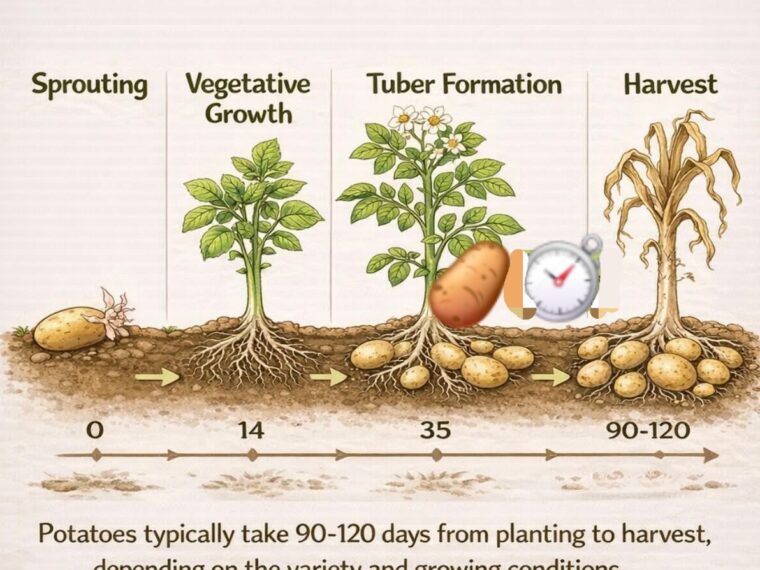
The truth is simple: potatoes take time. From planting to harvest, most varieties need 90 to 120 days, and each stage of growth serves a specific purpose. Understanding this timeline helps you avoid the biggest mistake—harvesting too early—and ensures a full, satisfying crop.
🌱 Total Growing Time: 90–120 Days
Unlike leafy greens or radishes, potatoes are not quick crops. They grow underground, slowly building size and weight long after the plant looks “done” above the soil.
This long timeline is exactly why timing and patience matter.
🗓️ Stage 1: Sprouting (Days 0–14)
After planting seed potatoes, nothing visible happens at first.
What’s going on underground:
- Eyes on the seed potato begin to sprout
- Roots start forming
- Energy is directed to shoot development
This stage can take 1–2 weeks, depending on soil temperature. Cold soil slows everything down.
👉 Many gardeners worry at this stage—but this quiet period is completely normal.
🌿 Stage 2: Vegetative Growth (Days 15–35)
Once sprouts break through the soil, the plant focuses on leaf and stem growth.
During this stage:
- The plant builds a strong leafy structure
- Photosynthesis increases
- Energy storage begins
Important:
At this point, no potatoes are forming yet. The plant is preparing itself to support tuber production later.
This stage lasts about 3 weeks.
🌸 Stage 3: Flowering & Tuber Initiation (Around Day 35–45)
This is the stage most people misunderstand.
When potato plants begin to flower:
- Underground stolons start forming tubers
- The first tiny potatoes appear
- Growth shifts from leaves to storage
👉 Flowers are the signal, not the harvest time.
At this point, potatoes are still very small—often marble-sized.
🥔 Stage 4: Tuber Bulking (Days 45–90+)
This is the most important stage of the entire timeline.
What happens now:
- Tubers steadily increase in size
- Starch and nutrients accumulate
- The plant sends energy downward, not upward
This process takes 6–8 weeks.
If you harvest during this stage:
- You’ll get many potatoes
- But they’ll be small and underdeveloped
This is why digging at day 60, when excitement peaks, leads to disappointment.
🍂 Stage 5: Maturation & Skin Set (Days 90–120)
As potatoes near maturity:
- Leaves yellow and die back
- Growth slows and then stops
- Skins thicken and harden
This final stage:
- Improves storage life
- Increases flavor
- Prevents damage during harvest
👉 Waiting until the plant naturally dies back gives you full-sized, durable potatoes.
⏳ Why Harvesting Too Early Fails
Harvesting early is the #1 reason gardeners get poor yields.
If you dig too soon:
- Tubers haven’t bulked up
- Skins are thin and fragile
- Total harvest weight is dramatically lower
Potatoes don’t “catch up” after harvest. Once they’re out of the ground, growth is over.
🧠 Key Lessons from the Potato Timeline
- Potatoes are slow by nature
- Most of the real growth happens underground
- The biggest size increase occurs in the final weeks
- Above-ground growth does NOT equal harvest readiness
Patience is not optional—it’s part of the process.
🌞 Final Thoughts
Potatoes reward gardeners who wait.
Understanding the full growth timeline explains why:
- Early digging leads to tiny potatoes
- Flowering doesn’t mean harvest time
- Waiting the full 90–120 days produces the yield you expect
If you want baskets of full-sized, satisfying potatoes, let the plant finish its job. Give it time, and the harvest will be worth it.