🍞🥖 Ever wonder why your dough doesn’t turn out right?
Too dry? Too dense? Not rising the way it should? 😩
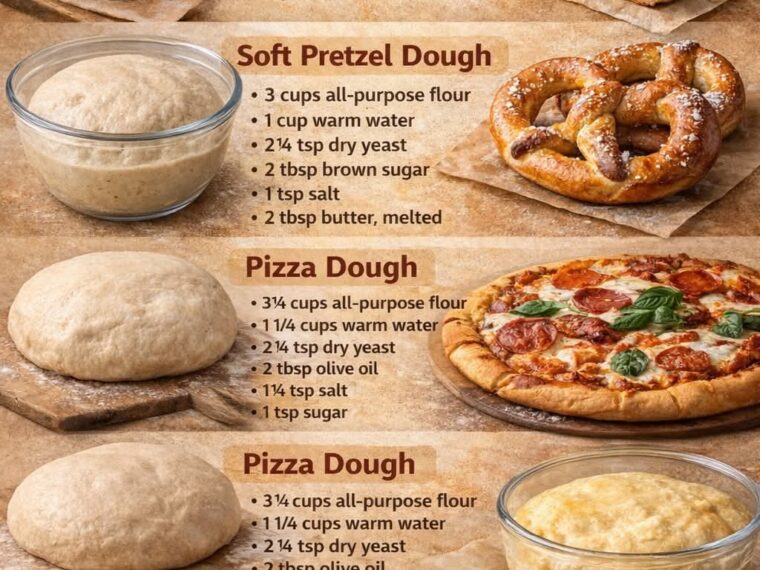
I put together the most essential dough recipes in one simple visual — with correct, logical ingredients and no guesswork 👇
✔️ Focaccia Dough
✔️ Soft Pretzel Dough
✔️ Pizza Dough
✔️ Brioche Dough
Each dough is different for a reason — and once you understand that, baking gets so much easier.
🍞🥖 Ever Wonder Why Your Dough Doesn’t Turn Out Right?
The Essential Dough Recipes That Explain Everything
Too dry? Too dense? Not rising the way it should? 😩
If you’ve ever followed a recipe exactly and still ended up disappointed, you’re not alone.
The truth is simple: each dough is built differently for a reason. Hydration, fat, sugar, and mixing methods all affect texture, rise, and flavor. Once you understand why doughs differ, baking becomes logical—not frustrating.
Below are four essential dough recipes, explained clearly and made with correct ratios so there’s no guesswork.
✔️ Focaccia Dough
✔️ Soft Pretzel Dough
✔️ Pizza Dough
✔️ Brioche Dough
🧠 Why Doughs Are Not One-Size-Fits-All
Dough texture depends on:
- Hydration (water amount) → softness vs structure
- Fat (oil, butter, milk) → tenderness
- Sugar → browning and softness
- Eggs → richness and strength
Change one element, and you change the result.
Let’s break it down.
🫓 Focaccia Dough
High Hydration = Airy & Chewy
Why This Dough Works
Focaccia is all about air bubbles and olive oil. High water content creates an open crumb, while oil keeps it soft and flavorful.
Ingredients
- 4 cups (500 g) bread flour
- 2 cups (480 ml) warm water
- 2¼ tsp instant yeast
- 2 tsp salt
- ¼ cup (60 ml) olive oil (plus more for topping)
Instructions
- Mix flour, yeast, and salt in a bowl
- Add warm water and olive oil
- Stir until sticky and wet (do not knead much)
- Cover and let rise 1–2 hours
- Transfer to oiled pan, dimple with fingers
- Drizzle with olive oil
- Bake at 220°C / 430°F for 20–25 minutes
👉 Sticky dough is correct. Don’t add flour.
🥨 Soft Pretzel Dough
Low Hydration = Dense & Chewy
Why This Dough Works
Pretzels need structure, not airiness. Lower water content keeps them firm and chewy.
Ingredients
- 3¾ cups (470 g) all-purpose flour
- 1 cup (240 ml) warm water
- 2¼ tsp instant yeast
- 1 tbsp sugar
- 1 tsp salt
- 2 tbsp melted butter
(Plus baking soda bath: ⅔ cup baking soda + 10 cups water)
Instructions
- Mix yeast, sugar, and water
- Add flour, salt, and butter
- Knead until smooth and firm (8–10 minutes)
- Rest 30 minutes
- Shape pretzels
- Boil 30 seconds per side in soda bath
- Bake at 230°C / 450°F for 12–15 minutes
👉 Firm dough = correct pretzel texture
🍕 Pizza Dough
Balanced Hydration = Stretchy & Crisp
Why This Dough Works
Pizza dough needs enough water to stretch but not collapse. Oil adds flexibility; long rest builds flavor.
Ingredients
- 3½ cups (440 g) bread flour
- 1¼ cups (300 ml) warm water
- 2¼ tsp instant yeast
- 2 tbsp olive oil
- 1½ tsp salt
Instructions
- Mix flour, yeast, salt
- Add water and oil
- Knead until smooth and elastic (7–8 minutes)
- Rest 1–24 hours (longer = better flavor)
- Stretch by hand (no rolling pin)
- Bake at 250°C / 480°F or hotter
👉 Soft, elastic dough = perfect pizza
🍞 Brioche Dough
Rich & Soft = Butter + Eggs
Why This Dough Works
Brioche is closer to cake than bread. Butter and eggs weaken gluten, making it tender and fluffy.
Ingredients
- 3½ cups (440 g) all-purpose flour
- ¼ cup (50 g) sugar
- 2¼ tsp instant yeast
- 1 tsp salt
- 4 eggs (room temperature)
- ¾ cup (170 g) soft butter
Instructions
- Mix flour, sugar, yeast, salt
- Add eggs, mix until combined
- Knead 5 minutes
- Slowly add butter, knead until smooth
- Chill dough overnight
- Shape and let rise 2 hours
- Bake at 180°C / 350°F for 30–35 minutes
👉 Sticky, rich dough = correct brioche
📌 Why Understanding This Changes Everything
| Dough Type | Hydration | Fat | Texture |
|---|---|---|---|
| Focaccia | Very high | Oil | Airy |
| Pretzel | Low | Butter | Dense |
| Pizza | Medium | Oil | Stretchy |
| Brioche | Medium | Butter + eggs | Soft |
Once you understand why each dough is built differently, baking becomes predictable—and fun.
🌟 Final Thoughts
Bad dough usually isn’t your fault—it’s wrong ratios or wrong expectations.
Stop forcing dough to behave like something it’s not.
Use the right structure, and the results will follow.
Master these four doughs, and you’ll understand 90% of bread baking forever.