Winter Mushrooms Aren’t Just Fungi 🍄
They’re a Living Food Chain Thriving in the Cold
When winter arrives, most people assume nature goes quiet. Trees stand bare, insects disappear, and life seems to pause. But beneath the frost and fallen leaves, something remarkable is still working.
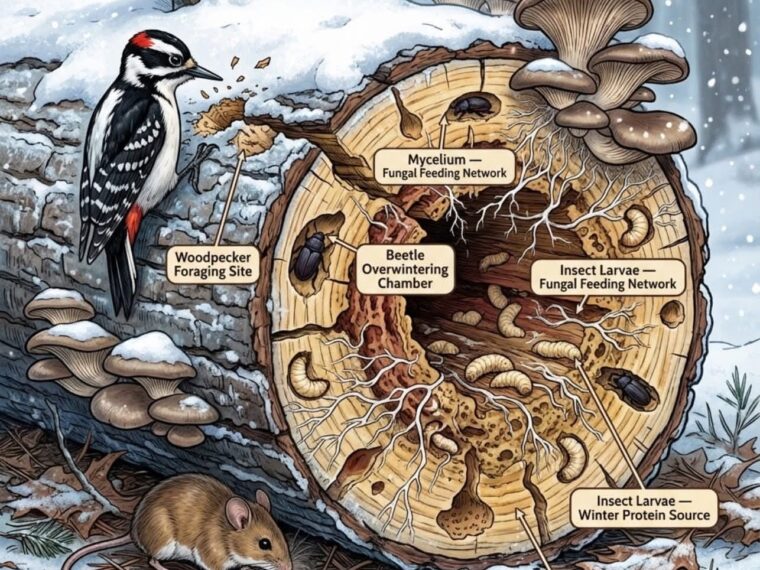
Winter mushrooms aren’t just fungi — they are the foundation of a hidden food chain. In cold forests and fields, fungi feed insects, insects feed birds, and birds sustain larger animals. Remove the fungi, and the entire system weakens.
Winter is not lifeless. It’s quietly connected.
🍄 Fungi: The Winter Survivors
Unlike plants, fungi don’t rely on sunlight. They thrive in cool, damp conditions where other life slows down.
During winter, fungi:
- Break down dead wood and leaves
- Release nutrients into the soil
- Provide food when little else is available
Many species actively grow in cold temperatures, even after frost and snowfall.
🐛 Fungi Feed Insects
Winter-active insects rely heavily on fungi.
Examples include:
- Beetle larvae living inside decaying logs
- Fungus gnats feeding on spores
- Small invertebrates sheltering in fungal networks
Fungi provide:
- Nutrition
- Shelter
- Warmth within decomposing material
Without fungi, these insects would struggle to survive winter.
🐦 Insects Feed Birds
Winter birds depend on insects more than most people realize.
Birds such as:
- Woodpeckers
- Wrens
- Chickadees
- Robins (in milder winters)
search bark, soil, and rotting wood for insects that survive because fungi made it possible.
When insect populations drop, bird survival rates drop too.
🦊 Birds Feed Larger Animals
Birds are not just consumers — they are also prey.
Larger animals depend on them:
- Foxes
- Hawks
- Owls
- Martens
- Wild cats
This means fungi indirectly support predators by sustaining the entire lower chain.
🌱 Fungi and Soil Health
Winter fungi don’t just feed animals — they rebuild the land.
They:
- Return nutrients to frozen soil
- Prepare the ground for spring growth
- Support root systems through underground mycelium
Healthy fungal networks mean healthier forests, fields, and gardens.
❄️ What Happens If Fungi Disappear?
Removing fungi breaks the chain:
- No fungi → fewer insects
- Fewer insects → fewer birds
- Fewer birds → struggling predators
- Poor soil → weaker plant growth
This isn’t theory — it’s ecological reality.
Fungi are not optional. They are foundational.
🍂 Why Winter Matters Most
In spring and summer, food is abundant. In winter, every source of nutrition matters.
Winter fungi:
- Act as emergency food
- Stabilize ecosystems during scarcity
- Keep populations alive until warmer months return
They are the quiet reason life survives the cold.
🌍 What This Teaches Us About Nature
Nature is not built on single species — it’s built on relationships.
Winter mushrooms remind us:
- Small organisms sustain entire systems
- What looks insignificant is often essential
- Removing one link weakens the whole chain
Respecting fungi means respecting life itself.
🌲 Final Thoughts
Winter mushrooms are more than strange shapes on dead wood.
They are the starting point of a winter food chain.
They feed insects.
Insects feed birds.
Birds feed animals.
And the soil is renewed for spring.
In the coldest months, fungi quietly keep the world alive.