Some plants protect others from heat, wind, and frost.
Smart pairings create gentle microclimates right in the garden.
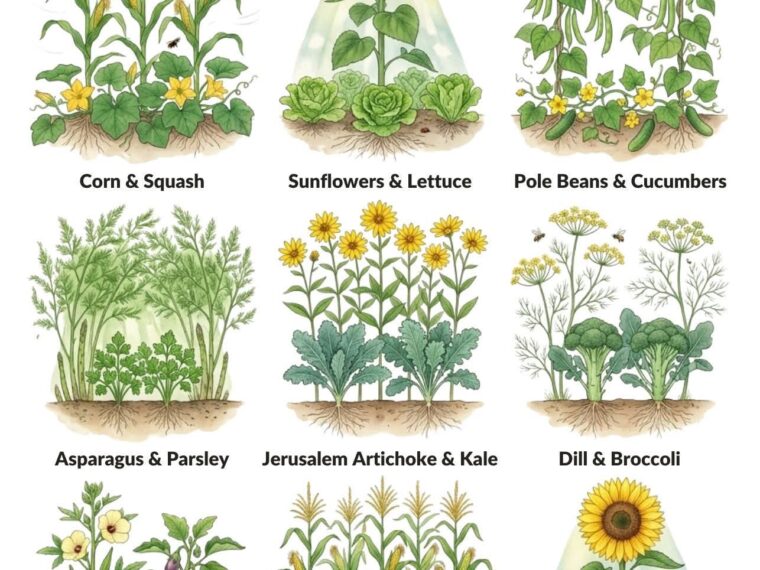
- Corn + Squash — tall stalks slow drying winds around low vines
- Sunflowers + Lettuce — broad leaves give cool shade in summer heat
- Pole beans + Cucumbers — beans climb while cucumbers sprawl in filtered shade
- Asparagus + Parsley — feathery fronds soften afternoon sun
- Jerusalem artichoke + Kale — tall screens help buffer light frost and wind
- Dill + Broccoli — airy stems reduce splash and soil contact during rain
- Okra + Eggplant — tall okra creates light windbreaks for tender plants
- Sweet corn + Melons — rows hold gentle humidity around spreading vines
- Sunflowers + Bush beans — shade keeps soil from drying and cracking
How Some Plants Protect Others: Creating Natural Microclimates in Your Garden 🌿🌤️
Smart Plant Pairings That Guard Against Heat, Wind, and Frost
In nature, plants rarely grow alone. They form communities where each species plays a role—some offering shade, others blocking wind, and some helping trap warmth during cold nights. When gardeners understand this, they can design gardens that protect plants naturally, without extra structures or energy.
By using smart plant pairings, you can create gentle microclimates right in your garden that help plants thrive through heat, wind, and frost.
🌱 What Is a Garden Microclimate?
A microclimate is a small area where temperature, humidity, and wind conditions differ from the surrounding environment.
In gardens, microclimates are created by:
- Plant height and density
- Leaf size and shape
- Ground cover
- Orientation to sun and wind
Even a few degrees of difference can mean the survival of tender plants.
☀️ Plants That Protect Against Heat
Tall, Leafy Plants as Living Shade
Large plants act like umbrellas for smaller ones.
Examples:
- Corn
- Sunflowers
- Okra
- Trellised beans
These plants:
- Reduce direct sun exposure
- Lower soil temperature
- Prevent moisture loss
Ideal companions: lettuce, spinach, herbs, and young seedlings.
🌬️ Plants That Block Wind
Wind dries soil, stresses plants, and damages stems.
Natural Windbreak Plants
- Shrubs
- Tall grasses
- Dense hedges
- Sunflowers or sorghum
Benefits:
- Reduce wind speed
- Protect delicate leaves
- Help plants retain moisture
Place windbreak plants on the windward side of your garden.
❄️ Plants That Protect Against Frost
Plants can help trap heat and reduce frost damage.
Frost-Buffering Techniques
- Dense plantings reduce heat loss at night
- Ground covers insulate soil
- Evergreens block cold winds
Examples:
- Strawberries as ground cover
- Kale or chard near stone walls
- Herbs planted near larger perennials
Dense foliage acts as a natural blanket.
🌾 Ground Covers: The Unsung Heroes
Low-growing plants protect soil and nearby roots.
Benefits:
- Reduce temperature swings
- Hold moisture
- Prevent frost penetration
- Improve soil health
Examples:
- Clover
- Creeping thyme
- Strawberries
- Sweet potato vines
🧠 Smart Plant Pairings for Natural Protection
Examples of Protective Pairings:
- Tomatoes + basil (shade and moisture retention)
- Corn + beans + squash (Three Sisters method)
- Fruit trees + herbs beneath (wind protection and insulation)
- Roses + low-growing ground covers
These combinations work together rather than competing.
🪴 Garden Layout Tips for Microclimates
- Plant taller crops on the north or west side
- Use walls, fences, or hedges strategically
- Group plants with similar needs
- Avoid large empty spaces
- Mulch heavily around sensitive plants
Design matters as much as plant choice.
🌿 Benefits of Microclimate Gardening
- Healthier plants
- Less water loss
- Fewer weather-related losses
- Reduced need for covers or heaters
- Higher yields and longer seasons
You let nature do the work.
⚠️ Common Mistakes to Avoid
- Overcrowding plants
- Blocking airflow completely
- Pairing plants with conflicting water needs
- Ignoring seasonal sun angles
Balance is essential.
🌼 Final Thoughts
Some plants are natural protectors. When you place them wisely, they create calm, stable conditions that help neighboring plants survive heat, wind, and frost.
Smart pairings don’t just grow food—they build resilience.
Your garden can protect itself, if you let it.