
Earth Air Tunnel Ventilation System 🌍🏠
How the Ground Can Heat (and Cool) Your Home Naturally
What if your house could be warmed in winter and cooled in summer—without burning fuel or running energy-hungry machines? The Earth Air Tunnel Ventilation System, also known as an Earth Tube or Ground-to-Air Heat Exchanger, does exactly that by using the stable temperature of the earth beneath your feet.
This ancient concept, refined with modern design, is one of the most efficient passive heating and cooling solutions available today.
🌡️ What Is an Earth Air Tunnel System?
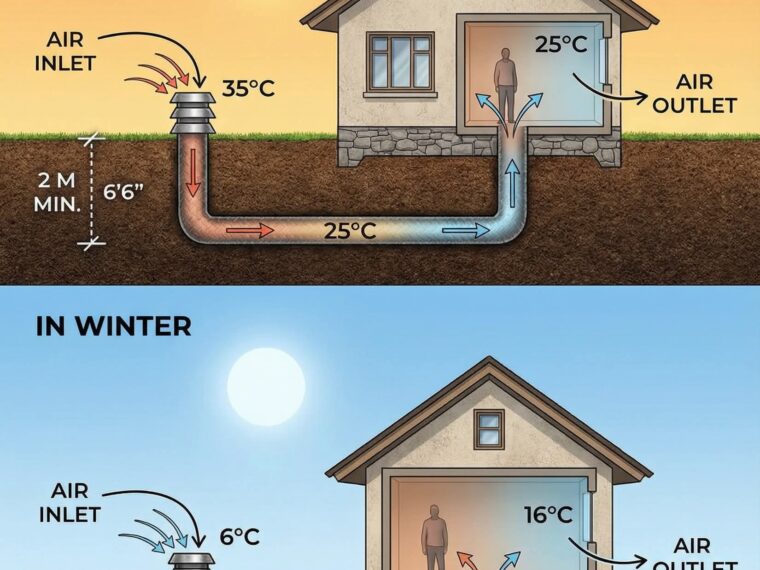
An earth air tunnel system uses underground pipes buried several feet below the surface to pre-heat or pre-cool air before it enters a home.
Because soil temperature remains relatively constant year-round, the air moving through these tunnels naturally adjusts to a comfortable temperature—warming in winter and cooling in summer.
🔥 How It Heats a House in Winter
Below the frost line, ground temperature typically stays between 10–18°C (50–65°F) depending on location.
In winter:
- Cold outside air enters the underground tunnel
- As it travels through the buried pipe, it absorbs heat from the surrounding soil
- The warmed air enters the house
- Indoor heating demand is reduced
This process happens without combustion or electricity, except for a small fan if needed.
❄️ How It Cools in Summer
In summer, the process reverses:
- Hot air enters the tunnel
- Heat transfers into the cooler earth
- Air enters the home significantly cooler
This reduces the need for air conditioning and stabilizes indoor temperatures.
🧱 Key Components of the System
Underground Pipes
- Length: typically 20–50 meters (65–165 ft)
- Depth: 2–4 meters (6–13 ft)
- Materials: PVC, HDPE, concrete, or clay
Air Intake
- Positioned above ground
- Covered with insect and debris screens
Air Outlet
- Delivers conditioned air into the house
- Often connected to ventilation ducts
Optional Fan
- Improves airflow in larger homes
- Uses very little electricity
🌍 Why the Earth Works So Well
Soil acts as thermal mass:
- Absorbs heat slowly
- Releases heat steadily
- Buffers extreme temperature swings
Unlike air, the earth doesn’t rapidly heat or cool—making it an ideal natural temperature regulator.
🌱 Benefits of an Earth Air Tunnel System
- Reduces heating and cooling costs
- Works year-round
- Uses renewable energy from the earth
- Improves indoor air quality
- Silent operation
- Long lifespan (30–50+ years)
- Ideal for off-grid or eco-homes
🏡 Best Applications
- Passive solar homes
- Earth-sheltered houses
- New construction projects
- Greenhouses
- Eco-lodges and cabins
While easier to install during construction, systems can be added later with proper planning.
⚠️ Important Design Considerations
Drainage
Condensation forms inside pipes. Proper slope and drainage are essential to prevent moisture buildup.
Filtration
Install air filters to prevent dust, insects, and microbes from entering the home.
Pipe Material
Smooth, non-toxic materials reduce mold risk and improve airflow.
Climate Suitability
Works best in regions with:
- Hot summers and cold winters
- Significant temperature differences between seasons
🧠 Health & Comfort Advantages
Earth air systems provide:
- Stable indoor temperatures
- Reduced dry air
- Improved oxygen flow
- Fewer allergens when filtered properly
This creates a more comfortable living environment with less mechanical noise.
🔧 Maintenance Needs
- Clean intake filters periodically
- Inspect drainage annually
- Ensure airflow remains unobstructed
Maintenance is minimal compared to conventional HVAC systems.
🌟 Final Thoughts
An Earth Air Tunnel Ventilation System is a powerful example of working with nature instead of against it. By harnessing the earth’s stable temperature, homes can stay warm in winter, cool in summer, and comfortable year-round—using energy that’s already there.
Sometimes the smartest technology is thousands of years old… just buried underground.