
Not everything from the kitchen belongs outdoors.
But a few carefully chosen items can help birds survive winter.
In cold weather, birds burn enormous amounts of energy just to stay warm. When snow, ice, and frozen ground limit natural food, safe supplemental feeding can make a real difference—especially across the U.S. and Canada, where winters are long and unpredictable.
The key is what you offer and how you offer it.
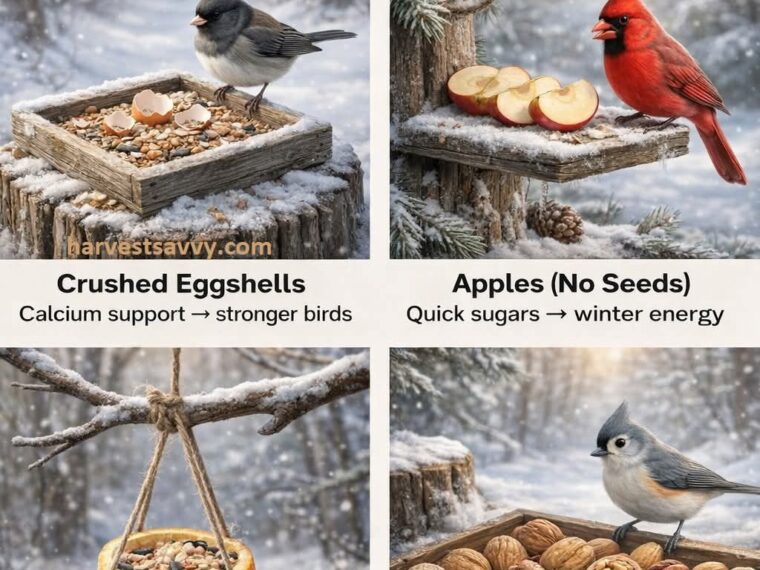
1️⃣ Crushed eggshells
A valuable calcium source for strong bones and future egg production—especially important as nesting season approaches.
Rinse shells, bake them to kill bacteria, then crush them into a fine grit (never sharp pieces).
Best for ground-feeding birds like robins, cardinals, and chickadees.
2️⃣ Apples (without seeds)
Apples provide quick, natural energy during cold spells.
Remove all seeds (they contain trace toxins) and cut the fruit into chunks or slices.
Favored by waxwings, thrushes, and woodpeckers—especially during late winter food gaps.
3️⃣ Orange peels (as feeders, not food)
Birds don’t eat the peel itself. Instead, use it as a temporary holder for suet or seed.
Fill the peel, hang it securely, and remove it once empty or weathered to prevent mold.
Useful for chickadees and nuthatches.
4️⃣ Unsalted nuts
High-fat fuel that helps birds maintain body heat through freezing nights.
Use raw or dry-roasted nuts only—never salted or seasoned—and crush them lightly.
A favorite of jays and woodpeckers.
These aren’t scraps.
They’re winter lifelines—when offered thoughtfully, kept clean, and used as a supplement, not a replacement for natural food.