The Right Support Makes Plants Stronger and Harvests Easier
Growing healthy, productive plants isn’t just about good soil, sunlight, and water. One of the most overlooked elements of successful gardening is proper plant support. Matching each crop to the right structure not only saves space but also prevents broken stems, improves air circulation, reduces disease, and makes harvesting far easier.
When plants are supported correctly from the start, they grow straighter, stay healthier, and produce better yields. When they aren’t, gardeners often face tangled vines, rotting fruit, and frustrating maintenance later in the season.
Let’s explore why plant support matters and how to choose the right structure for different crops.
Why Plant Support Is So Important
1. Stronger, Healthier Plants
Unsupported plants often sprawl on the ground, where they’re exposed to moisture, pests, and soil-borne diseases. Supporting plants keeps leaves and fruit off damp soil, improving airflow and reducing fungal problems like mildew and rot.
2. Higher Yields
When plants grow upward instead of outward, they receive more sunlight and produce more flowers and fruit. Supported plants also spend less energy repairing broken stems and more energy producing crops.
3. Easier Harvesting
With fruits hanging neatly and vines organized, harvesting becomes faster and less messy. You won’t have to dig through tangled foliage to find hidden produce or risk damaging plants while searching for ripe fruit.
4. Space-Saving Gardening
Vertical growing allows you to fit more plants into a smaller area. This is especially valuable in raised beds, small yards, and container gardens.
Matching Crops to the Right Structure
Different plants grow in different ways, and each needs a specific type of support to thrive.
1. Tomatoes
Best supports: Cages, stakes, trellises
Tomatoes, especially indeterminate varieties, grow tall and heavy.
- Cages are ideal for bushy growth and minimal pruning.
- Stakes work well for single-stem training.
- Trellises are perfect for vertical tomato gardening and easier airflow.
Tip: Install supports at planting time to avoid damaging roots later.
2. Cucumbers
Best supports: Trellises, netting, A-frames
Cucumbers are natural climbers that love to grow upward.
- Vertical trellises keep fruit straight and clean.
- Netting works well for lightweight vines.
- A-frames offer stability in windy areas.
Tip: Train young vines early so they naturally climb.
3. Peas and Beans
Best supports: Teepees, netting, poles, trellises
Climbing peas and beans need something to wrap their tendrils around.
- Teepees are easy to build and look attractive.
- Netting works well for lightweight varieties.
- Poles provide strong vertical growth.
Tip: Choose thin supports—thick posts are harder for tendrils to grip.
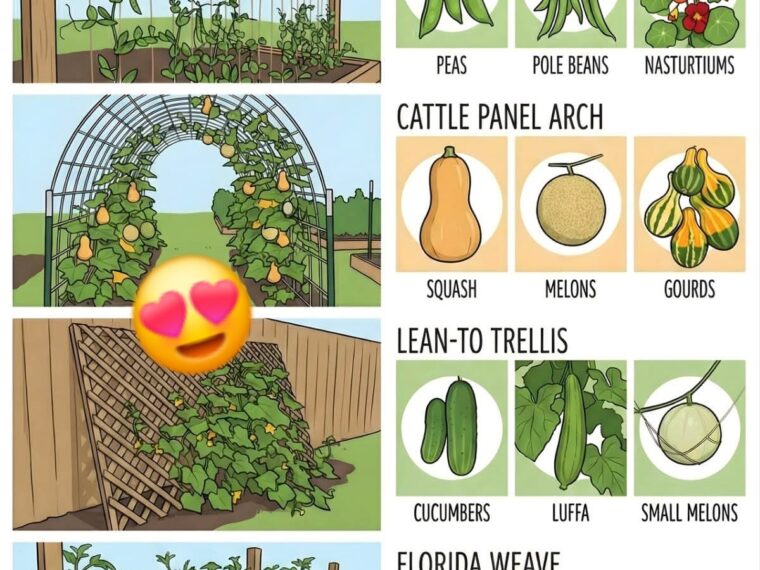
4. Squash and Melons
Best supports: Heavy-duty trellises, cattle panels
These vines grow large and produce heavy fruit.
- Use sturdy frames to support the weight.
- Slings made from fabric or mesh can hold growing fruit.
Tip: Vertical squash saves space and reduces pest damage.
5. Peppers
Best supports: Stakes, cages
Pepper plants may look compact, but heavy fruit can snap branches.
- Stakes provide gentle support.
- Small cages prevent toppling in strong winds.
Tip: Tie stems loosely to avoid restricting growth.
6. Flowers (Sunflowers, Dahlias, Snapdragons)
Best supports: Stakes, hoops, grids
Tall flowers benefit from discreet support.
- Use bamboo stakes or decorative rods.
- Grids and hoops keep stems upright.
Tip: Add support early so plants grow into it naturally.
Choosing the Right Support Material
Not all supports are created equal. Here’s what to consider:
1. Strength
Heavier crops need stronger structures. Lightweight netting works for peas but not for squash or melons.
2. Durability
Metal and treated wood last longer outdoors. Bamboo is eco-friendly but may need replacing each season.
3. Height
Choose supports tall enough to match the plant’s mature size.
4. Stability
Anchor supports firmly into the soil to prevent tipping in wind or heavy rain.
Common Mistakes to Avoid
- Waiting too long: Adding supports late can damage roots and stress plants.
- Using weak materials: Thin sticks won’t hold heavy fruit.
- Overcrowding: Even with vertical growth, plants still need airflow.
- Tying too tightly: Tight ties can cut into stems and restrict growth.
Simple DIY Support Ideas
- Bamboo teepees
- Wooden A-frame trellises
- Wire cattle panel arches
- Repurposed ladders
- Garden twine grids
These budget-friendly solutions work just as well as store-bought options.
Final Thoughts
The right plant support is one of the simplest ways to improve your garden’s health, productivity, and organization. By matching crops to the right structure, you save space, prevent frustration later, and enjoy cleaner, stronger plants and easier harvests.
Plan your supports before planting, choose sturdy materials, and train young plants early. A little effort at the start of the season leads to a more successful and stress-free garden all summer long.