🍽️ Logic of Mixing Bowls — why the bowl actually matters
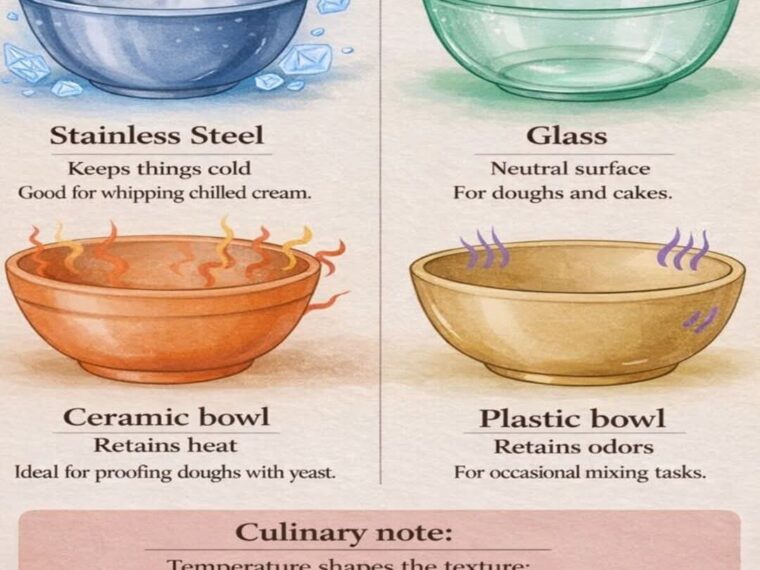
This image explains how different bowl materials affect temperature and, in turn, your results in the kitchen.
🔹 Stainless steel
Keeps ingredients cold. Great for whipping cream or handling butter-based mixtures where you want fat to stay firm.
🔹 Glass
A neutral, non-reactive surface. Ideal for cake batters, doughs, and general mixing where temperature control isn’t critical.
🔹 Ceramic
Retains heat well. Perfect for proofing yeast doughs, helping fermentation and rise.
🔹 Plastic
Light and practical, but tends to retain odors and stains. Best for occasional or non-sensitive mixing tasks.
🍞 Key culinary insight
Temperature shapes texture:
Colder bowls keep fats firm → flakier pastries
Warmer bowls encourage yeast activity → fluffier dough
✨ Takeaway
Choosing the right bowl isn’t just about convenience—it’s a quiet technique that can noticeably improve baking and cooking results.