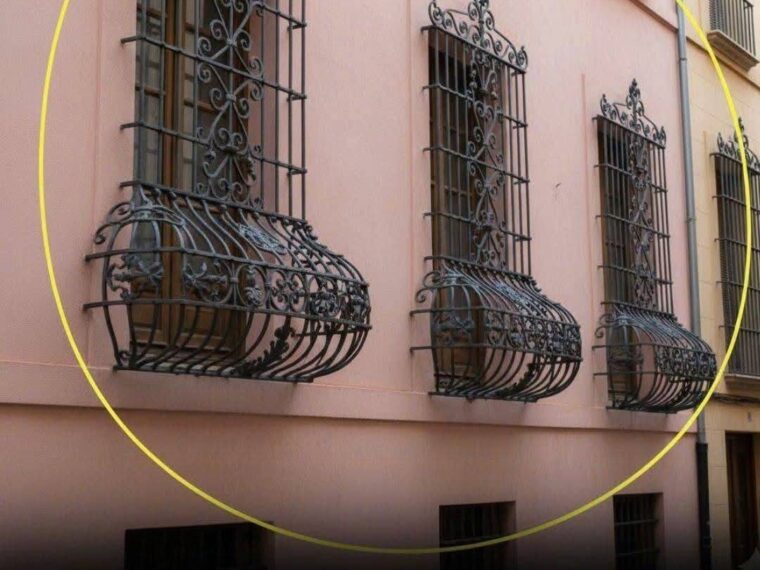
At first glance, those curved window bars you see on older buildings and European streets might seem purely decorative. Many people assume they’re just an old-fashioned design choice or an artistic flourish added by blacksmiths centuries ago. But the truth is far more practical — and surprisingly clever.
So why do some window bars bulge outward at the bottom?
It’s Not Just for Decoration
While the intricate ironwork certainly adds charm to historic buildings, the curved shape serves a very specific purpose. These window bars are known as “belly bars” or “pot-bellied grilles.” And their design was driven by everyday needs, not aesthetics.
The Real Purpose: Function and Safety
The main reason for the outward curve is space.
- Emergency Exit
In older buildings, especially those with thick stone walls, windows often doubled as emergency escape routes. The curved bars created extra room, allowing a person to squeeze through more easily in case of fire or danger — something flat bars would make nearly impossible. - More Light and Air
The bulge pushes the bars away from the glass, letting more sunlight and airflow into the room. This made interior spaces brighter and fresher long before modern ventilation and lighting existed. - Everyday Practical Use
People commonly used the curved area to place flower pots, small plants, or even food items to cool — especially in times before refrigerators. In some cities, it was normal to rest bread, milk, or produce safely outside the window without losing security.
Added Security Without Sacrificing Comfort
TO CONTINUE READING THE ARTICLE PLEASE SEE PAGE 2
Pages: 1 2