Different Types of Dough Recipes 🍞🥖
Understanding Dough Basics for Better Baking Results
Not all dough is the same. The reason your pizza is chewy, your brioche is soft, and your focaccia is airy comes down to ingredients, hydration, fat, and technique.
This guide breaks down the most common dough types, explains why they work the way they do, and gives you reliable, easy-to-follow recipes for each one.
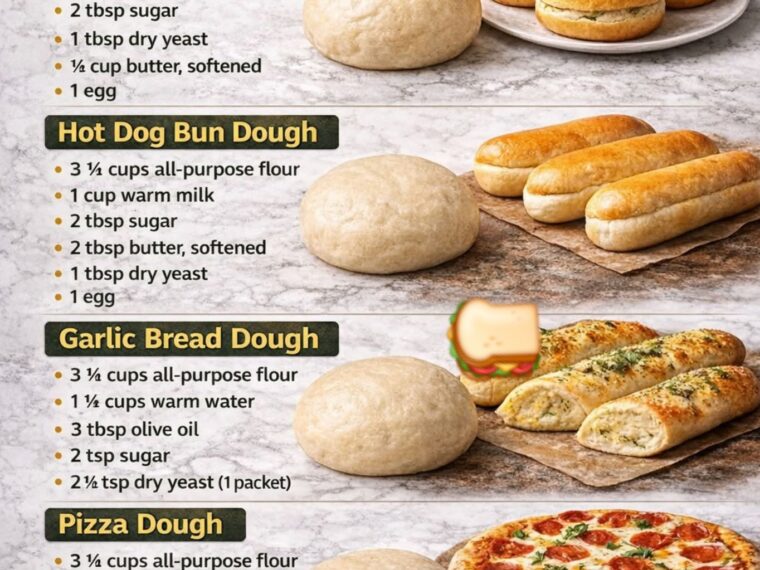
🍕 1. Pizza Dough
Chewy, stretchy, crisp edges
Why It’s Different
Pizza dough uses moderate hydration and minimal fat to create elasticity and chew.
Ingredients:
- 3 cups all-purpose or bread flour
- 1 cup warm water
- 2 tsp instant yeast
- 1 tsp sugar
- 1 tsp salt
- 2 tbsp olive oil
Instructions:
- Mix warm water, yeast, and sugar. Rest 5 minutes.
- Add flour, salt, and olive oil.
- Knead 8–10 minutes until smooth.
- Let rise 1–2 hours until doubled.
- Shape, top, and bake at high heat.
🥨 2. Soft Pretzel Dough
Dense, chewy, golden
Why It’s Different
Low hydration and a baking soda bath create the classic pretzel texture.
Ingredients:
- 3 cups all-purpose flour
- 1 cup warm water
- 2 tsp yeast
- 1 tbsp sugar
- 1 tsp salt
- 2 tbsp butter (melted)
Instructions:
- Activate yeast with water and sugar.
- Add remaining ingredients and knead until firm.
- Rise 1 hour.
- Shape pretzels.
- Boil briefly in baking soda water.
- Bake until golden.
🫓 3. Focaccia Dough
Airy, fluffy, olive-oil rich
Why It’s Different
High hydration and generous olive oil create large air pockets.
Ingredients:
- 3½ cups bread flour
- 1½ cups warm water
- 2 tsp yeast
- 2 tsp salt
- ¼ cup olive oil
Instructions:
- Mix all ingredients until sticky.
- Rest 20 minutes, then stretch and fold.
- Rise 1–2 hours.
- Press into oiled pan, dimple surface.
- Drizzle with oil and bake.
🍞 4. Basic Bread Dough
Soft crumb, sturdy structure
Why It’s Different
Balanced hydration and minimal fat make it versatile.
Ingredients:
- 3½ cups flour
- 1¼ cups warm water
- 2 tsp yeast
- 1½ tsp salt
- 1 tbsp oil
Instructions:
- Mix ingredients.
- Knead 10 minutes.
- Rise until doubled.
- Shape and rise again.
- Bake until golden.
🧈 5. Brioche Dough
Rich, buttery, tender
Why It’s Different
High fat and eggs create softness and richness.
Ingredients:
- 3 cups flour
- 3 eggs
- ½ cup butter (softened)
- ¼ cup sugar
- 2 tsp yeast
- 1 tsp salt
- ¼ cup warm milk
Instructions:
- Mix dry ingredients.
- Add eggs and milk.
- Knead until smooth.
- Add butter gradually.
- Chill overnight, then bake.
🥟 6. Flatbread Dough
Quick, soft, flexible
Why It’s Different
No yeast or very little yeast means fast preparation.
Ingredients:
- 2 cups flour
- ¾ cup warm water
- 1 tsp salt
- 2 tbsp oil
Instructions:
- Mix into soft dough.
- Rest 20 minutes.
- Roll and cook on hot pan.
🥐 7. Enriched Sweet Dough
Soft rolls, cinnamon buns
Why It’s Different
Sugar, milk, and fat make it tender and sweet.
Ingredients:
- 3½ cups flour
- 1 cup milk
- ¼ cup sugar
- 2 eggs
- 2 tsp yeast
- ½ cup butter
Instructions:
- Mix and knead well.
- Rise until doubled.
- Shape and bake.
🧠 Why Understanding Dough Matters
Different doughs exist because:
- Hydration affects texture
- Fat controls tenderness
- Sugar impacts browning
- Kneading develops structure
Once you understand this, baking becomes predictable—not frustrating.
✨ Final Thoughts
Every great bake starts with the right dough. Whether you want chewy pizza, fluffy focaccia, or rich brioche, success comes from choosing the correct formula—not guessing.
Master the dough, and everything else follows.