How and Why to Build an Underground Greenhouse (Walipini)
As food prices rise and climates become more unpredictable, more people are turning to self-sufficient, low-cost growing solutions. One of the most effective — and surprisingly ancient — methods is the Walipini, also known as an underground greenhouse.
This simple yet powerful structure allows you to grow vegetables year-round, even in cold or harsh climates, using mostly natural heat from the earth.
What Is a Walipini?
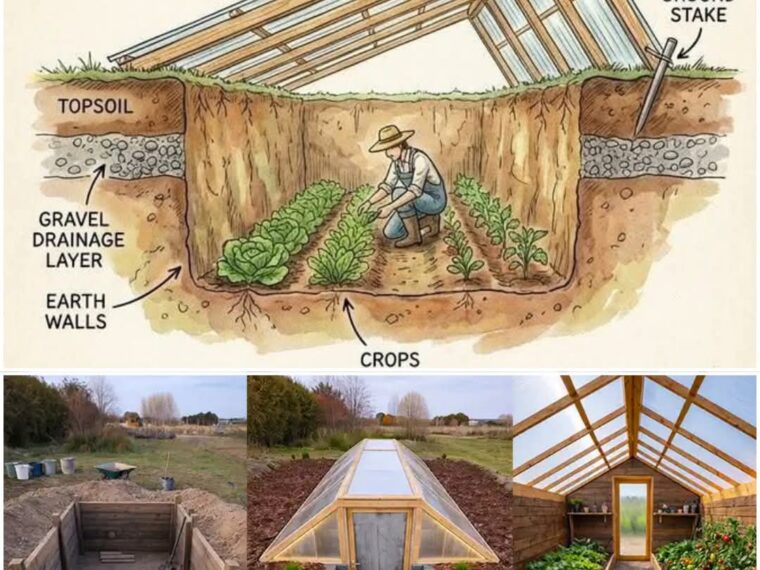
The word Walipini comes from the Aymara language of Bolivia and means “place of warmth.” It is a sunken greenhouse, typically dug 1.5 to 2.5 meters (5–8 feet) into the ground, with a transparent roof angled toward the sun.
By using the earth as insulation, a Walipini maintains a stable internal temperature, protecting plants from frost, wind, and extreme heat.
Why Build an Underground Greenhouse?
1. Natural Temperature Control 🌍
The ground maintains a relatively constant temperature year-round. Even when outside temperatures drop below freezing, the soil walls store and release heat, keeping plants alive and productive.
2. Year-Round Growing 🌱
With a Walipini, you can grow:
- Leafy greens in winter
- Tomatoes and peppers in shoulder seasons
- Herbs all year
- Seedlings long before spring
This extends your growing season dramatically without expensive heating.
3. Low Energy & Low Cost 💡
Unlike traditional greenhouses, Walipinis:
- Require no electricity or heaters
- Use local materials
- Cost a fraction of standard greenhouses
Once built, maintenance costs are minimal.
4. Protection from Weather & Pests 🛡️
Being underground protects plants from:
- Strong winds
- Heavy snow
- Extreme heat
- Many pests and animals
5. Water Efficiency 💧
The sheltered environment reduces evaporation, meaning:
- Less watering
- Healthier soil moisture
- Better water conservation
How a Walipini Works
- Earth insulation stabilizes temperature
- South-facing roof (north-facing in the Southern Hemisphere) maximizes sun exposure
- Thermal mass (soil, stone, water barrels) stores heat during the day and releases it at night
This creates a naturally warm microclimate.
How to Build a Walipini (Step by Step)
1. Choose the Right Location
- Pick a spot with maximum sun exposure
- Avoid flood-prone areas
- Ensure good drainage
- Check groundwater levels (very important)
2. Determine Size and Depth
Typical dimensions:
- Depth: 1.5–2.5 meters (5–8 ft)
- Width: 3–5 meters (10–16 ft)
- Length: As needed
Deeper structures retain heat better but require more excavation.
3. Dig the Pit
- Dig straight walls or slightly angled inward
- Slope the floor slightly for drainage
- Keep excavated soil nearby for backfilling
4. Build Retaining Walls
Use available materials such as:
- Earthbags
- Stone
- Concrete blocks
- Treated wood (with proper moisture protection)
Walls must be strong enough to resist soil pressure.
5. Install Drainage
This step is critical:
- Gravel layer at the base
- Drain pipe leading water away
- Optional French drain
Poor drainage can ruin a Walipini.
6. Build the Roof
- Use clear plastic, polycarbonate panels, or recycled windows
- Angle the roof toward the sun (about 30–45°)
- Ensure it is strong enough for snow or rain loads
7. Add Thermal Mass
Inside the greenhouse, include:
- Water barrels
- Stone walls
- Brick paths
These absorb heat during the day and release it at night.
8. Ventilation Is Essential
Even underground greenhouses need airflow:
- Install vents at the top
- Optional small windows or doors
- Manual or solar-powered ventilation
This prevents mold and overheating.
What Can You Grow in a Walipini?
Depending on your climate:
- Lettuce, spinach, kale
- Carrots, beets, radishes
- Herbs (basil, parsley, cilantro)
- Tomatoes, peppers (with good sun)
- Strawberries
- Seedlings and transplants
Common Mistakes to Avoid ⚠️
- Ignoring drainage
- Building in a flood zone
- Poor roof angle
- No ventilation
- Using untreated wood without protection
Planning is more important than speed.
Walipini vs Traditional Greenhouse
| Feature | Walipini | Traditional Greenhouse |
|---|---|---|
| Heating | Natural (earth) | Artificial |
| Cost | Low | High |
| Weather Resistance | Excellent | Moderate |
| Energy Use | Minimal | High |
Is a Walipini Right for You?
A Walipini is ideal if you:
- Want food security
- Live in cold or hot climates
- Have limited budget
- Prefer sustainable solutions
- Want year-round gardening
It’s not just a greenhouse — it’s a long-term investment in resilience.
Final Thoughts
Building an underground greenhouse (Walipini) is one of the smartest, most sustainable ways to grow food year-round. With careful planning and simple materials, you can harness the earth’s natural warmth and create a productive growing space that works with nature, not against it.
In a changing world, the Walipini offers stability, independence, and fresh food — right in your backyard.