How to Clean Your Cutting Board Properly 🧼🔪
Keep Your Kitchen Safe, Fresh, and Odor-Free
Your cutting board is one of the most used—and most contaminated—tools in the kitchen. Whether you use wood, bamboo, or plastic, improper cleaning can allow bacteria, odors, and stains to build up over time.
Cleaning your cutting board the right way not only extends its life, but also protects your food and your health.
🧠 Why Cutting Board Hygiene Matters
Cutting boards come into direct contact with:
- Raw meat
- Poultry
- Fish
- Fruits and vegetables
Knife cuts create grooves where moisture and bacteria can hide. Regular and proper cleaning helps:
- Reduce bacterial growth
- Prevent cross-contamination
- Eliminate odors
- Maintain the board’s surface
🪵 How to Clean a Wooden or Bamboo Cutting Board
Wooden boards are naturally antimicrobial but require special care.
Daily Cleaning (After Each Use)
- Scrape off food residue
- Wash with hot water and mild dish soap
- Scrub with a brush or sponge
- Rinse thoroughly
- Dry immediately with a towel
- Stand upright to air-dry completely
❌ Never soak a wooden board or put it in the dishwasher.
Deep Cleaning (Once a Week)
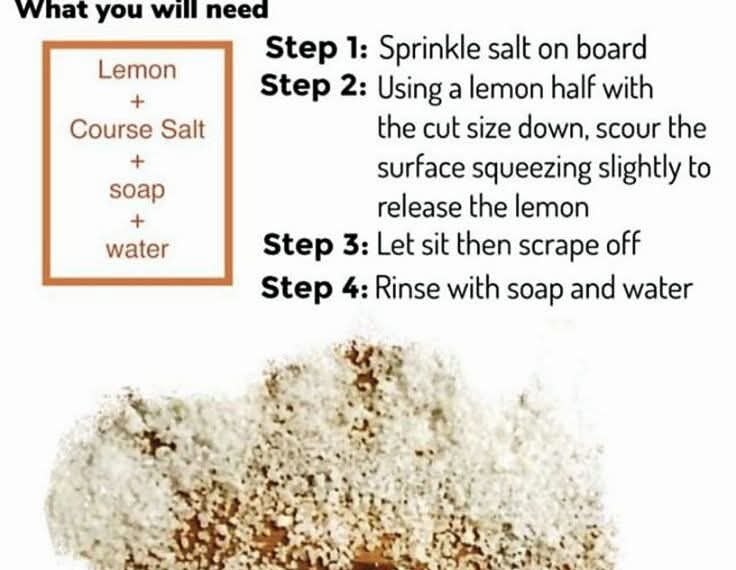
Salt & Lemon Method
- Sprinkle coarse salt over the board
- Scrub with half a lemon
- Let sit for 5 minutes
- Rinse and dry thoroughly
This removes stains, odors, and surface bacteria.
Disinfecting a Wooden Board
- Use white vinegar or 3% hydrogen peroxide
- Pour over the surface
- Let sit for 5 minutes
- Rinse and dry
Avoid bleach—it damages wood fibers.
Conditioning the Board (Once a Month)
- Rub in food-grade mineral oil or beeswax
- Let absorb overnight
- Wipe off excess
This prevents cracking and moisture absorption.
🧴 How to Clean a Plastic Cutting Board
Plastic boards are easier to sanitize but trap bacteria in knife grooves.
Daily Cleaning
- Wash with hot soapy water
- Scrub thoroughly
- Rinse well
Disinfecting Plastic Boards
- Use diluted bleach:
- 1 tablespoon bleach per gallon of water
- Soak for 1–2 minutes
- Rinse thoroughly
Plastic boards can usually go in the dishwasher—check manufacturer instructions.
❌ Common Cleaning Mistakes
- Soaking wooden boards
- Air-drying flat (traps moisture)
- Using harsh chemicals on wood
- Using one board for raw meat and produce
- Ignoring deep cleaning
🔄 When to Replace Your Cutting Board
Replace your board if:
- Deep grooves won’t clean properly
- Persistent odors remain
- Cracks or warping appear
- Mold spots develop
No cleaning method can fix severely damaged boards.
🧼 Extra Tips for Food Safety
- Use separate boards for raw meat and produce
- Label boards by food type
- Clean immediately after use
- Store boards upright with airflow
🌿 Final Thoughts
A clean cutting board is essential for a safe kitchen. With the right methods, you can keep your board fresh, odor-free, and long-lasting—whether it’s wood or plastic.
A few extra minutes of care can prevent contamination and protect your family’s health.