Family Garden Layout Guide 🥕
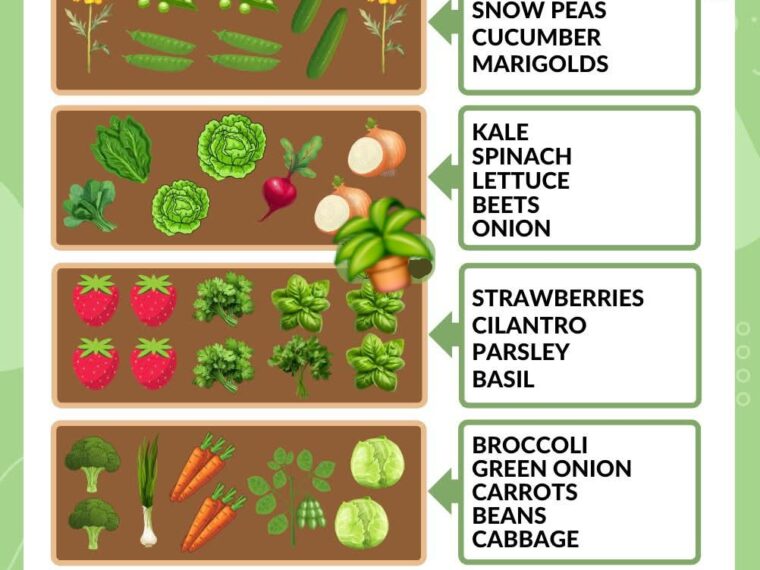
Planning a raised bed garden for four people means choosing high-yield crops that actually feed your family, not just random vegetables. This layout balances quick harvests like snap peas with staples like kale and onions you’ll eat all season. The strawberry and herb bed is smart because perennials don’t need replanting every year. Notice marigolds with the tomatoes and peppers—they actively repel aphids and whiteflies, not just decoration. Once those early peas finish, the same bed can grow a second crop of cucumbers or beans for continuous production.
Family Garden Layout Guide 🥕
How to Design a Raised Bed Garden That Truly Feeds a Family of Four
Planning a family garden is very different from planting a few random vegetables for fun. If your goal is to actually feed a family of four, every square foot matters. A smart garden layout focuses on high-yield crops, continuous harvests, and long-season staples—not just what looks nice on paper.
This raised bed layout guide shows how to balance fast harvests like snap peas, dependable staples such as kale and onions, and low-maintenance perennials like strawberries and herbs, all while maximizing space and reducing pests naturally.
🌱 Why Layout Matters in a Family Garden
Many beginner gardeners make the mistake of planting a little of everything. The result? Plenty of variety, but not enough food to make a real difference in meals.
A family garden layout should:
- Prioritize vegetables you eat every week
- Produce harvests across the entire season
- Allow for succession planting (one crop replacing another)
- Reduce labor and replanting whenever possible
With thoughtful planning, even a modest raised bed garden can supply fresh greens, vegetables, and herbs from early spring through fall.
🧩 The Raised Bed Strategy
This layout assumes multiple raised beds, each assigned a purpose rather than random planting.
Key principles:
- Fast crops + slow crops in rotation
- Vertical growers to save space
- Perennials separated from annual beds
- Companion planting for pest control
🌿 Bed 1: Early Producers & Successions (Snap Peas → Cucumbers or Beans)
Snap peas are one of the earliest crops to harvest and thrive in cool weather.
Why they work:
- Ready to harvest quickly
- Grow vertically, saving space
- Improve soil by fixing nitrogen
Once peas finish producing in early summer, don’t leave the bed empty.
Second Crop Options:
- Cucumbers
- Bush beans
- Pole beans
- Summer squash (if space allows)
👉 This single bed produces two harvests in one season, doubling its value.
🥬 Bed 2: Leafy Greens for Continuous Harvest (Kale & Friends)
Kale is a family-garden superstar.
Why kale belongs in every family layout:
- Harvestable for months
- Cold-hardy and heat-tolerant
- Highly nutritious and versatile
Pair kale with:
- Swiss chard
- Lettuce (early season)
- Spinach (spring and fall)
👉 Harvest outer leaves regularly and the plant keeps producing, feeding your family all season long.
🧅 Bed 3: Staples That Store Well (Onions & Garlic)
Not every crop needs constant harvesting.
Onions and garlic:
- Take up space quietly
- Require little maintenance
- Store for months after harvest
This bed ensures you’re growing ingredients you use daily, reducing grocery trips and costs.
🍅 Bed 4: Tomatoes & Peppers with Marigolds
This is where productivity meets pest control.
Why this combination works:
- Tomatoes and peppers love similar conditions
- Both are high-yield summer crops
- Marigolds actively repel:
- Aphids
- Whiteflies
- Nematodes
Marigolds are not just decorative—they play a real role in protecting your harvest.
👉 Fewer pests means healthier plants and higher yields without chemicals.
🍓 Bed 5: Strawberry & Herb Bed (Low Maintenance, High Reward)
This is one of the smartest design choices in a family garden.
Why keep perennials together:
- Strawberries return year after year
- Herbs don’t need constant replanting
- Less disturbance improves long-term productivity
Best herbs for a family garden:
- Rosemary
- Thyme
- Oregano
- Chives
- Mint (keep contained)
👉 This bed provides flavor and fruit with minimal effort, freeing time for other tasks.
🔄 Succession Planting: The Secret to Continuous Harvests
A productive family garden is never “done” after one harvest.
When one crop finishes:
- Replace peas with cucumbers or beans
- Follow spring lettuce with basil or dill
- Replant fall greens after summer crops fade
Succession planting ensures:
- No wasted space
- Steady food supply
- Higher total yield per bed
🧠 Planning for Real Meals, Not Just Gardening Fun
Ask yourself:
- What vegetables does my family eat every week?
- Which crops are expensive at the store?
- What grows well in my climate?
Focus your beds on those answers, not novelty plants that rarely make it to the table.
🌞 Final Thoughts
A family garden should be practical, productive, and sustainable.
By combining:
- Quick harvests like snap peas
- Long-season staples like kale and onions
- Perennials that don’t need yearly replanting
- Natural pest control with companion planting
- Smart succession planting
…you create a garden that truly supports your household, not just your hobby.
With the right layout, a raised bed garden can become a reliable food source your family enjoys all season long.