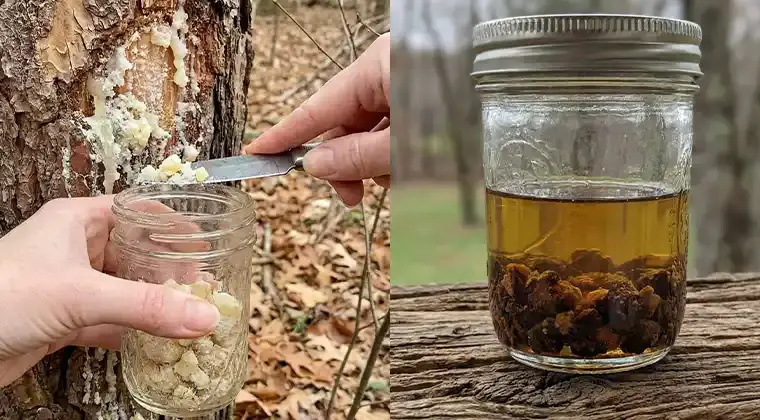
Steps:
- Freeze the resin for 1–2 hours (optional). This makes it less messy to handle.
- Set up a double boiler (low heat only). Resin is flammable at high heat—go slow.
- Add resin to a jar or small pot and warm gently until it melts.
- Strain while hot through cheesecloth/strainer into a clean container.
- Let it cool into a solid puck or thick paste.
Storage tip: Store cleaned resin in a glass jar, away from heat and sunlight.
Potential Benefits People Traditionally Associate With Pine Resin
These are commonly mentioned in traditional or homemade contexts, usually as topical or aromatic uses:
- Protective barrier on skin when used in salves
- Comfort for dry, cracked areas (hands, heels) in balm form
- Fresh, clearing aroma when gently warmed
- Deodorizing effect in homemade room blends
- Helps keep moisture out when used as a coating
- Soothing feel in massage balms (when diluted properly)
- Helps reduce friction (sticky-but-waxy balms for rough spots)
- Useful in “chest rub” style balms for scent and warmth (not a medicine)
- Insect-unfriendly smell in some outdoor applications
- Makes durable, long-lasting salves compared to plain oils
- Supports “protect and cover” first-aid style preparations (traditional use)
- Adds grip in survival-style tool handling (tiny amount, diluted)
- Makes excellent “working hands” balm for gardeners and builders
- Helps preserve wooden items as part of oil/resin blends
- Acts like natural “varnish glue” in crafts and repairs
Best Homemade Uses for Pine Resin (With Clear Instructions)
1) Pine Resin Healing-Style Salve (Classic Homemade Balm)
This is the most popular resin project.
Basic formula (by volume):
- 1 part cleaned pine resin
- 2–3 parts olive oil (or another stable oil)
- 1 part beeswax (adjust for firmness)
Steps:
- Melt resin gently in a double boiler.
- Add oil and stir until smooth.
- Strain again if needed.
- Add beeswax, melt, stir well.
- Pour into tins and cool.
Use: Dry skin, rough hands, cracked heels, “working skin” protection.
Note: Resin can irritate some people—patch test first.
2) Pine “Chest Balm” Style Rub (Aromatic)
Same salve base, but use more oil so it spreads easily.
Tip: Add a small amount of beeswax for a soft balm. Keep scent natural—pine resin is already strong.
3) Pine Resin-Infused Oil (Gentler Than Straight Resin)
If resin feels too intense, infused oil is a softer option.
Steps:
- Melt a small amount of cleaned resin with oil on very low heat.
- Keep it warm 30–60 minutes, stirring.
- Strain and store in a glass bottle.
Use: Massage oil base, balm base, or wood conditioning blends.
4) Natural Fire Starter “Pitch Sticks”
Resin is a legendary fire helper.
Easy method:
- Smear a little resin onto dry wood shavings, pine cones, or a cotton ball.
- Let it harden slightly.
- Store in a tin for camping.
Why it works: Resin burns hot and catches easily.
5) Pine Pitch Glue (Survival-Grade Adhesive)
A traditional “field glue” for simple repairs.
Basic concept:
- Resin + fine plant fiber/charcoal powder = tougher pitch
Steps:
- Melt cleaned resin.
- Stir in a pinch of powdered charcoal (from clean wood ash, finely crushed) to strengthen.
- Add a small amount of fibers (dry grass fibers or crushed bark fiber) for structure.
- Apply while warm, press pieces together, let harden.
Use: Emergency fixes for wood, tools, and outdoor repairs.
6) Waterproofing Thread and Cord
Resin can help protect natural cordage.
Steps:
- Warm a tiny amount of resin until tacky.
- Pull cord through it lightly.
- Let it set.
Use: Outdoor cord, simple craft projects, rustic stitching.
7) Wooden Tool Handle Grip Coating
A micro-layer can add tack and grip.
Steps:
- Mix resin with a little oil/wax to reduce stickiness.
- Rub a thin coat on a wooden handle and let it cure.
8) Homemade “Forest Incense”
For scent only—keep it ventilated.
Steps:
- Place a pea-sized piece of resin on a heat-safe charcoal disc (or a resin burner).
- Let it release aroma slowly.
Tip: A little goes a long way.
9) Pine Resin Furniture Polish (Small-Batch)
A simple wood-friendly blend.
Basic blend:
- Resin-infused oil + a little beeswax
Use: Rub into wood lightly, buff with cloth.
10) Protective Coating for Small Wood Crafts
Resin can act like a natural “sealant” when blended with oil/wax.
Idea: Coat handmade wooden spoons (display use), rustic ornaments, or tool accessories.
11) Boot and Gear Edge Waterproofing
Resin blends can help seal tiny seams on canvas or leather edges.
Method: Use a resin + beeswax blend, warmed and applied thinly.
Caution: Test first—some materials stain.
12) “Garden Hand Balm” for After Work
Gardeners love resin salves because they feel durable.
Use after washing hands, not before touching delicate plants (it can be sticky).
13) Emergency Splinter “Cover and Protect” Prep (Traditional-Style)
Historically, resin was used as a “covering” layer on small skin issues. If you do this, keep it simple:
- Clean skin thoroughly
- Use a very clean salve
- Patch test
- Discontinue if irritation happens
14) Scented Drawer Freshener (No Essential Oils Needed)
Put a tiny resin piece in a breathable sachet (cloth pouch).
It gives a gentle forest scent.
15) Sticky Trap Uses (Caution)
Resin is extremely sticky and can trap small insects. If used, do it thoughtfully and avoid harming beneficial insects.
Common Mistakes to Avoid
- Overheating resin (smoke + fire risk). Always low heat, preferably double boiler.
- Using raw resin without cleaning (debris and contaminants).
- Collecting near pollution sources (roads, industrial edges).
- Assuming “natural = harmless.” Resin can irritate skin or trigger allergies.
Important Safety Notes and Disclaimer
Pine resin is for external and practical household use. Some people are sensitive to resin and related plant compounds. Always patch test any skin product (inner forearm, 24 hours). Do not apply resin preparations to deep wounds, severe burns, eyes, or mucous membranes. Avoid use if you have known allergies to pine, resin, turpentine-like products, or strong fragrances. If you are pregnant, nursing, have asthma triggered by scents, or are using it on children, use extra caution and consult a qualified professional. This article is for educational purposes and is not medical advice.
Inspired by this? Share the article with your friends!