Seed Starting Schedule 🌱📆
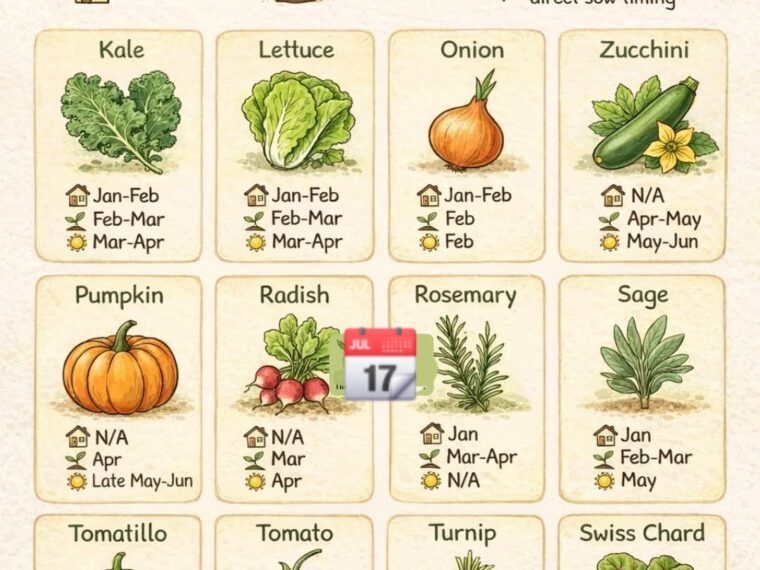
This calendar prevents the biggest mistake: starting everything at once in March and ending up with some plants ready too early and others needing more time.
Kale, lettuce, and onions can start indoors as early as January because they’re cold-hardy and slow-growing.
omatoes and tomatillos need January to March starts—any earlier and they outgrow their pots before transplant time. Herbs like rosemary and sage can start in January for strong plants by spring.
Radishes and turnips go straight outside in March or April—they grow fast and hate transplanting.
Zucchini gets direct-sown in May because it grows quickly and doesn’t like root disturbance!
Seed Starting Schedule 🌱📆
How a Simple Calendar Prevents the Biggest Gardening Mistake
Every spring, eager gardeners make the same costly mistake: starting all their seeds at once in March. The excitement of the new growing season is understandable—but this approach often leads to weak, leggy plants, overcrowded trays, and seedlings that are either ready far too early or still immature when it’s time to plant outdoors.
A seed starting schedule solves this problem. By following a calendar based on each plant’s growth needs, you give every seed the right amount of time to develop—no rushing, no delays, and far better results.
🌿 Why Starting Everything at Once Doesn’t Work
Not all plants grow at the same speed. Some crops mature quickly and hate being confined in containers, while others need weeks—or even months—of indoor growth before they are strong enough to move outside.
When seeds are started too early:
- Plants become tall, weak, and leggy
- Roots get crowded and stressed
- Transplant shock becomes more severe
- You may need to up-pot multiple times
When seeds are started too late:
- Plants may never reach full maturity
- Harvests are delayed or reduced
- Short growing seasons become a challenge
A proper seed starting calendar prevents both extremes.
📅 What Is a Seed Starting Schedule?
A seed starting schedule is a plant-by-plant calendar that tells you:
- When to start seeds indoors
- When to sow seeds directly outdoors
- When to transplant seedlings into the garden
Instead of using a fixed date like “March 1,” schedules are based on weeks before your last expected frost date—making them adaptable to different climates.
🧭 How to Use a Seed Starting Calendar
Step 1: Know Your Last Frost Date
Your local last frost date is the anchor for your entire schedule. All planting times are counted backward from this date.
Step 2: Group Plants by Growth Speed
Plants fall into three main categories:
🌱 Fast-Growing Plants (Start Late)
These plants grow quickly and don’t like staying in pots too long.
Start 2–4 weeks before last frost
- Lettuce
- Spinach
- Arugula
- Cucumbers
- Zucchini
- Squash
- Beans
👉 Many of these can also be direct-sown outdoors once soil temperatures are suitable.
🌿 Medium-Speed Plants (Start Mid-Season)
These plants benefit from an indoor head start but don’t need months.
Start 4–6 weeks before last frost
- Tomatoes
- Peppers
- Basil
- Cabbage
- Broccoli
- Cauliflower
- Kale
👉 These are the most commonly mistimed crops—too early and they outgrow their pots, too late and yields suffer.
🌼 Slow-Growing Plants (Start Early)
These crops require patience and early planning.
Start 8–12 weeks before last frost
- Onions (from seed)
- Leeks
- Celery
- Artichokes
- Perennial herbs (thyme, rosemary, oregano)
- Many flowers (petunias, snapdragons)
👉 These plants develop slowly but reward you with stronger growth later.
🚫 The Biggest Mistake This Calendar Prevents
Without a schedule, gardeners often:
- Run out of space under grow lights
- End up transplanting too early due to overcrowding
- Lose seedlings to stress, pests, or cold snaps
A staggered schedule keeps:
- Seedlings manageable
- Growth balanced
- Transplants strong and healthy
🌞 Matching Seedlings to Outdoor Conditions
Timing is not just about size—it’s about weather readiness.
A proper seed starting calendar ensures:
- Warm-season crops aren’t planted into cold soil
- Cool-season crops aren’t exposed to heat stress
- Seedlings are hardened off at the right time
Healthy timing equals healthy harvests.
🧠 Pro Tips for Seed-Starting Success
- Label everything with dates and plant names
- Use a notebook or printable calendar to track sowing times
- Start fewer plants than you think—you can always sow more later
- Adjust your schedule each year based on experience
🌻 Final Thoughts
Gardening success isn’t about doing everything early—it’s about doing everything at the right time.
A seed starting schedule:
- Reduces waste
- Prevents weak plants
- Maximizes space and light
- Leads to stronger gardens and better harvests
Instead of rushing into March with every seed packet open, take a step back, follow a calendar, and let each plant grow at its own pace. Your garden will thank you.