Stop Throwing Out Those Pine Cones!
Nature’s Free Garden Helpers You’re Overlooking
Most of us see pine cones as yard trash — something to rake up, bag, and forget. But what if those spiky little cones scattered under your trees were actually one of the most useful free gardening materials you’ll ever find?
When you look closer, pine cones turn out to be excellent for mulch, drainage, weed control, and even frost protection. And the best part? They’re not a modern gardening hack. Pine trees have been refining this design for over 300 million years.
Your garden can absolutely benefit from that kind of experience.
Why Pine Cones Are a Hidden Garden Treasure
Pine cones are:
- Natural
- Biodegradable
- Readily available
- Designed to interact with moisture, temperature, and soil
Their structure isn’t random. Those overlapping scales open and close in response to humidity, protecting seeds and regulating airflow. That same structure makes them incredibly useful in the garden.
1. Pine Cones as Mulch 🌲
Pine cones make an excellent coarse mulch, especially around trees, shrubs, and perennial beds.
Benefits:
- Reduce moisture loss from soil
- Protect roots from temperature swings
- Prevent soil compaction
- Improve soil structure as they slowly break down
They’re especially good in areas where finer mulch blows away or washes off easily.
How to use:
Spread whole pine cones or broken pieces in a single layer around plants, keeping them a few centimeters away from stems.
2. Natural Weed Control 🚫🌿
Pine cones create a physical barrier that makes it difficult for weeds to establish themselves.
Unlike loose mulch:
- They don’t mat down tightly
- They block sunlight
- They make it harder for weeds to push through
This works particularly well on garden paths, around shrubs, and in decorative beds.
3. Excellent Drainage Material 💧
Those air gaps between pine cone scales are perfect for drainage and aeration.
Use pine cones for:
- The bottom layer of raised beds
- Large planters and containers
- Garden beds with heavy or compacted soil
They help excess water drain away while still holding enough moisture to benefit plant roots.
Bonus: As they decompose, they add organic matter to the soil.
4. Frost Protection for Plants ❄️
Pine cones trap air — and trapped air is insulation.
Used correctly, they can:
- Protect shallow roots from frost
- Reduce freeze–thaw damage
- Help overwinter perennials
Pile them loosely around the base of plants before a frost. They act like a breathable blanket, unlike plastic covers that can trap moisture and cause rot.
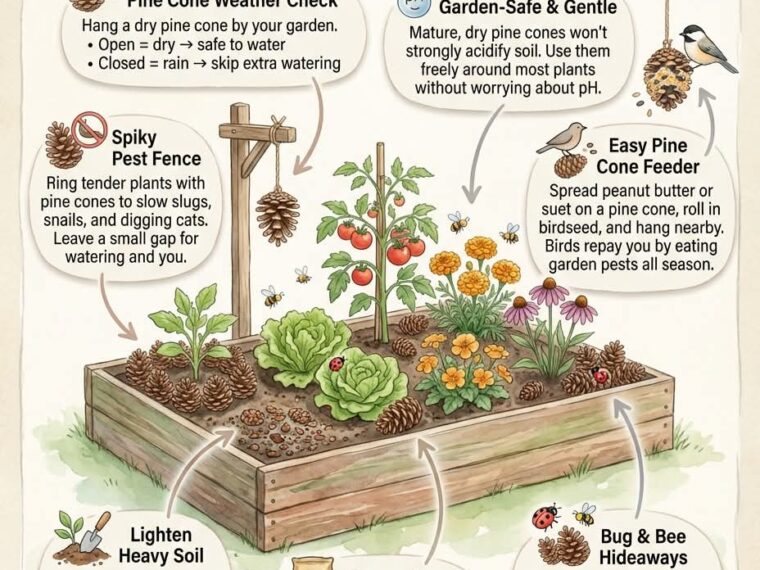
5. Slug and Pest Deterrent 🐌
Slugs and snails prefer smooth, damp surfaces.
Pine cones are:
- Sharp
- Uneven
- Uncomfortable to crawl over
While not a perfect solution, they can help discourage pests when placed around vulnerable plants.
6. Soil Health Over Time 🌱
Pine cones break down slowly, which is a good thing.
As they decompose, they:
- Improve soil structure
- Encourage beneficial microbes
- Add carbon-rich organic matter
Contrary to popular belief, pine cones do not significantly acidify soil in normal garden use.
How to Prepare Pine Cones for the Garden
- Collect dry pine cones from clean areas
- Shake or brush off dirt and insects
- Let them dry fully
- Use whole or crush slightly depending on purpose
No chemicals. No processing. No cost.
Where Pine Cones Work Best
- Around trees and shrubs
- Raised beds
- Container gardens
- Garden borders and paths
- Cold-climate gardens
They’re especially useful in low-maintenance or natural-style gardens.
Why This Works So Well
Pine cones evolved to:
- Protect seeds
- Manage moisture
- Respond to temperature
- Interact with soil and air
That’s 300 million years of natural engineering — and you’re getting it for free.
Final Thoughts
What looks like yard waste is actually one of nature’s most underrated gardening tools.
Before you throw pine cones away, consider what they can do:
- Mulch
- Drainage
- Weed suppression
- Frost protection
- Soil improvement
Sometimes the best garden solutions aren’t on store shelves — they’re already under your feet.
Nature did the design work.
All you have to do is use it.