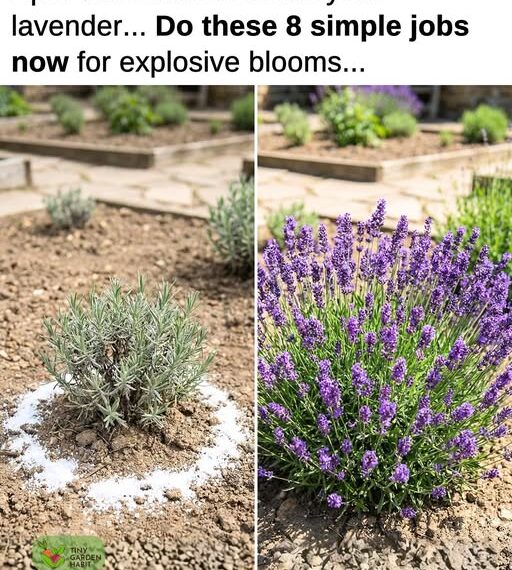
Allow me to spike your interest with a few April chores that set your lavender up for its best fragrance yet. Your garden deserves the best, so grab the season by the roots and make it count! Playing for a tie with the neighborhood is simply not an option.
8 In-violet-able Rules

Here’s a simple roadmap to help your lavender thrive. A legendary bloom doesn’t happen by accident.
Quick note: This guide is geared toward USDA Zones 5-9. If your garden is still buried under snow… yeah, this can wait a little.
1: Debris Clearing

I start by clearing away the soggy winter layers sitting around the base of the plant. Remove any moldy mulch and matted leaves so the crown is exposed to good airflow.
Damp debris creates the perfect miserable environment for fungal problems, and your lavender has no interest in hosting a rot-filled pity party.
A clean surface also helps the soil temperature to rise faster in spring, encouraging new growth as the plant comes out of dormancy.
2: Soil Aeration

Once the base is clear of winter trash, give the roots a bit of breathing room. I break up soil that has hardened over winter with a hand fork.
This helps water soak in instead of running off and improves airflow around the roots. Compacted soil limits oxygen and can slow down the plant’s ability to put on new growth in spring.
Loosening the soil can also improve drainage and make it easier for roots to expand before the summer heat sets in.
3: Drainage Audit

Even well-aerated soil won’t help if your plant is sitting in waterlogged conditions.
Check for drainage issues and clear any compacted spots, or mix in coarse sand or grit if needed to keep moisture moving. If water sits for too long, roots will rot and die.
In the garden, check the slope of the land. Ideally, you want to see whether water naturally flows away from the base of the plant rather than collect around it.
In case your planting area sits in a low spot, try mounding the soil slightly. Raising the lavender a few inches above the surrounding ground helps excess water drain away more easily.
If you’re growing lavender in containers, drainage becomes even more important. We wrote a full guide on growing lavender in pots successfully that covers exactly what to watch out for.
4: pH-reshly Balanced

Now that you’ve opened up the soil and fixed draining issues, checking whether the roots can actually access nutrients is the next step.
Soil that’s too acidic is a silent killer. It can limit nutrient availability and slow lavender’s growth. Lavender prefers slightly alkaline soil, and I aim for a reading between 6.5 to 7.5.
Rainwater (which has a pH of around 5.6) and decomposing organic matter can gradually make soil more acidic over time.
Quick tip: If needed, garden lime can help raise the pH, becoming your best defensive tool. Apply it based on a soil test rather than guessing!
And if you’re wondering about feeding your plants, we also explain when to fertilize lavender for the best blooms and how to avoid overdoing it.
5: Removing Weeds

Nobody likes uninvited guests stealing all the nutrients right when the plant is starting its active growth phase. I remove any grass and stubborn weeds around the base that compete with my lavender.
Every nutrient these invaders take can reduce healthy growth and future blooms. Keeping the area clear helps your lavender focus all its energy on strong development.
6: Pruning Tips

You can shape your lavender by lightly pinching or trimming the soft green tips of active stems. This trick encourages the plant to branch out and produce a fuller, more rounded shape.
I focus on cutting only the flexible green growth, since lavender rarely regrows well from old woody stems.
Regular light pruning can encourage more stems, which often leads to more flower spikes. So you’re basically doubling the blooms by forcing the plant to branch out at every single cut.
7: Sun Optimization

I realized pruning the plant is only half the battle if a neighboring shrub throws shade on my work. Trim back any overhanging branches from nearby plants to ensure your lavender gets at least six hours of direct sunlight each day.
This plant depends on strong sunlight. A shadow just creates a roadblock on the path to greatness.
If the sun cannot reach the foliage, it leads to weaker plants and reduced blooms. Clearing anything that blocks the light helps the plant stay compact, vigorous, and fragrant.
8: Gravel Mulching

Swap damp wood chips for light-colored gravel or small stones. If my physics classes taught me anything, it’s that pale gravel reflects heat and helps keep the base of the plant warm and dry.
As it warms up around the plant, you may notice the fragrance is a bit stronger when you walk past, especially on sunny days.
Plus, stone keeps things cleaner. Muddy water is less likely to splash soil onto the foliage during heavy rain, which can help reduce potential disease issues. It also creates a warm and dry spot that makes your garden feel a lot more like the Mediterranean.
Deep Purple: Live at Your Garden

Gardening sometimes feels like a series of controlled experiments where the subjects occasionally fail just to spite you.
And lavender is a stubborn partner, demanding specific conditions before it agrees to flourish. Yet, the silver foliage and the fragrant spikes will justify your meticulous effort. Err and love, gardeners, love and err. Although you will err a lot less with these essential lavender tasks.