
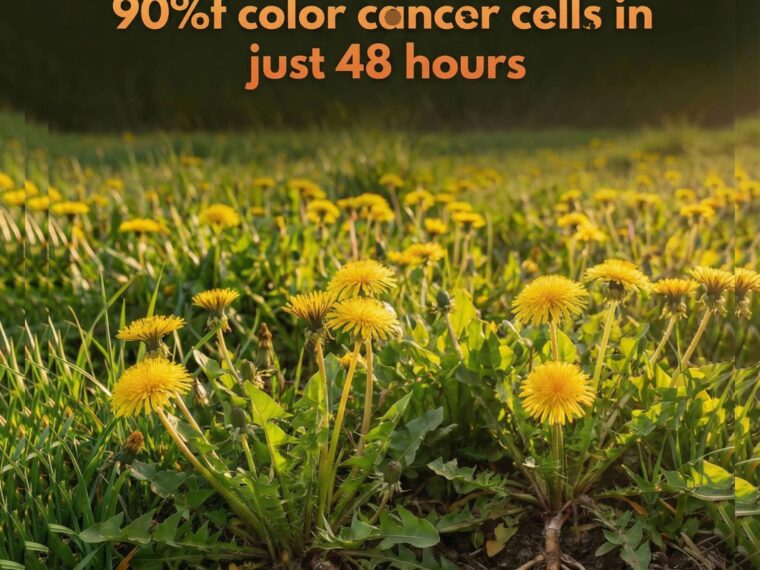
Research reveals that common plants hold profound potential for holistic health.
For centuries, Indigenous healers have recognized that many plants often dismissed as mere weeds are actually potent natural remedies. This deep understanding was forged through generations of careful observation and a profound respect for the delicate balance of the natural world.
Long before the advent of modern pharmacology, these practitioners understood how specific flora interacted with human physiology, treating wellness not just as the absence of disease, but as a state of environmental and spiritual harmony.
Today, contemporary science is finally catching up, with studies exploring the therapeutic properties of dandelion root and other traditional botanicals.
Case in point, based on laboratory studies, specifically research from the University of Windsor in Canada, dandelion root extract (DRE) has been found to kill over 90% to 95% of colon cancer cells in lab tests (in vitro) within 48 hours.
It is important to note that these findings are in the early stages, primarily in petri dishes and animal models, and are not a proven cure for cancer in humans. However, the research highlights that the extract works via a multi-pathway attack, activating both caspase-dependent and independent death signaling.
Rather than viewing traditional knowledge and empirical research as conflicting ideologies, a growing movement advocates for their integration. By combining the rigorous data of the lab with the ethical responsibility and cultural context of Indigenous teachings, we can unlock a more comprehensive approach to global health that honors both the plant and the patient.
source:
Dandelion root extract affects colorectal cancer proliferation and survival through the activation of multiple death signalling pathways. Oncotarget.
Kimmerer, R. W. (2013). Braiding Sweetgrass: Indigenous Wisdom, Scientific Knowledge and the Teachings of Plants. Milkweed Editions.