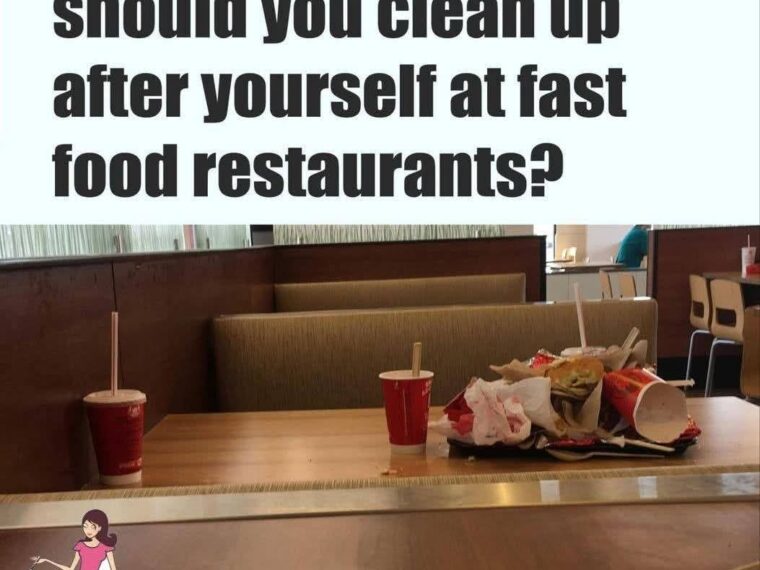
Walk into any fast-food restaurant during a busy hour and you’ll see two kinds of tables: ones neatly cleared, and others covered in trays, wrappers, spilled drinks, and half-eaten food. This raises a simple but surprisingly debated question: should customers clean up after themselves at fast-food restaurants?
The answer isn’t just about rules—it’s about courtesy, responsibility, and how modern fast-food spaces are designed.
Understanding the Fast-Food Model
Fast-food restaurants operate differently from full-service restaurants. You order at the counter or kiosk, carry your own tray, fill your own drink, and choose your seat. The experience is built around self-service.
Because of this model, clearing your table afterward is generally considered part of the customer’s role. Staff members are there to prepare food, manage orders, and keep the restaurant running—not to clean up avoidable messes left behind by capable customers.
Why Cleaning Up After Yourself Matters
1. It’s Basic Courtesy
Fast-food employees often work long shifts under pressure, dealing with high volumes of customers. Leaving a mess behind sends the message that their time and effort don’t matter. Throwing away your trash is a simple way to show respect.
2. It Keeps the Space Pleasant for Everyone
A messy table doesn’t just affect staff—it affects the next customer. Clean dining areas make restaurants more welcoming, hygienic, and comfortable, especially during busy hours.
3. It’s Usually Expected
Most fast-food restaurants provide trash bins, tray return stations, and clear signage. These aren’t decorations—they exist because customers are expected to use them.
4. It Teaches Responsibility
For families, cleaning up is an opportunity to teach children good public behavior. Learning to leave shared spaces tidy builds habits that carry into schools, workplaces, and communities.
Common Arguments Against Cleaning Up — And Why They Fall Short
“They get paid to clean.”
Yes, staff are paid to maintain the restaurant—but that doesn’t mean customers should make their jobs harder. There’s a difference between routine cleaning and dealing with careless messes.
“It’s not my job.”
In fast-food environments, clearing your tray is part of the system. You’re not being asked to mop floors or sanitize tables—just to take responsibility for your own waste.
“No one told me to.”
Many places don’t need to say it explicitly because it’s a widely understood norm. Trash bins and tray stations are the instruction.
When It’s Reasonable Not to Clean Up
There are situations where it’s perfectly understandable not to fully clear your table:
- You have a disability or mobility issue
- You’re pregnant or carrying a small child
- You feel unwell or injured
- Staff specifically ask customers to leave trays
In these cases, even a small effort—like stacking trash neatly—can still make a difference.
What Cleaning Up Actually Means (and Doesn’t)
What you should do:
- Throw away wrappers, cups, and leftover food
- Return trays if there’s a designated area
- Wipe obvious spills if napkins are available
What you’re NOT expected to do:
- Scrub tables
- Mop floors
- Disinfect surfaces
- Replace staff duties
Cleaning up after yourself is about responsibility, not labor.
A Cultural Perspective
In many countries, especially in parts of Asia and Northern Europe, cleaning up after yourself is non-negotiable. Leaving a mess is seen as disrespectful to both staff and other customers.
While norms vary by culture, global trends increasingly favor shared responsibility in public spaces—especially in self-service environments.
The Bigger Picture
Small actions reveal big attitudes. Clearing your table shows:
- Awareness of others
- Respect for workers
- Consideration for shared spaces
It’s not about perfection—it’s about decency.
The Bottom Line
Yes, you should clean up after yourself at a fast-food restaurant when you’re able to. It’s polite, practical, and aligned with how these places are designed to operate. You don’t need to go above and beyond—just don’t leave a mess behind.
A few seconds of effort can make someone else’s day a little easier. And that’s always worth it.