Stubborn Water Spots on Glass? Here’s How to Remove Them (Before You Replace the Glass!)
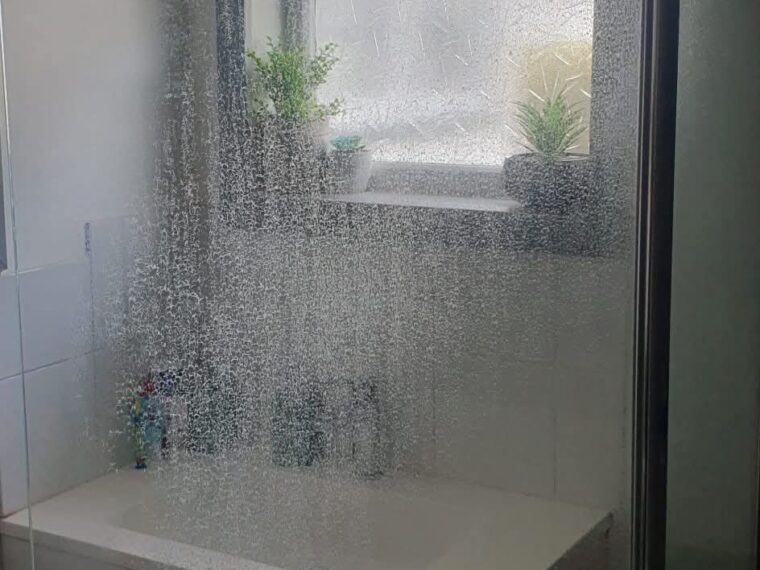
You moved into your new home, and everything felt fresh — until you noticed the cloudy, crusty water spots on the shower glass. You’ve tried sprays, wipes, vinegar, baking soda, even commercial water spot removers. You’ve scrubbed. A lot. It improved… but it’s still there.
Before you replace the glass (and your patience), here’s what’s really happening — and how to fix it properly.
What Those “Water Spots” Actually Are
Most stubborn shower spots aren’t just water. They’re:
- Hard water mineral deposits (calcium and magnesium)
- Soap scum buildup
- Sometimes light surface etching from long-term neglect
If the house had hard water for years, minerals can bond tightly to the glass surface and won’t come off with basic cleaners.
The key is using the right level of abrasion — safely.
Step-by-Step: How to Remove Severe Hard Water Stains
Step 1: Deep Vinegar Soak (But Done Correctly)
Regular spraying isn’t enough.
You’ll need:
- White vinegar
- Paper towels
- Plastic wrap
How:
- Warm the vinegar (not boiling — just hot tap temperature).
- Soak paper towels in vinegar.
- Press them directly onto the glass.
- Cover with plastic wrap to prevent drying.
- Leave for 1–2 hours.
This softens thick mineral buildup.
Wipe and rinse.
If it’s still cloudy, move to Step 2.
Step 2: The Game-Changer — Razor Blade Scraping
Yes — safely done, this works incredibly well.
You’ll need:
- NEW single-edge razor blade
- Spray bottle with water + a drop of dish soap
Important:
Only use on flat, non-coated glass. Do NOT use on textured or coated glass.
How:
- Spray glass generously (it must stay wet).
- Hold razor at a 45-degree angle.
- Gently scrape in one direction.
- Wipe clean and repeat.
You’re removing mineral buildup mechanically.
If deposits come off in chalky flakes — that’s good.
Step 3: Use a Cerium Oxide Glass Polish (For Severe Cases)
If stains remain after scraping, they may be lightly etched into the surface.
Cerium oxide (glass polishing compound) can remove shallow etching.
How:
- Apply with a microfiber cloth or polishing pad.
- Rub in circular motions.
- Buff and rinse.
This step restores clarity when nothing else works.
Step 4: When It’s Actually Etched (The Hard Truth)
If:
- The surface feels smooth
- Nothing scrapes off
- It still looks permanently cloudy
It may be true glass etching.
Etching happens when minerals sit too long and chemically damage the surface.
At that point:
- Polishing may reduce it
- Full clarity may not return
- Replacement is the only perfect fix
But many cases are just heavy buildup — not permanent damage.
Prevention (So This Never Happens Again)
Once restored:
1. Squeegee After Every Shower
Takes 20 seconds. Prevents 90% of buildup.
2. Weekly Quick Spray
Mix:
- 1 cup water
- 1 cup vinegar
- 1 teaspoon dish soap
Spray, wait 5 minutes, rinse.
3. Consider a Water Softener
If you have very hard water, this is a long-term solution.
What NOT to Use
Avoid:
- Steel wool
- Magic erasers on coated glass
- Harsh abrasive powders
- Dry scraping
These can scratch permanently.
Final Thoughts
If you’ve already tried vinegar and store-bought removers without success, the next step is usually:
👉 Mechanical removal (razor blade)
👉 Or glass polishing compound
Replacing the glass is rarely necessary unless it’s deeply etched.
Most homeowners think it’s permanent — but in many cases, it’s just years of buildup that needs the right approach.