Some plants grow measurably better when their roots share soil. The mechanisms range from nitrogen exchange to chemical signaling, but the result is the same — healthier growth, fewer problems, bigger yields.
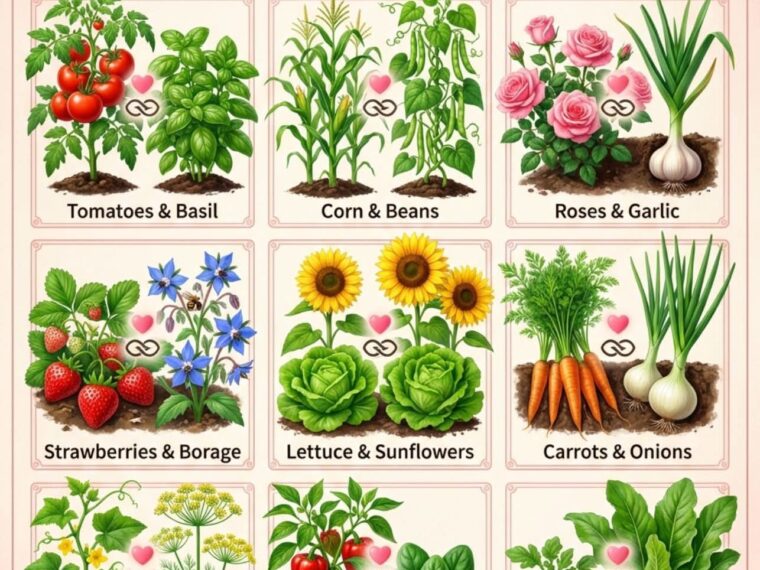
- Tomatoes & Basil — basil increases tomato yield by up to 20 percent through volatile compound interaction
- Corn & Beans — beans fix atmospheric nitrogen directly into soil that corn feeds on
- Roses & Garlic — garlic’s sulfur compounds reduce black spot fungal infection on rose foliage
- Strawberries & Borage — borage attracts pollinators that increase strawberry fruit set by 30 percent
- Lettuce & Tall Sunflowers — sunflowers provide afternoon shade that prevents lettuce from bolting 2 weeks longer
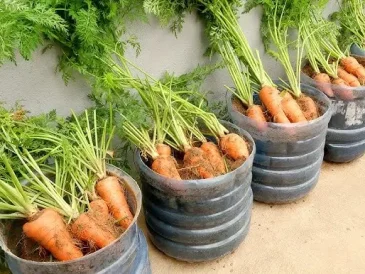
- Carrots & Onions — onion scent confuses carrot rust fly, reducing larval damage by up to 75 percent
- Cucumbers & Dill — dill attracts predatory insects that consume cucumber pests
- Peppers & Spinach — spinach acts as living mulch, keeping pepper root zone cool and moist
- Potatoes & Horseradish — one horseradish plant per potato row repels Colorado potato beetles
The best gardens are not collections of individual plants. They are communities.