
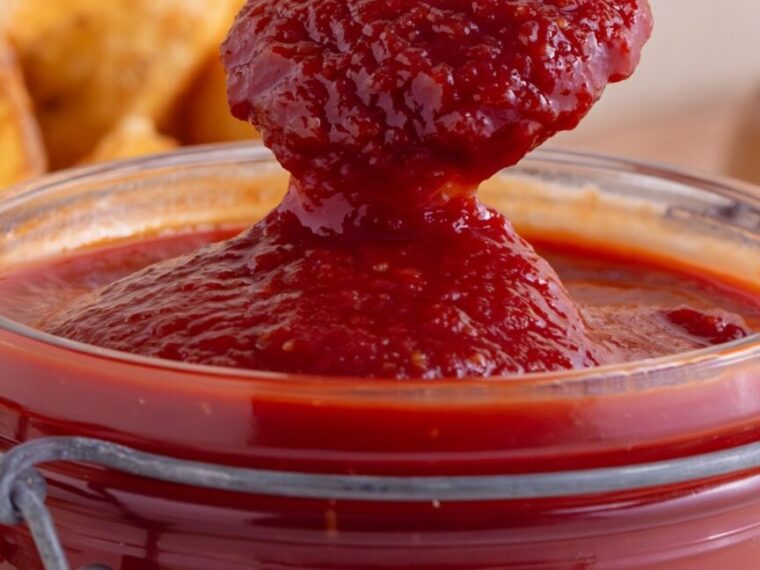
Growing up Persian, we put ketchup on EVERYTHING. Pizza, lasagna, sandwiches, you name it. So when I moved into my own apartment and started avoiding processed foods, I knew I had to crack the code on homemade ketchup that actually tasted good.
And here’s what I discovered: making your own ketchup isn’t complicated, doesn’t require special equipment, and takes about the same amount of time as running to the store. This recipe uses 7 simple ingredients, gets the consistency RIGHT (no watery mess!), and tastes fresher than anything you’ll find in a bottle.
I BETTER NOT CATCH YOU buying ketchup loaded with high fructose corn syrup when you can whip up this naturally sweetened version in 20 minutes!
The Health Benefits You’re Actually Getting
Here’s something most people don’t know about ketchup: it’s actually one of the best dietary sources of lycopene, a powerful antioxidant.
Research published in the National Institutes of Health found that lycopene in tomatoes is known to lower the risk of chronic diseases, such as diabetes and cardiovascular disease. When you make ketchup at home, you’re getting MORE of these beneficial compounds because you’re not diluting them with fillers and preservatives.
I’m not saying ketchup is a health food, but when you’re going to use it anyway, doesn’t it make sense to maximize the benefits and minimize the junk?
Why This Homemade Ketchup Recipe Works
Let me tell you why this recipe has become a staple in my kitchen:
It’s QUICK. Start to finish, you’re looking at 20 to 25 minutes. Probably faster than going to the grocery store.
Naturally sweetened. I use maple syrup instead of refined sugar or corn syrup. You get that perfect balance of sweet and tangy without the processed stuff.
Simple ingredients. Seven pantry staples. No tomato paste hunting or specialty spices required.
Perfect consistency every time. I’m going to teach you the exact method so you never end up with watery or clumpy ketchup (the biggest complaint I see with homemade versions).
Customizable. Want it spicier? Smokier? More tangy? You control every element.
Plus, when you make condiments from scratch, you know exactly what’s going into your food. If you love the DIY condiment approach, my homemade butter is another game-changer.
Tomato Puree (2 cups): The base of your ketchup. Tomato puree gives you smooth texture without needing to blend anything. I prefer it over tomato paste because it’s already the right consistency.
Vinegar (½ cup): This is what gives ketchup that signature tang. White vinegar creates classic ketchup flavor, but apple cider vinegar adds a slightly sweeter, more complex taste. Both work beautifully.
Maple Syrup (¼ cup): Your natural sweetener. Maple syrup provides depth that regular sugar can’t match, plus it keeps this recipe refined sugar-free (aside from the tiny bit we add for balance).
Sugar (1 tsp): Just a touch to round out the sweetness. Trust me, the combination of maple syrup and this small amount creates the perfect flavor.
Salt (1 tsp): Enhances all the other flavors and helps preserve your ketchup.
Garlic Powder (1 tsp): Adds savory depth without overpowering the tomato flavor.
Onion Powder (1 tsp): Works with the garlic powder to create that classic ketchup taste.
My Pro Tip: Use fresh garlic powder and onion powder if you have them. Old spices lose their potency and can make your ketchup taste flat.
Step-by-Step Instructions
Let me walk you through exactly how to make ketchup that comes out perfect every single time.
Step 1: Combine All Ingredients
In a medium saucepan, combine 2 cups tomato puree, ½ cup vinegar, ¼ cup maple syrup, 1 tsp sugar, 1 tsp salt, 1 tsp garlic powder, and 1 tsp onion powder. Whisk everything together until well combined and you don’t see any clumps of spices floating around.
The mixture will look thin at this point. That’s completely normal.
Step 2: Simmer and Reduce
Bring the mixture to a gentle simmer over medium heat. Once you see small bubbles forming around the edges, reduce the heat slightly to maintain a steady, low bubble.
Here’s where I learned the hard way: COVER YOUR POT with the lid slightly tilted to allow steam to escape. I once forgot this step and ended up with tomato splatter all over my stovetop. Not fun to clean.
Simmer uncovered (or with that tilted lid) for 15 to 20 minutes, stirring occasionally to prevent sticking. You’re looking for the ketchup to reduce by about one quarter to one half of its original volume.
My Pro Tip: Set a timer for 5-minute intervals to remind yourself to stir. This prevents burning on the bottom of the pan.

Step 3: Test for Doneness
Here’s the trick I use: dip a spoon into the ketchup and turn it horizontally. The ketchup should coat the back of the spoon and slowly drip off rather than running right off. If it’s still too thin, keep simmering for another 5 minutes and test again.
The ketchup will thicken MORE as it cools, so don’t overdo it. Slightly thinner than you want is perfect.

Step 4: Cool and Store
Remove from heat and transfer the ketchup to a clean jar or airtight container. Let it cool to room temperature, then refrigerate for at least 1 hour before using.
This cooling and resting time is ESSENTIAL. The flavors need time to meld together, and the ketchup continues to thicken in the fridge.

Getting the Consistency RIGHT (This Is KEY!)
Let’s talk about the NUMBER ONE issue people have with homemade ketchup: getting the texture right.
If your ketchup is too thin:
Keep simmering. Most “watery ketchup” problems happen because people don’t reduce it enough. Give it another 5 minutes and test again with the spoon method I mentioned above.
Remember, it thickens as it cools. What looks slightly thin in the pot will be perfect after refrigeration.
If your ketchup is too thick:
Thin it out by whisking in 1 tablespoon of water or vinegar at a time until you reach your preferred consistency. I prefer using vinegar because it maintains that tangy flavor profile.
The texture won’t be identical to store-bought:
This homemade ketchup has a slightly more textured, less smooth consistency than Heinz. That’s because commercial ketchup goes through industrial processing and often contains additives that create that ultra-smooth texture.
But here’s the thing: once you taste this fresher, more flavorful version, that super-processed smoothness won’t matter anymore.
My Pro Tip: If you absolutely must have silky-smooth ketchup, blend it with an immersion blender after cooking. I personally love the slightly grainy texture, but you do you!
Your Ketchup Won’t Taste Like Heinz (And Why That’s BETTER)

I need to be honest with you: if you’re expecting an exact Heinz replica, this isn’t it.
Homemade ketchup tastes RICHER. More tomatoey. The maple syrup adds complexity that high fructose corn syrup never could. The spices are fresher and more pronounced.
It’s like comparing homemade Quick Hamburger Buns to store-bought burger buns. Sure, they’re different, but once you taste the real deal, there’s no going back.
The best part? You can adjust this recipe to YOUR taste preferences. Want it sweeter? Add another tablespoon of maple syrup. More tangy? Increase the vinegar slightly. That’s the beauty of making your own ketchup.
Flavor Variations to Try
TO CONTINUE READING THE ARTICLE PLEASE SEE PAGE 2


