
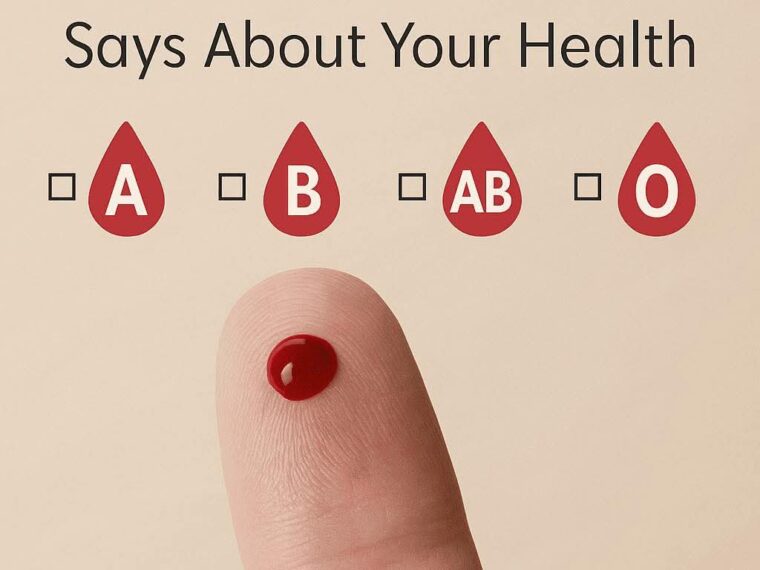
Your blood type is more than just a label used for transfusions — it’s a biological signature that can influence various aspects of your health. Blood types (A, B, AB, and O) are determined by specific molecules called antigens on the surface of red blood cells. These antigens interact with your immune system, and research suggests that they may play a role in disease susceptibility, cardiovascular health, and even your body’s response to infections.
While your blood type doesn’t determine your destiny, it can offer insight into how your body might react to certain conditions or medical risks.
Understanding Blood Types and the ABO System
The ABO blood group system was first discovered by Karl Landsteiner in 1901. It classifies blood based on the presence or absence of A and B antigens on red blood cells:
- Type A: Has A antigens and anti-B antibodies.
- Type B: Has B antigens and anti-A antibodies.
- Type AB: Has both A and B antigens, and no antibodies — the “universal recipient.”
Type O: Has no A or B antigens, but both anti-A and anti-B antibodies — the “universal donor.”
These antigens are not only important for transfusions but also play a role in how your immune system identifies and reacts to foreign substances.
How Blood Type Affects Disease Risk
1. Heart Disease
Studies have shown that non-O blood types (A, B, and AB) may have a slightly higher risk of heart disease. This is likely due to higher levels of a blood-clotting protein called von Willebrand factor (vWF) and Factor VIII, which can increase the risk of thrombosis.
2. Cancer Risk
Research indicates that people with blood type A may be more prone to certain cancers, such as stomach and pancreatic cancer, possibly due to differences in immune response and how Helicobacter pylori bacteria attach to stomach lining cells.
3. Infection Susceptibility
People with type O blood may have some resistance to severe forms of malaria, while type A individuals could be more susceptible to certain viral infections like smallpox or norovirus, based on how pathogens interact with blood group antigens.
Blood Type and Cardiovascular Health
Blood group O individuals tend to have a lower risk of cardiovascular disease due to reduced clotting factors and lower cholesterol levels. Conversely, people with types A and AB may face higher cholesterol and blood pressure levels, although lifestyle and genetics play a much larger role than blood type alone.
A 2012 study in Arteriosclerosis, Thrombosis, and Vascular Biology found that people with type O blood had a 23% lower risk of heart disease compared to non-O types.
See Continuation On Next Page 👇


