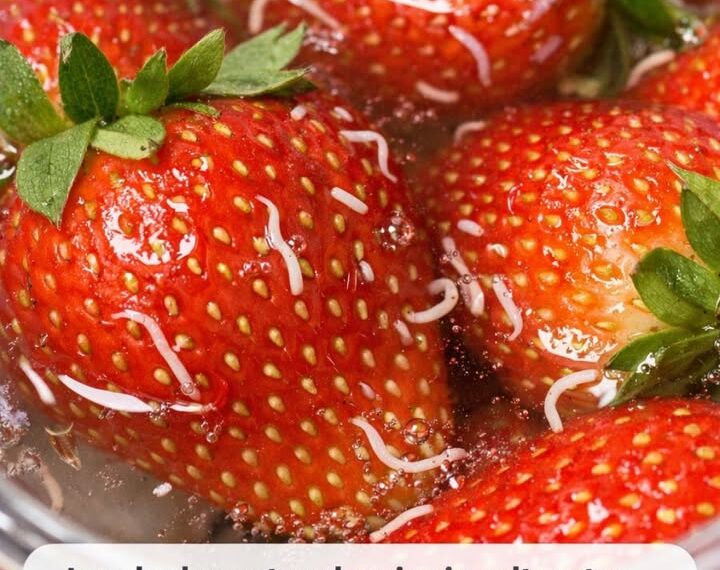
Imagine the scene: a sunlit kitchen, a bowl of strawberries gleaming with promise, and you, eager to enjoy the sweet, juicy fruits of summer. As you prepare your strawberries for a refreshing snack, you decide to soak them in salt water, a practice rumored on social media to be a foolproof way to clean them. To your surprise, across the water’s surface, tiny white worms begin to wriggle out of the fruit.
This unexpected revelation has sparked curiosity and concern among strawberry lovers everywhere. What are these mysterious white creatures, and why are they in your strawberries? This article will explore the science behind these critters, the reasons they inhabit your favorite berries, and whether you should be concerned about their presence. We’ll also provide practical tips on how to ensure your strawberries are as clean and safe as possible.
1. What Are Those Tiny White Worms in Your Strawberries?
The tiny white worms you might see emerging from your strawberries after a salt water soak are most likely the larvae of the Spotted Wing Drosophila (SWD), a type of fruit fly. These larvae are small, typically measuring about 1 to 3 millimeters in length. They have a pale, translucent appearance and can be difficult to spot without careful inspection.
These larvae thrive in the soft, ripening flesh of strawberries, which provides an ideal environment for them to develop. The female flies lay their eggs just below the fruit’s surface, and as the eggs hatch, the larvae begin to feed on the fruit from the inside out. This process can occur rapidly, especially in warm, humid conditions, making it a common issue in many strawberry-growing regions.
2. Meet the Culprit: Spotted Wing Drosophila Explained
The Spotted Wing Drosophila (Drosophila suzukii) is a small fruit fly native to Southeast Asia, but it has become a significant pest in fruit-growing regions worldwide. Unlike other fruit flies that target overripe or damaged fruit, the SWD can infest healthy, ripening fruits, including strawberries, blueberries, and cherries.
The adult SWD is about 2 to 3 millimeters long, with distinctive red eyes and a yellowish-brown body. The males have a characteristic dark spot on each wing, which gives the species its name. SWD females possess a serrated ovipositor, an adaptation that allows them to cut through the skin of ripening fruit to lay their eggs, making them particularly troublesome for fruit producers.
3. How Salt Water Makes the Larvae Wiggle Out
Soaking strawberries in salt water is a method that exploits the larvae’s sensitivity to changes in their environment. When strawberries are submerged in a salt water solution, typically made with a ratio of about 1 tablespoon of salt per cup of water, the osmotic pressure changes around the larvae.
The salt water draws water out of the larvae’s bodies, causing them to become distressed and vacate the fruit in search of a more suitable environment. This reaction is what causes the larvae to wriggle out of the strawberries, making them visible to the naked eye.
4. Are Strawberry Worms Dangerous to Eat?
The presence of SWD larvae in strawberries, while unappetizing, is generally not considered dangerous to human health. The larvae are not known to carry any pathogens harmful to humans, and consuming them accidentally is unlikely to cause illness.
However, the idea of eating fruit that contains live larvae is understandably off-putting for many people. While the larvae themselves are not harmful, their presence can indicate that the fruit may be past its prime, potentially affecting its taste and texture.
5. How Common Is This Problem in Store‑Bought and Home‑Grown Berries?
The prevalence of SWD larvae in strawberries can vary widely depending on geographic location, climate, and the time of year. In regions where the SWD is well-established, such as parts of North America and Europe, infestations can be a significant challenge for both commercial growers and home gardeners alike.
Store-bought strawberries may also be affected, particularly if they are sourced from areas with known SWD populations. However, many commercial growers implement rigorous pest management strategies to minimize the impact of SWD and deliver clean, healthy fruit to consumers.
6. The Science Behind Infestation: When and How Flies Lay Their Eggs
The SWD is known for its ability to lay eggs in ripening fruit rather than overripe or damaged fruit, which is typical of other fruit flies. Female SWD flies use their specialized ovipositors to puncture the skin of the fruit and deposit eggs just beneath the surface.
The oviposition process can occur rapidly, with a single female capable of laying hundreds of eggs over her lifespan. This prolific reproductive capacity, combined with a short life cycle—eggs can hatch within a few days—means that SWD populations can grow quickly, particularly in warm, humid conditions.
7. Should You Start Soaking All Your Strawberries in Salt Water?
While soaking strawberries in salt water can reveal the presence of SWD larvae, it is not the only method for cleaning and preparing your fruit. If you’re concerned about the potential for larvae, a salt water soak can be a useful precaution, especially if you notice small holes or other signs of infestation on your berries.
However, it’s important to remember that the presence of larvae is not inherently dangerous, and regular cleaning methods, such as rinsing under cold water, are usually sufficient to prepare strawberries for consumption.
8. Safer Ways to Wash and Prep Strawberries at Home
For those who prefer to avoid the salt water method, there are several other ways to ensure your strawberries are clean and ready to eat. Rinsing strawberries under cold, running water is the most straightforward method and helps remove surface dirt and potential contaminants.
For added peace of mind, you can also use a mixture of water and vinegar (typically one part vinegar to three parts water) to soak your strawberries for a few minutes before rinsing. This method can help reduce bacteria and pesticide residues without affecting the fruit’s flavor.
9. How Farmers and Grocers Fight Spotted Wing Drosophila
Farmers and grocers employ various strategies to combat SWD infestations and protect their crops. Integrated Pest Management (IPM) is a common approach, combining cultural practices, biological control, and, when necessary, chemical treatments to manage SWD populations effectively.
Cultural practices include regular monitoring of fruit and maintaining clean fields to reduce breeding sites. Biological control may involve introducing natural predators, such as parasitic wasps, to the environment. When these methods are insufficient, targeted pesticide applications may be used, though growers strive to minimize chemical use to protect pollinators and the environment.
10. What Food Safety Experts Really Say About Eating These Larvae
Food safety experts generally agree that the presence of SWD larvae in fruit does not pose a significant health risk. These larvae are not associated with any known human pathogens and are considered safe to consume, albeit unappealing.
However, experts emphasize the importance of purchasing fruit from reputable sources and maintaining good hygiene practices when handling and preparing fresh produce. Washing fruit thoroughly before consumption remains a key recommendation to minimize potential exposure to contaminants.
11. When to Toss Your Strawberries—and When It’s Just a Viral Overreaction
Determining when to discard strawberries due to SWD larvae presence depends largely on personal preference and the condition of the fruit. If strawberries show visible signs of spoilage, such as mold, mushiness, or an off smell, they should be discarded regardless of larval presence.
On the other hand, if the fruit appears fresh and your concern is primarily about the larvae, it is safe to eat the strawberries after a thorough cleaning. Viral videos and online trends can sometimes exaggerate the issue, leading to unnecessary food waste. Ultimately, trust your senses and judgment when deciding whether to enjoy or discard your strawberries.