Why Potatoes Should Always Be Stored in the Dark 🥔🌑
Potatoes may look like simple vegetables, but they are actually living organisms. Even after being harvested, potatoes continue to respond to their environment. One of the most important factors that affects their safety and quality is light exposure.
When potatoes are exposed to sunlight—or even strong indoor lighting—they begin a biological process that can lead to the formation of a potentially harmful compound called solanine. Understanding how this process works can help you store potatoes properly and avoid unwanted health risks.
The Science Behind Green Potatoes
Potatoes belong to the nightshade family of plants. Like other plants in this family, they naturally produce defensive chemicals to protect themselves from pests and predators.
When potatoes are exposed to light, two important changes occur:
- Chlorophyll Production
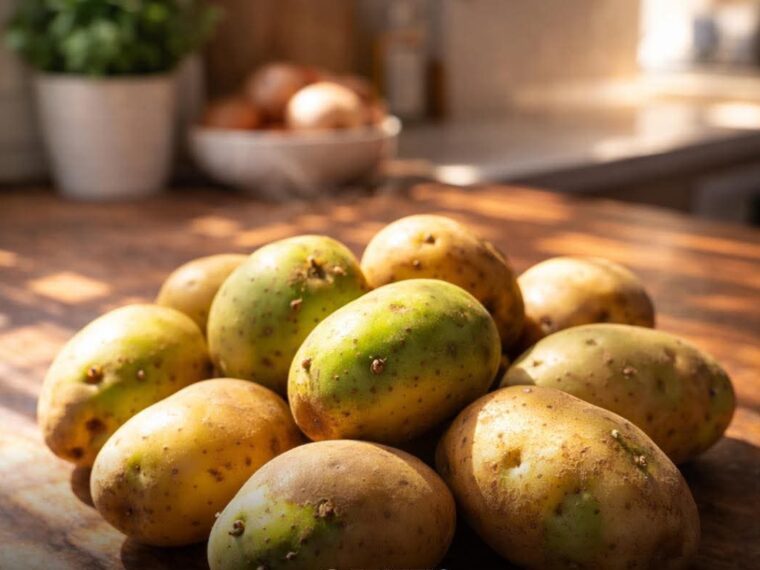
The potato begins producing chlorophyll, the pigment that gives plants their green color. This is why potatoes sometimes develop green patches on their skin. - Solanine Production
At the same time, the potato increases production of solanine, a natural toxic alkaloid that acts as the plant’s defense system against insects and animals.
While chlorophyll itself is harmless, it often signals that solanine levels may also be increasing.
Why Solanine Can Be Harmful
In small amounts, solanine usually does not cause problems. However, higher levels can be harmful to humans. Consuming potatoes with significant solanine can lead to symptoms such as:
- Headaches
- Nausea or vomiting
- Stomach cramps
- Dizziness
- Neurological discomfort in severe cases
Because solanine acts as a natural pesticide, the human body does not easily tolerate large amounts of it.
Cooking Does Not Remove Solanine
One common misconception is that cooking can destroy toxins in food. While heat can eliminate many bacteria, solanine is heat-stable. This means:
- Frying does not eliminate it
- Baking does not destroy it
- Boiling only slightly reduces levels
If a potato already contains high levels of solanine, cooking will not fully make it safe.
Signs Your Potatoes May Be Unsafe
Before cooking potatoes, look for warning signs such as:
- Green patches on the skin
- A bitter taste
- Sprouting “eyes”
- A shriveled or very old appearance
Small green spots can sometimes be cut away, but if a potato is heavily green or very bitter, it is safest to discard it.
The Best Way to Store Potatoes
Proper storage can help prevent solanine from forming in the first place. Potatoes stay safest when kept in conditions that mimic the dark soil where they originally grew.
Ideal potato storage conditions include:
- Total darkness – A cupboard, pantry, or storage bin
- Cool temperatures – Around 45–55°F (7–13°C)
- Good air circulation – Use a basket, paper bag, or crate
- Dry environment – Avoid excess moisture
Avoid storing potatoes in direct sunlight, near windows, or under bright kitchen lights.
A Simple Kitchen Tip
If you buy potatoes in a clear plastic bag, transfer them to a paper bag, cloth sack, or basket and keep them in a dark cupboard. This small step can significantly slow down the chemical changes caused by light exposure.
Final Thoughts
Potatoes are one of the world’s most versatile and beloved foods, but they still behave like the living plants they once were. Exposure to light can trigger the production of chlorophyll and the defensive compound solanine, which may become harmful if consumed in large amounts.
By storing potatoes in a cool, dark place, you help keep them dormant, preserve their flavor, and ensure they remain safe and enjoyable to eat.
Sometimes, the secret to safer food is simply storing it the way nature intended—away from the light. 🥔🌑