
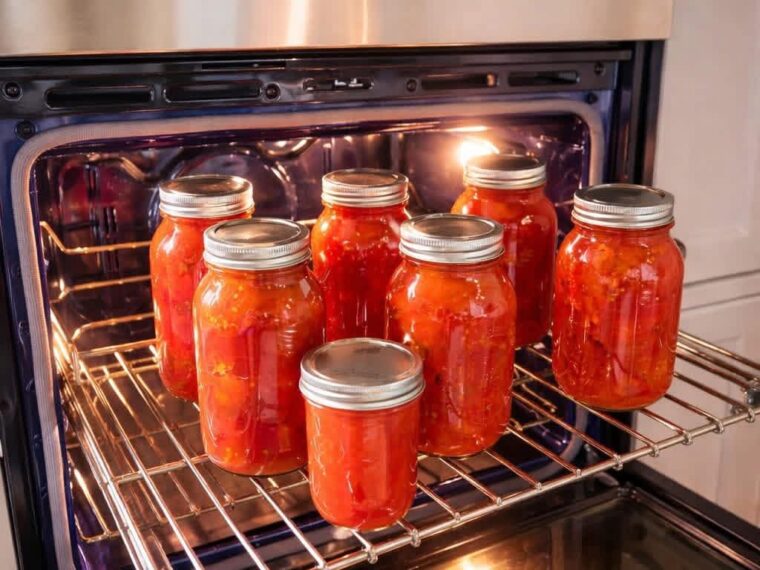
Today’s Canning Tip: The Truth About Sealing Jars in the Oven 🫙🔥
Home canning is a wonderful way to preserve fruits, vegetables, sauces, and jams so they can be enjoyed months later. Over the years, many different “tips” have circulated about easier ways to seal jars. One suggestion people sometimes hear is to place sealed jars in the oven at about 200°F (93°C) for an hour and leave them overnight to seal.
While this method may sound simple, it is important to understand why food safety experts do not recommend oven canning and what safer alternatives you can use instead.
Why Some People Suggest Oven Canning
The idea behind oven canning is that heat inside the oven warms the jars and creates a vacuum seal as the jars cool. Some home cooks believe this eliminates the need for boiling jars in a water bath or pressure canner.
However, the issue is not just sealing the jar—it is safely preserving the food inside.
The Problem With Oven Canning
Food safety authorities warn against using ovens for canning because:
1. Uneven Heat Distribution
Ovens heat the air, not the food directly. The temperature inside the jar may never reach the level needed to destroy harmful microorganisms.
2. Risk of Foodborne Illness
Certain bacteria, including those that cause serious food poisoning, can survive if foods are not processed at the correct temperature for the correct amount of time.
3. Potential Jar Breakage
Canning jars are designed for water bath or pressure canning, not dry oven heat. Sudden temperature changes may cause jars to crack or break.
4. False Seals
A jar may appear sealed after cooling, but the food inside might not be properly preserved.
Safer Methods for Home Canning
Instead of using the oven, experts recommend these tested methods:
Water Bath Canning
Best for high-acid foods such as:
- Jams and jellies
- Fruits
- Pickles
- Tomatoes with added acid
Jars are placed in boiling water and processed for a specific time to safely preserve the contents.
Pressure Canning
Required for low-acid foods such as:
- Vegetables
- Meats
- Soups
- Beans
Pressure canners reach temperatures higher than boiling water, which is necessary to safely preserve these foods.
Tips for Successful Canning
- Always use clean, undamaged canning jars.
- Follow tested recipes and processing times.
- Leave the correct headspace in jars before sealing.
- Allow jars to cool naturally after processing.
These steps help ensure that your preserved foods stay safe, flavorful, and shelf-stable.
Final Thoughts
Canning is a rewarding skill that allows you to enjoy seasonal foods all year long. While shortcuts like oven canning may sound convenient, proper canning methods are essential to protect both food quality and safety.
By following reliable techniques such as water bath or pressure canning, you can confidently build a pantry full of delicious homemade preserves. 🫙✨