
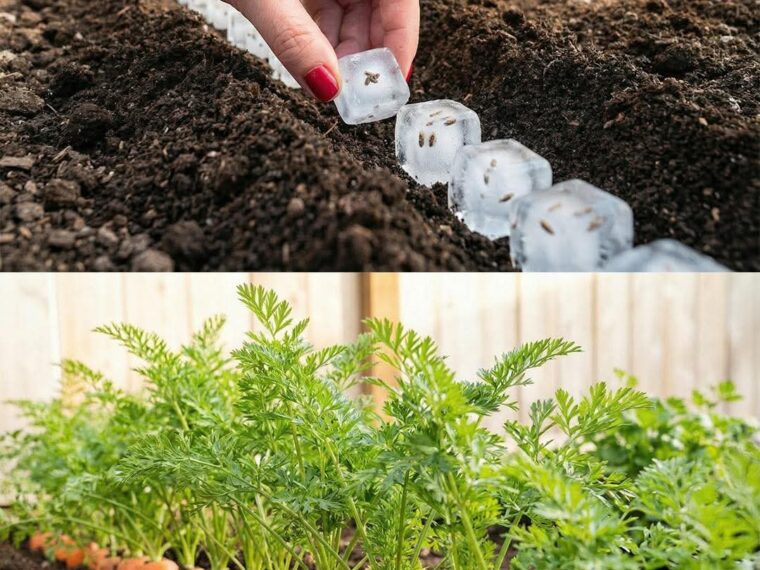
Growing carrots can be surprisingly tricky, even for experienced gardeners. Their seeds are tiny, lightweight, and difficult to space evenly by hand. It is easy to sow too many in one spot, which later leads to crowded seedlings, extra thinning, and wasted effort. A simple solution is to prepare carrot seeds in frozen soil cubes before planting. This method helps create tidy rows, improves spacing, reduces bending in the garden, and gives the seeds a moist start in the soil.
Why Carrot Seeds Are Difficult to Sow
Carrot seeds are among the smallest vegetable seeds commonly planted in home gardens. Because of their size, they often fall unevenly into the furrow. Some areas become overcrowded while others remain empty. When seedlings emerge too close together, the roots compete for space, often producing thin, twisted, or undersized carrots.
Using frozen seed cubes changes that. Instead of sprinkling the seeds directly into the soil, you prepare small portions in advance. Each cube carries a few seeds and can be placed exactly where you want it. This makes sowing faster, more precise, and much easier on the back.
What You Need
To try this method, gather just a few simple items:
- Carrot seeds
- An ice cube tray
- Loose garden soil
- Water
- A bowl or container for the frozen cubes
This is a practical technique for gardeners who want straighter rows and more even germination without spending a lot of time thinning later.
How to Prepare the Seed Ice Cubes
Start by placing a small pinch of fine garden soil into each compartment of the ice cube tray. The soil should be loose and crumbly, without stones or hard clumps. Then add two to three carrot seeds into each section.
Once the seeds are in place, fill the tray with water. The water should be enough to freeze the soil and seeds together into small cubes. Put the tray in the freezer until the cubes are completely solid.
After freezing, remove the cubes and place them in a bowl or container so they are easy to carry to the garden. At this stage, the seeds are already portioned and ready for planting, which saves time outdoors.
Preparing the Garden Bed
Carrots grow best in light, loose, deeply worked soil. Since the edible part is the root, the ground must allow it to grow straight downward without obstruction. Heavy, compacted soil or beds filled with stones and clods can lead to forked or misshapen carrots.
Before planting, loosen the bed well and rake the surface smooth. Make shallow furrows about 1 cm deep. Carrots should not be planted too deeply, as they germinate best close to the surface. Space the rows about 20 to 30 cm apart so the plants have room to develop and so you can easily weed between them later.
How to Plant the Frozen Cubes
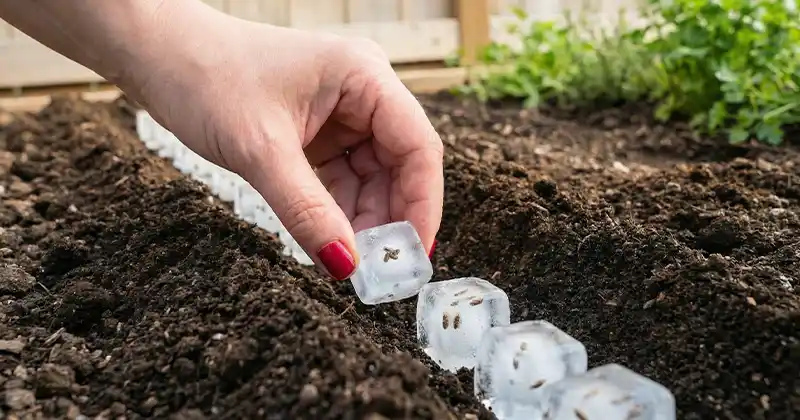
Take the frozen cubes to the garden and place them into the furrows at intervals of about 3 to 5 cm. This gives the seeds a more even distribution than scattering them by hand. Because each cube contains only a few seeds, the spacing stays controlled from the beginning.
Once the cubes are in place, cover them with a thin layer of soil. There is no need to bury them deeply. The ice melts quickly in the ground, releasing the seeds and providing immediate moisture around them.
Some gardeners worry that freezing might damage the seeds, but carrot seeds tolerate cold very well. In nature, many seeds spend time in cold soil before conditions become right for sprouting. As the weather warms and the soil reaches suitable temperatures, the seeds begin to germinate normally.
Best Time to Plant Carrots
Carrots are usually sown in early spring, once the soil has warmed to around 7 to 10°C. Cool conditions are ideal for getting them started, but the bed should not be waterlogged or frozen solid. In many gardens, this is one of the first crops of the season.
Because the seeds are planted shallowly, moisture is especially important during the germination period. If the top layer of soil dries out, sprouting may be uneven or delayed.
Watering and Early Care
After planting, keep the soil consistently moist but not soaked. Gentle, regular watering is the key to successful emergence. Once the seedlings appear, continue to water carefully so the young roots can establish well.
A mild natural liquid feed can also be used during early growth if your soil is poor, though carrots generally do best in balanced soil that is not overly rich in fresh manure. Too much nitrogen can encourage leafy tops at the expense of root quality.
Why This Method Works So Well
The seed ice cube method is useful because it combines better spacing, easy handling, and built-in moisture. Instead of struggling with tiny seeds in the wind or crouching for long periods over a seed row, you prepare everything comfortably indoors and simply place the cubes in the bed.
It is a neat, efficient way to sow carrots, especially for gardeners who want an organized planting system with less thinning and less physical strain. With suitable soil, steady moisture, and proper spacing, this simple trick can lead to healthier plants and a more satisfying harvest.
A Smarter Way to Sow Carrots
If you have ever ended up with patchy rows or crowded carrot seedlings, this method is worth trying. Preparing carrot seeds in frozen soil cubes turns a delicate sowing job into a straightforward planting routine. It saves effort, improves seed placement, and helps create the conditions carrots need for strong, straight growth. For a small garden trick, it can make a big difference at harvest time.
Inspired by this? Share the article with your friends!