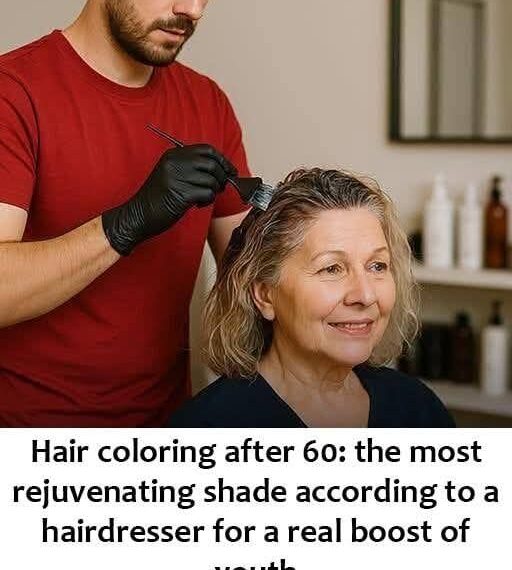
Hair color becomes far more influential as we age because it interacts directly with our changing skin tone, hair texture, and facial features. Many people notice that the same hair color they wore in their 30s suddenly doesn’t suit them as well decades later. That’s not a coincidence. Over time, the skin naturally loses some pigmentation and collagen, which can make certain hair colors look harsh or draining instead of flattering.Hairdressers often say that the right color can act like a natural filter for the face. Warm tones reflect light and add brightness, which can soften wrinkles and enhance the complexion. On the other hand, overly dark or cool tones can emphasize shadows, making fine lines more noticeable. That’s why professional stylists often recommend softer, warmer shades for mature clients.Another factor is the natural transition to gray hair. As hair loses melanin, it becomes more fragile and sometimes thinner. Choosing the right color technique—rather than a single flat shade—can create the illusion of thickness and movement. Dimensional coloring methods like balayage or highlights can make hair appear fuller and more vibrant.Ultimately, hair color after 60 isn’t about disguising age. It’s about embracing it while highlighting your best features. The right shade can brighten your complexion, enhance your confidence, and create a modern, stylish look that feels both natural and rejuvenating.
How Aging Changes Hair Texture and Color
Hair undergoes significant biological changes as we age. The most visible change is the gradual loss of pigment, which leads to gray or white strands. But beneath the surface, there are also structural changes that affect the way hair behaves. Hair fibers can become thinner, drier, and more fragile, which makes the choice of hair color even more important.
As melanin decreases, hair reflects light differently. Gray hair often appears duller because it lacks the natural pigments that once gave it shine and depth. This is one reason why many hairstylists recommend multi-dimensional coloring techniques rather than solid colors. By adding highlights or lowlights, hair gains depth and luminosity, which helps restore the vibrancy that gray hair sometimes lacks.
Another change that happens with age is scalp sensitivity. Hair coloring formulas today are far more advanced than they were decades ago, but mature hair still benefits from gentler coloring techniques. Professional stylists often recommend ammonia-free dyes, gloss treatments, or balayage methods that require less chemical processing.
Understanding these changes is the key to choosing a flattering hair color. Instead of fighting against natural aging, the goal is to work with it—enhancing texture, adding light, and creating a soft, natural-looking color that complements mature beauty.
The Psychology of Hair Color and Youthfulness
Hair color isn’t just about appearance—it also influences how people perceive age and vitality. Psychologists and beauty experts often point out that brighter, warmer hair tones are associated with energy and youthfulness. This is partly because they reflect more light, creating a glow that brightens the face.
Studies in beauty perception have shown that hair color can influence first impressions, particularly when it complements skin tone. Warm shades like honey blonde, golden brown, or soft auburn tend to make the complexion look healthier and more radiant. In contrast, extremely dark or cool shades can create stark contrasts that emphasize facial shadows.
Hairdressers often compare hair color to lighting in photography. Imagine taking a photo under harsh fluorescent lights—it can make anyone look tired. But soft, warm lighting enhances natural beauty and smooths out imperfections. The same principle applies to hair color. A flattering shade works like natural lighting for the face.
Confidence also plays a major role. Many women say that changing their hair color after 60 makes them feel revitalized. It’s not about chasing youth—it’s about feeling refreshed, stylish, and confident in your own skin.
The Most Rejuvenating Hair Colors for Women Over 60
TO CONTINUE READING THE ARTICLE PLEASE SEE PAGE 2