
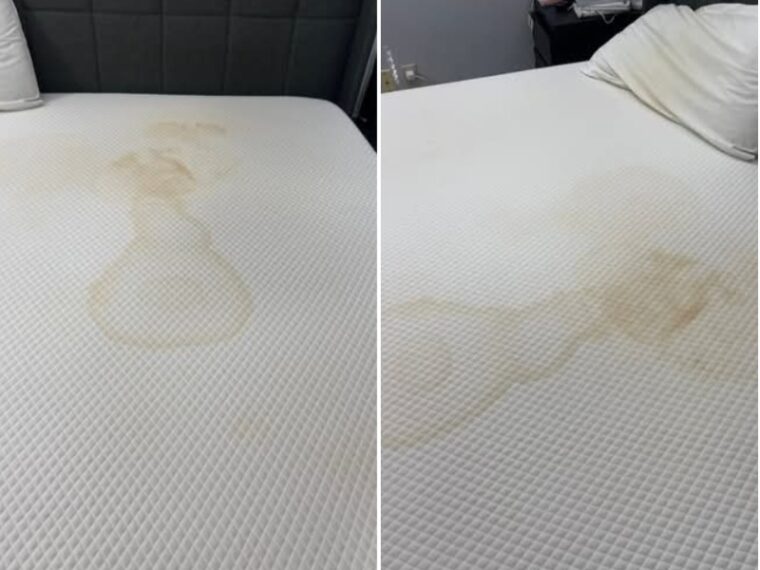
Why Night Sweat Can Damage Your Mattress (and How to Remove Stains & Prevent It)
Waking up to a damp bed occasionally is normal—but when one person consistently sweats heavily during sleep, it can lead to bigger problems than just discomfort. Over time, sweat can seep through bedding, break down mattress protectors, and leave behind stubborn stains and odors.
If you’ve noticed that your mattress protector’s waterproof layer has started to deteriorate or “melt,” you’re not imagining things. While it might feel like the sweat is unusually harsh, there’s a scientific explanation—and thankfully, practical solutions.
🧪 Why Sweat Can “Eat” a Mattress Protector
Sweat isn’t just water. It contains:
- Salt
- Natural body oils
- Trace minerals
- Slightly acidic compounds (urea, lactic acid)
Over time, these components can:
- Break down cheap or aging waterproof layers (especially polyurethane backing)
- Cause discoloration and stains on the mattress
- Lead to odors and bacterial buildup
A mattress protector that’s about 4 years old may already be nearing the end of its lifespan—especially under heavy nightly moisture.
🧼 How to Remove Sweat Stains from a Mattress
Before starting, always let the mattress fully air out.
Step 1: Blot and Dry
If the mattress is damp:
- Press with clean towels to absorb moisture
- Let it air dry completely (open windows or use a fan)
Step 2: Use a Gentle Cleaning Solution
Mix:
- 1 cup warm water
- 1 cup white vinegar
- A few drops of mild dish soap
Lightly spray the stained area (do not soak).
Step 3: Blot Again
- Use a clean cloth to blot the area
- Avoid rubbing—it spreads the stain deeper
Step 4: Deodorize with Baking Soda
- Sprinkle baking soda generously over the area
- Let it sit for 6–12 hours
- Vacuum thoroughly
This helps absorb both moisture and odor.
Step 5: For Tough Stains (Optional)
You can use a mild hydrogen peroxide mix:
- 1 part hydrogen peroxide
- 2 parts water
Test on a small hidden spot first, as it can slightly lighten fabric.
🚫 What to Avoid
- Over-soaking the mattress (can cause mold)
- Harsh chemicals like bleach
- Scrubbing aggressively
🛡️ How to Prevent Future Damage
1. Upgrade Your Mattress Protector
Not all protectors are equal. Look for:
- High-quality waterproof membranes (TPU instead of cheap plastic backing)
- Breathable, moisture-wicking fabrics
- Labels like “cooling” or “sweat-resistant”
Replace protectors every 1–2 years if sweating is heavy.
2. Double-Layer Protection
Use:
- A waterproof protector
- Plus a washable mattress pad on top
This reduces direct stress on the waterproof layer.
3. Choose Breathable Bedding
Avoid heat-trapping materials.
Better options:
- Cotton
- Bamboo
- Linen
These fabrics help regulate temperature and reduce sweating.
4. Wash Bedding Frequently
- Sheets: 1–2 times per week
- Mattress protector: every 2–4 weeks
This prevents buildup of salts and oils.
5. Improve Sleep Temperature
Heavy sweating is often linked to overheating.
Try:
- Lower room temperature
- Use lighter blankets
- Improve airflow (fan or ventilation)
6. Consider Health Factors
If the sweating is new or excessive, it may be worth looking into possible causes such as:
- Fever or recent illness
- Stress or anxiety
- Hormonal changes
- Diet (spicy foods, caffeine, alcohol)
If it continues long-term, consulting a healthcare professional can help rule out underlying issues.
🌙 Final Thoughts
Heavy night sweating can absolutely damage bedding over time—but it’s manageable. With proper cleaning, better-quality protection, and a few smart adjustments, you can extend the life of your mattress and keep your sleep environment fresh and comfortable.
The key is consistency: protect, clean, and stay ahead of moisture before it becomes a bigger problem.
If you want, I can also recommend specific mattress protectors that work best for heavy sweating or help you choose one available in your area 👍