
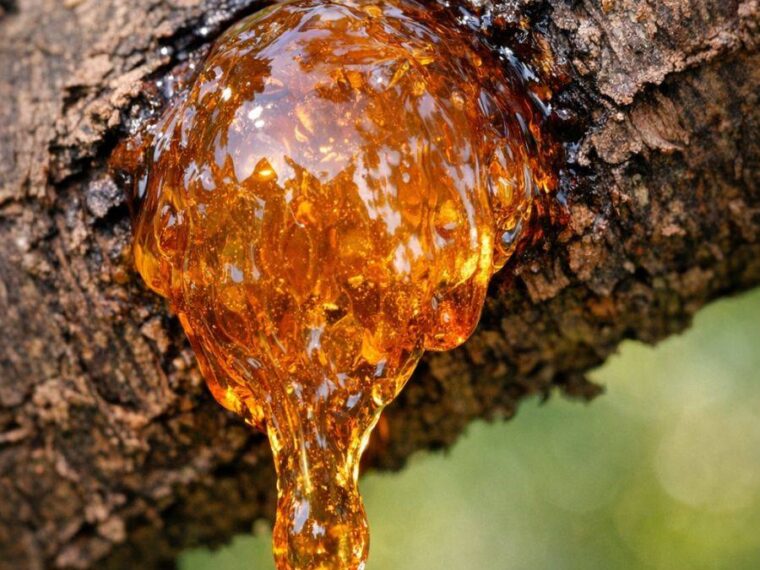
If you’ve spotted a thick, amber-colored, jelly-like substance oozing from your cherry tree, it’s completely understandable to feel concerned. With its sticky texture and unusual appearance, it can look almost like something out of a sci-fi movie.
But in most cases, this strange “sap” is actually a natural response from your tree. Understanding what it is—and why it’s happening—can help you determine whether your tree is healthy or needs attention.
1. What That Sticky Substance Really Is
The amber jelly is known as Gummosis, a condition where sap leaks out of the bark and hardens into a gummy or gel-like material.
This can occur not only in cherry trees but also in other stone fruit trees like peaches, plums, and apricots.
The sap may appear:
Clear
Amber or honey-colored
Dark brown
While it may look alarming, gummosis is often simply a defense mechanism, not a disease itself.
2. Why It Happens: The Tree’s Natural Defense
Gummosis is similar to how a wound heals in humans.
When a tree is stressed or injured, it produces extra sap to:
Seal off damaged areas
Protect against bacteria and fungi
Prevent further internal damage
The sap oozes out, then hardens when exposed to air, forming that sticky, jelly-like substance you see on the trunk.
3. Common Causes of Gummosis
Several factors can trigger this reaction:
Physical damage
Improper pruning
Cuts from tools or lawn equipment
Cracks in the bark
Environmental stress
Drought or irregular watering
Poor soil conditions
Extreme heat or cold
Pests and diseases
Insect borers damaging the wood
Fungal infections entering through wounds
4. When Should You Be Concerned
Gummosis is not always dangerous, but you should pay attention if:
The sap is excessive or spreading
The bark appears cracked, sunken, or dying
Leaves are wilting or turning yellow
Branches begin to die back
These signs may indicate a deeper issue that needs treatment.
5. How to Help Your Tree Recover
To keep your cherry tree healthy:
Prune carefully and only during the proper season
Avoid injuring the trunk with tools or machinery
Water consistently, but do not overwater
Improve soil drainage if needed
Remove and clean affected areas gently if infections are suspected
If the problem persists, consider consulting a gardening expert or arborist.
Final Thought
That strange amber “slime” is actually your tree trying to protect itself. In many cases, it’s a normal response to stress—but it’s also a useful signal that something might need your attention.