
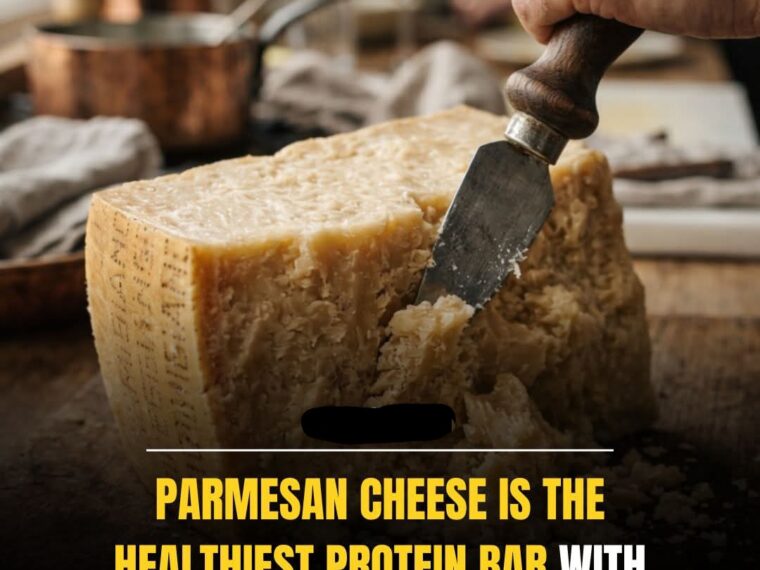
🧀 Parmesan Cheese: One of the Most Protein-Dense Whole Foods You Can Eat
In a world full of protein bars, powders, and ultra-processed snacks, it’s easy to overlook one of the simplest and most powerful sources of protein:
Parmesan cheese.
Known traditionally as Parmigiano Reggiano, this aged cheese is far more than just a topping for pasta—it’s a nutrient-dense food packed with high-quality protein, essential minerals, and centuries of craftsmanship.
💪 A Surprisingly Powerful Protein Source
When people think of protein-rich foods, they often imagine meat, eggs, or supplements. But Parmesan stands right alongside them.
A 100-gram serving of Parmigiano Reggiano provides approximately:
- 35–36 grams of protein
That’s comparable to:
- Many protein bars
- A generous serving of chicken or beef
This makes it one of the most protein-dense whole foods available, especially considering its minimal ingredient list.
🧬 A Complete Protein for Your Body
Not all proteins are created equal.
Parmesan is considered a complete protein, meaning it contains all nine essential amino acids your body needs but cannot produce on its own. These amino acids are crucial for:
- Muscle repair and growth
- Hormone production
- Immune function
This makes Parmesan especially valuable for active individuals, older adults, or anyone looking to support muscle health naturally.
🦴 Rich in Essential Nutrients
Beyond protein, Parmesan is a concentrated source of key micronutrients that support overall health.
Key nutrients include:
- Calcium → supports strong bones and teeth
- Phosphorus → works with calcium for bone structure
- Vitamin B12 → essential for energy and nerve function
- Zinc → supports immunity and healing
Because Parmesan is aged and dehydrated over time, these nutrients become more concentrated compared to many fresh cheeses.
🧀 Naturally Low in Lactose
One of the unique advantages of Parmigiano Reggiano is how it’s made.
It is aged for 12 to 36 months, during which:
- Natural fermentation breaks down most of the lactose
- Proteins and flavors become more concentrated
As a result, many people who are sensitive to lactose find Parmesan easier to digest than other dairy products.
🌿 Simple, Traditional Ingredients
In contrast to modern processed snacks, traditional Parmesan is made with just a few basic ingredients:
- Milk
- Salt
- Rennet
That’s it.
No added sugars.
No artificial preservatives.
No industrial seed oils.
This simplicity is part of what makes it such a clean, whole-food option.
⚖️ A Nutrient-Dense, Not Volume-Dense Food
While Parmesan is rich in protein and nutrients, it’s also energy-dense due to its fat content.
That means:
- A small portion goes a long way
- You don’t need large amounts to benefit
A sprinkle over meals or a small chunk as a snack can provide meaningful nutrition without overconsumption.
🍽️ Easy Ways to Add Parmesan to Your Diet
Parmesan is incredibly versatile and easy to include in everyday meals:
- Shave it over salads for extra protein
- Add to eggs or omelets
- Sprinkle on roasted vegetables
- Pair small chunks with fruit or nuts for a balanced snack
- Use it to enhance soups and pasta dishes
Its rich, savory flavor (often described as umami) makes even simple meals more satisfying.
⚠️ A Note on Sodium
Like many aged cheeses, Parmesan contains a higher amount of sodium due to the curing process.
For most people, this isn’t an issue in moderate amounts—but if you’re watching sodium intake, it’s best enjoyed in controlled portions.
🌟 Final Thoughts
Parmesan cheese is a perfect example of how traditional foods can rival—and often outperform—modern alternatives.
It delivers:
- High-quality complete protein
- Essential vitamins and minerals
- Minimal, natural ingredients
- Exceptional flavor
Sometimes, the simplest foods really are the most powerful.
Instead of reaching for another processed protein snack, consider going back to basics—with a small piece of Parmesan that delivers far more than meets the eye.