“What’s This on My Salami?”
A Parisian Food Mystery, a Crisis of Confidence, and the Science Behind the White Stuff
There I was.
In Paris.
With a beautiful piece of salami.
And I couldn’t bring myself to eat it.
If you’ve ever stood in a tiny Parisian grocery store or charcuterie, holding a cured meat that looks almost perfect—except for something strange on the surface—then you already know the feeling. The mix of excitement and doubt. The internal debate between trust and fear.
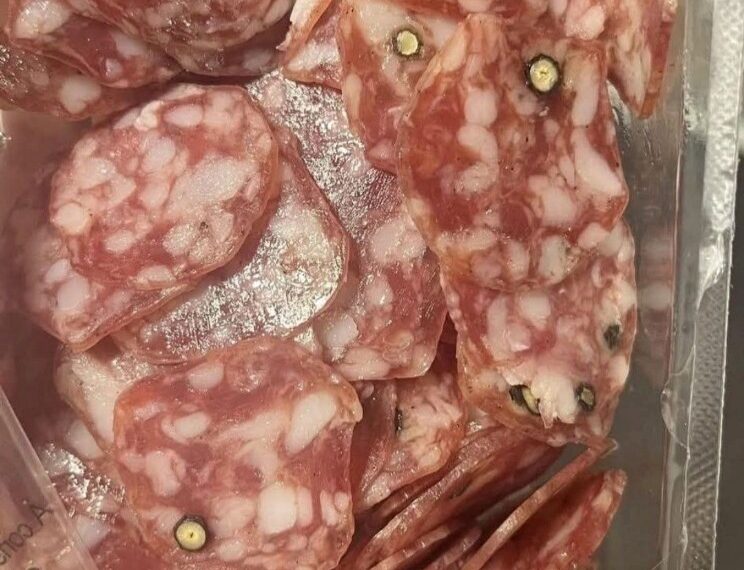
The salami was exactly what you’d hope for: deep red, marbled with fat, wrapped in a natural casing, smelling rich and savory. It looked artisanal. Authentic. Very French.
But then there was that.
A pale, powdery, uneven coating on the outside.
Not green.
Not fuzzy.
Not obviously mold… but not obviously not mold either.
And suddenly the thought hit me:
“What is this on my salami? I know it’s not mold… I think. But am I about to make a terrible mistake?”
I put it down. I picked it up again. I Googled. I second-guessed myself. And in the end, I didn’t eat it.
This is the story of that moment—and what I learned afterward.
The Universal Fear of “Is This Still Safe?”
Let’s be honest: food fear hits differently when you’re traveling.
At home, we trust our instincts. We know what “normal” looks like. We recognize familiar brands, expiration labels, textures, and smells. Abroad—especially in a place like France, where food culture follows older rules—those instincts get shaky.
In Paris, cured meats don’t look like the vacuum-sealed salami you buy at a supermarket back home. There’s no glossy plastic. No bold “USE BY” date screaming reassurance. Instead, there’s tradition. Natural casings. Time. Air. Microorganisms.
And microorganisms are where panic lives.
The White Stuff: Not Mold, But… Mold?
Here’s the twist that confuses almost everyone:
That white coating on traditional salami is mold.
But not bad mold.
It’s good mold.
Specifically, it’s usually a strain of Penicillium—most commonly Penicillium nalgiovense. This mold is intentionally encouraged during the curing process of many European dry sausages.
Yes. Encouraged.
Which means the thing you were afraid of is actually a sign that the salami was made correctly.
Why Good Mold Exists at All
In traditional charcuterie, mold is not an accident—it’s an ally.
That white bloom on the casing serves several purposes:
Protection
It prevents harmful bacteria from growing by taking up space and resources.
Flavor Development
As the salami ages, the mold interacts with the meat, helping develop complex, savory flavors.
Moisture Regulation
It helps the salami dry evenly, preventing the outside from hardening too quickly.
Authenticity Marker
In many regions of France, Italy, and Spain, white mold is a visual signal of proper artisanal curing.
In other words, that dusty white coating is doing a job.
Why It Doesn’t Look “Safe” to Us
Here’s the cultural disconnect.
Many of us grew up learning one simple rule:
Mold = throw it away.
And that rule is usually correct—in modern industrial food systems.
But traditional European food culture operates on a different relationship with microorganisms. Cheese, wine, yogurt, bread, cured meats—all depend on controlled microbial activity.
In France especially, mold is not inherently bad. It’s contextual.
White mold on salami? Normal.
White mold on brie? Expected.
Green or black fuzzy mold with a sour smell? Nope.
The problem is that our brains weren’t trained to make those distinctions.
The Texture Test (That No One Tells You)
One of the reasons the salami made you hesitate is texture.
Good curing mold:
Looks matte, powdery, or chalky
Feels dry
Is evenly distributed
Bad mold:
Looks fuzzy, hairy, or slimy
Appears in patches
Often comes with an off smell
But unless you’ve seen it before, that difference isn’t obvious. Especially when you’re holding unfamiliar food in a foreign country, already worried about getting sick on vacation.
So your reaction wasn’t irrational.
It was human.
The Paris Factor: Why This Happens So Often There
Paris is the perfect storm for this kind of food anxiety.
Traditional food presentation
Minimal labeling
Strong emphasis on freshness and craft
Less obsession with sterilized perfection
In a Parisian charcuterie, food isn’t designed to look “safe.” It’s designed to be right.
And right doesn’t always look familiar.
Why You Didn’t Eat It (And Why That’s Okay)
Let’s address the quiet guilt many people feel afterward.
“I was in Paris—I should have eaten it.”
“I wasted good food.”
“I chickened out.”
But here’s the truth:
Trusting your comfort level matters.
Food is not just about safety—it’s about enjoyment. If anxiety kills the pleasure, the experience is already compromised.
You weren’t wrong to hesitate. You didn’t fail at being adventurous. You encountered a knowledge gap, and your brain chose caution.
That’s not weakness. That’s self-preservation.
What You Could Have Done Instead
If you ever find yourself in this situation again, here are some options that don’t involve panic-googling in a grocery aisle:
Ask the seller
In Paris, charcutiers expect questions. “C’est normal?” goes a long way.
Look at consistency
If all the salamis look similar, that’s a good sign.
Smell it
Good salami smells rich and savory, not sour or rotten.
Know the colors
White = usually fine
Green/black = usually not
Peel the casing
Many people remove the casing anyway. The mold stays on the outside.
The Irony: You Probably Ate Mold Anyway
Here’s the funny part.
If you’ve eaten:
Blue cheese
Brie
Camembert
Salami back home
Aged cheese of almost any kind
You’ve already eaten mold.
Just not visibly enough to trigger your alarm bells.
The Paris salami wasn’t more dangerous—it was just more honest.
The Emotional Side of Food Fear
This moment wasn’t just about salami.
It was about:
Being far from home
Wanting to do things “right”
Not wanting to get sick
Feeling unsure in unfamiliar systems
Food becomes symbolic when we travel. It represents connection, culture, bravery, and belonging.
So when fear interrupts that, it feels bigger than it should.
What I Learned After the Fact
When I got home, I looked it up properly. I read about traditional curing. I learned about Penicillium nalgiovense. I saw photos identical to the salami I didn’t eat.
And yes—I realized it would have been safe.
But I also realized something else:
Knowledge turns fear into confidence—but only afterward.
And that’s okay.
A Different Kind of Souvenir
That uneaten salami became a lesson instead of a meal.
A reminder that:
Cultural food norms differ
“Safe” doesn’t always look sterile
Curiosity matters more than perfection
Travel is about learning, not proving anything
Next time, I’ll know.
And next time, I’ll probably eat it.