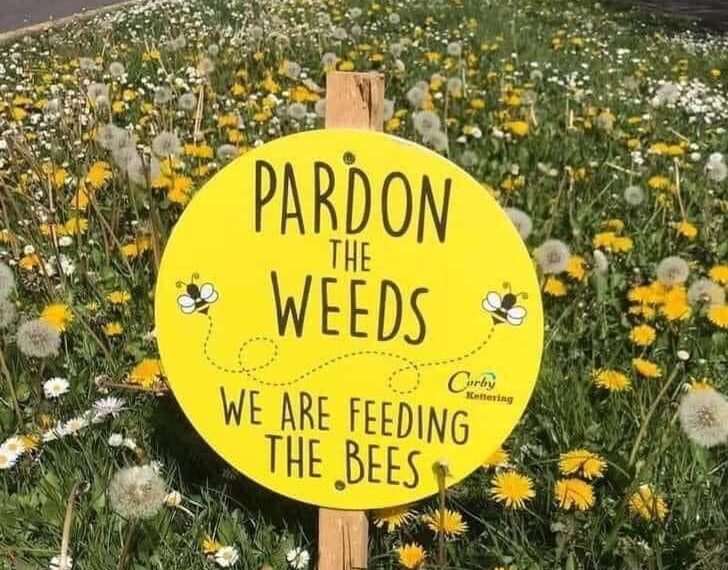
🌼 “Pardon the Weeds, We Are Feeding the Bees”
Why Letting Nature Grow Can Help Save Pollinators
At first glance, a yard full of weeds might look messy or neglected. But behind those wild patches of green and scattered blooms lies a quiet, powerful act of environmental care.
The phrase “Pardon the weeds, we are feeding the bees” is more than just a sign—it’s a mindset. It reflects a growing awareness that what we often call “weeds” can actually play a vital role in supporting pollinators like bees, butterflies, and other beneficial insects.
🐝 Why Bees Matter So Much
Bees are among the most important pollinators on Earth. They are responsible for helping plants reproduce by transferring pollen from one flower to another.
This process supports:
- Fruit and vegetable production
- Seed formation
- Biodiversity in ecosystems
In fact, a significant portion of the food we eat depends directly or indirectly on pollinators.
🌿 The Problem with Perfect Lawns
Modern landscaping often focuses on clean, uniform lawns—short grass, no weeds, and minimal plant diversity.
While visually appealing, these spaces offer:
- Little to no food for pollinators
- No shelter for insects
- A heavy reliance on pesticides and chemicals
As a result, bees and other pollinators struggle to find enough nectar and pollen, especially in urban and suburban environments.
🌼 Rethinking “Weeds”
Not all weeds are bad. In fact, many common “weeds” are excellent food sources for bees.
Some of these include:
- Dandelions
- Clover
- Wildflowers
- Plantain
These plants often bloom early or persist throughout the season, providing a steady supply of nectar when other flowers are not available.
🍯 A Lifeline for Pollinators
Allowing some weeds to grow creates a natural feeding ground for bees.
This is especially important:
- In early spring, when few plants are blooming
- During dry periods, when flowers are scarce
- In cities, where green spaces are limited
Even a small patch of flowering weeds can make a difference.
🌱 Small Changes, Big Impact
You don’t need to turn your entire yard into a wild meadow to help pollinators. Simple changes can have a meaningful effect:
- Let a section of your lawn grow naturally
- Reduce mowing frequency
- Avoid chemical pesticides
- Plant native flowers alongside wild plants
These steps create a more balanced environment that supports both people and nature.
🏡 Balancing Beauty and Ecology
A pollinator-friendly yard doesn’t have to look messy. You can design your space intentionally:
- Keep some areas trimmed and others wild
- Add pathways or borders for structure
- Combine cultivated plants with natural growth
This creates a garden that is both beautiful and beneficial.
🐝 Changing the Way We See Nature
The idea of “weeds” is largely based on perception. What we remove for aesthetic reasons may actually be essential for the environment.
By shifting how we view these plants, we:
- Support biodiversity
- Protect pollinators
- Contribute to healthier ecosystems
🌍 A Collective Effort
Helping bees isn’t just for farmers or environmentalists—it’s something anyone can do.
From a small balcony pot to a backyard garden, every space counts. When more people make small changes, the combined impact becomes powerful.
🌟 Final Thoughts
“Pardon the weeds, we are feeding the bees” is more than a phrase—it’s a gentle reminder that nature doesn’t need to be perfect to be valuable.
Sometimes, the best thing we can do is step back, let things grow, and allow life to thrive in its own way.
Because in those wild, imperfect patches…
there’s food, life, and a future for the bees. 🐝💚
If you want, I can also turn this into:
- A short viral post
- A garden sign design
- Or a step-by-step pollinator garden guide 🌸