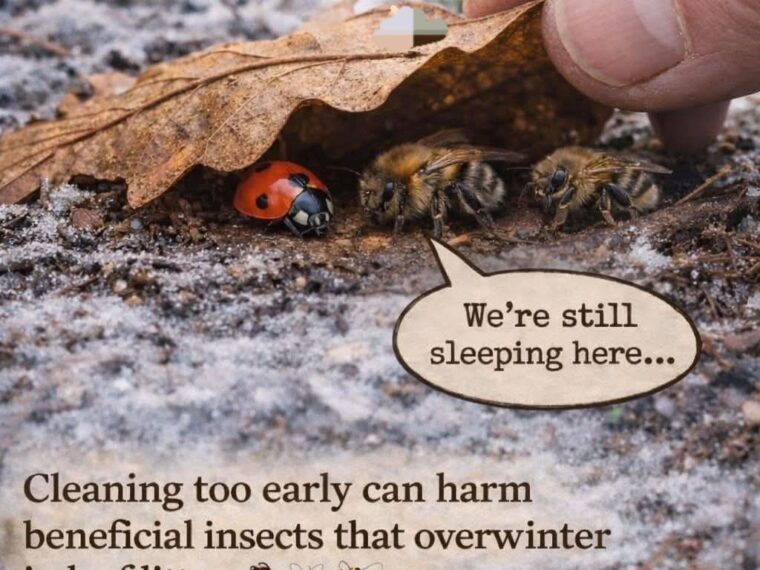
🍂🐝 “We’re Still Sleeping Here…” — Why Waiting to Clean Your Yard Helps Nature Thrive
When the weather begins to warm and the urge to tidy up your yard kicks in, it’s tempting to clear away every fallen leaf and dried stem. But beneath that quiet layer of leaf litter, life is still resting.
What looks like simple cleanup can actually disturb entire hidden ecosystems—tiny creatures that are essential to a healthy environment are still sleeping, waiting for the right moment to emerge.
🌿 The Hidden Life Beneath the Leaves
Leaf litter is far more than yard waste—it’s a natural shelter.
During colder months, many beneficial insects take refuge under leaves, inside hollow stems, and within garden debris. These spaces protect them from wind, rain, and temperature changes.
Among these quiet sleepers are:
- bumblebee queens preparing for spring
- Butterflies and moths in cocoon or chrysalis form
- Beetles, ladybugs, and other helpful insects
- Small organisms that enrich the soil
For these creatures, your yard is their winter home.
🐝 Why Pollinators Need This Protection
Pollinators like bumblebees play a critical role in ecosystems. They help plants reproduce by transferring pollen, which supports:
- Food crops
- Wildflowers
- Biodiversity overall
Without them, many plants—including those we rely on—would struggle to survive.
When leaf litter is removed too early, it can:
- Destroy nesting sites
- Interrupt life cycles
- Reduce pollinator populations
Even small disturbances can have a big impact.
🌼 The Risk of Cleaning Too Soon
Early spring can be deceptive. While the air may feel warmer, many insects are still dormant.
Cleaning too early may:
- Expose insects to sudden temperature drops
- Physically remove or kill overwintering species
- Disrupt soil health and natural processes
What seems like a simple task can unintentionally harm the balance of your garden.
🌱 A Better Approach: Gentle, Gradual Care
You don’t have to stop caring for your yard—you just need to adjust how and when you do it.
✅ Smarter Yard Practices:
- Wait until temperatures are consistently warm
- Clean gradually instead of all at once
- Leave some areas undisturbed as natural habitat
- Gently move leaves rather than removing everything
👉 A good rule: wait until daytime temperatures are around 10°C or higher for several days.
🏡 Creating a Pollinator-Friendly Space
You can turn your yard into a safe haven for nature with a few simple choices:
- Keep a small “wild corner” with leaves and branches
- Plant native flowers for food and shelter
- Avoid excessive pesticide use
- Provide shallow water sources
These steps help support pollinators not just in winter—but all year long.
🌍 Why This Matters Everywhere
In regions like Morocco and beyond, pollinators are vital to agriculture and natural ecosystems. Protecting them helps maintain food production, plant diversity, and environmental balance.
Small actions in your garden can contribute to a much larger impact.
💛 Final Thoughts
Sometimes, the best way to care for nature is to pause and let it be.
By waiting just a little longer before cleaning your yard, you give countless tiny creatures the chance to wake up safely and continue their essential work. What may look like untidiness is actually life—quiet, hidden, and incredibly important.
So this season, when you see fallen leaves, remember:
someone might still be sleeping there. 🍂🐝✨