
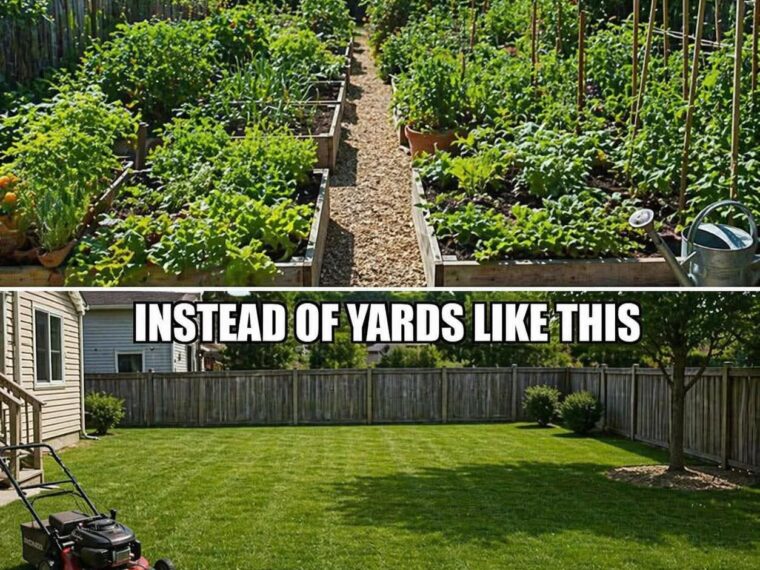
If Every Yard Became a Garden, Hunger Could Shrink: Rethinking Food, One Backyard at a Time
Imagine a world where every yard—no matter how small—was transformed into a thriving, productive garden. Instead of empty lawns or unused spaces, neighborhoods would be filled with vegetables, fruits, herbs, and edible plants. This simple shift in how we use our land could have a powerful impact on one of the world’s biggest challenges: hunger.
🌱 The Hidden Potential of Everyday Spaces
Across cities and villages, millions of yards sit underused. Lawns are often maintained for appearance rather than purpose, requiring water, time, and money—yet giving nothing back in terms of food. If even a portion of these spaces were converted into edible gardens, they could collectively produce an enormous amount of fresh, nutritious food.
A small backyard garden can grow:
- Tomatoes, peppers, and leafy greens
- Potatoes, beans, and onions
- Herbs like mint, basil, and parsley
Even a modest garden can supplement a household’s diet, reducing grocery costs and improving food security.
🌍 Fighting Hunger at the Local Level
Hunger is not always caused by a lack of food globally—it is often about access. Many communities struggle with affordability, availability, or distribution. Backyard gardening offers a local solution:
- Families can grow their own food
- Communities can share surplus harvests
- Neighborhoods can support one another
When more people grow food, dependence on complex supply chains decreases. This makes communities more resilient during economic hardship or food shortages.
🥕 Nutrition That Starts at Home
Homegrown food is not only more accessible—it is often healthier. Freshly harvested fruits and vegetables retain more nutrients compared to those transported over long distances. Gardens encourage diets rich in:
- Vitamins and minerals
- Fiber and antioxidants
- Natural, unprocessed foods
This shift can improve overall health while reducing reliance on packaged and processed items.
🤝 Building Stronger Communities
Gardening has a unique way of bringing people together. When neighbors share seeds, exchange tips, or trade produce, something powerful happens:
- Knowledge spreads
- Relationships grow
- Communities become more connected
Community gardens, in particular, can turn shared spaces into sources of pride, cooperation, and nourishment.
💧 Sustainability and Environmental Benefits
Replacing lawns with gardens also benefits the environment:
- Less water waste compared to grass lawns
- Reduced need for chemical fertilizers and pesticides
- Lower carbon footprint from transporting food
Gardens can also support pollinators like bees and butterflies, helping maintain ecological balance.
🌿 Challenges to Consider
While the idea is powerful, it’s not without challenges:
- Not everyone has access to land or safe soil
- Gardening requires time, knowledge, and consistency
- Climate conditions can limit what can be grown
However, these challenges can be addressed through education, community support, and creative solutions like container gardening, rooftop gardens, and vertical planting.
🌟 A Simple Idea with Big Impact
The idea that “if everybody had a beautiful yard, no one would be starving” may sound idealistic—but it carries a strong truth. When individuals take small steps toward growing their own food, the collective impact can be enormous.
A single garden may not change the world. But millions of gardens? That’s a movement.
🌼 Final Thought
Sometimes, solutions to global problems don’t start with large systems—they begin at home. A seed planted in a backyard can grow into more than just food. It can grow into independence, resilience, and hope.
So the next time you look at an empty yard, imagine what it could become—not just for beauty, but for nourishment and change.