
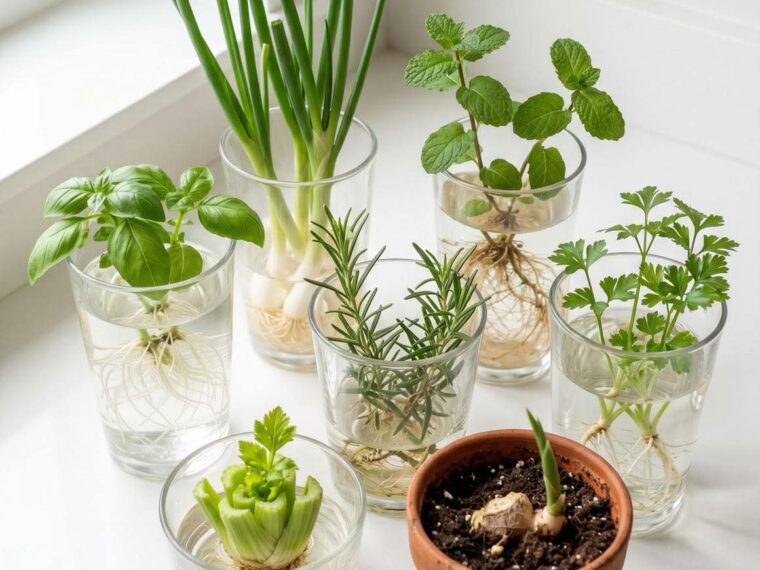
Before you throw those kitchen scraps away, put them in a glass of water first. 🌿
Green onions are the easiest place to start. Leave the white root end about 2 cm, drop it in a glass with a little water, and new shoots will show up in 3 to 5 days. Basil and mint work the same way. Cut a stem, remove the lower leaves, set it in water near a window, and roots form within a week. Both will keep producing as long as you keep them watered and in decent light.
For celery and romaine lettuce, cut the base off about 5 cm up and place it flat side down in shallow water. New growth comes from the center in just a few days. Ginger takes a bit more patience since it needs soil, but plant a small piece with a visible bud just below the surface and it will eventually come through. 🌱
The only things you need to remember are to change the water every couple of days and keep everything somewhere with decent light. Once the roots are a few centimeters long you can move them to soil or just leave them in water. It costs nothing and it genuinely works. Give it a try this week. 😄
🌱 Don’t Toss It—Regrow It: How Kitchen Scraps Can Turn Into Fresh Food Again
Most of us throw away vegetable scraps without a second thought. But what if those leftovers could grow into fresh food again—right on your windowsill?
Regrowing plants from kitchen scraps is one of the simplest, most satisfying ways to reduce waste, save money, and reconnect with your food. You don’t need a garden, special tools, or even much experience. Just a glass of water, a little light, and a bit of patience.
Here’s how it works—and how you can start today.
🌿 Why Regrowing Scraps Works
Many vegetables and herbs naturally store energy in their roots or stems. Even after being cut, they still contain enough nutrients to restart growth under the right conditions.
By placing them in water or soil, you’re simply giving them a second chance to continue growing.
🧅 1. Green Onions – The Easiest Place to Start
If you try only one plant, make it green onions. They regrow incredibly fast and require almost no effort.
🪴 How to regrow:
- Leave about 2 cm of the white root end attached
- Place it upright in a glass with a small amount of water
- Keep it near a window
⏱️ What to expect:
- New green shoots in 3–5 days
- Ready to trim again within a week
You can regrow them multiple times from the same roots.
🌿 2. Basil and Mint – Endless Fresh Herbs
Herbs like basil and mint grow easily from cut stems and can keep producing for weeks or even months.
🪴 How to regrow:
- Cut a healthy stem (10–15 cm long)
- Remove leaves from the lower half
- Place the stem in a glass of water
⏱️ What to expect:
- Roots begin forming within 5–7 days
- Once roots are a few centimeters long, transfer to soil (or keep in water)
These herbs thrive in sunlight, so a bright windowsill is ideal.
🥬 3. Celery and Romaine Lettuce – Regrow From the Base
You can regrow leafy vegetables from the base you normally throw away.
🪴 How to regrow:
- Cut the base about 5 cm from the bottom
- Place it flat side down in shallow water
- Keep it in a bright spot
⏱️ What to expect:
- New leaves start growing from the center in a few days
- Roots may develop over time
While they won’t grow into full supermarket-sized heads again, they’ll produce fresh leaves you can harvest.
🌱 4. Ginger – A Slower but Rewarding Option
Ginger takes more time and requires soil, but it’s still very doable at home.
🪴 How to regrow:
- Choose a piece with a visible “eye” or bud
- Plant it just below the surface of moist soil
- Keep it warm and lightly watered
⏱️ What to expect:
- Shoots may take a few weeks to appear
- Over time, the root expands underground
Patience is key—but the reward is fresh, homegrown ginger.
💧 The Simple Rules for Success
No matter what you’re regrowing, a few basic habits make all the difference:
✅ Change the water regularly
Every 2–3 days to prevent bacteria and keep plants healthy
☀️ Give them light
A windowsill with indirect sunlight works best
🌡️ Keep conditions moderate
Avoid extreme heat or cold
🌱 Move to soil when ready
Once roots reach a few centimeters, transferring to soil helps long-term growth
🌍 Why It’s Worth Trying
Regrowing kitchen scraps isn’t just a fun experiment—it has real benefits:
- Reduces food waste
- Saves money on groceries
- Provides fresh, chemical-free herbs and greens
- Teaches patience and sustainability
- Adds a bit of green life to your home
Even if you only regrow one or two items, it’s a step toward more mindful living.
⚠️ Keep Expectations Realistic
Not every scrap will regrow perfectly, and results can vary depending on light, temperature, and plant quality. Some plants (like lettuce) won’t fully regenerate, but they’ll still give you usable new growth.
Think of it as a bonus—not a full replacement for grocery shopping.
🌟 Final Thoughts
Before you throw those kitchen scraps away, give them a second chance. With just a glass of water and a little attention, you can turn leftovers into living plants.
It’s simple, it costs nothing, and it genuinely works.
Sometimes, the easiest way to grow your own food… is to stop throwing it away. 🌿