A Cheap and Easy Mini Greenhouse Using Dollar Store Umbrellas 🌱☂️
Gardening doesn’t have to be expensive. With a little creativity, everyday items can become practical tools in your garden. One clever and budget-friendly idea is turning inexpensive umbrellas into mini greenhouses for your plants.
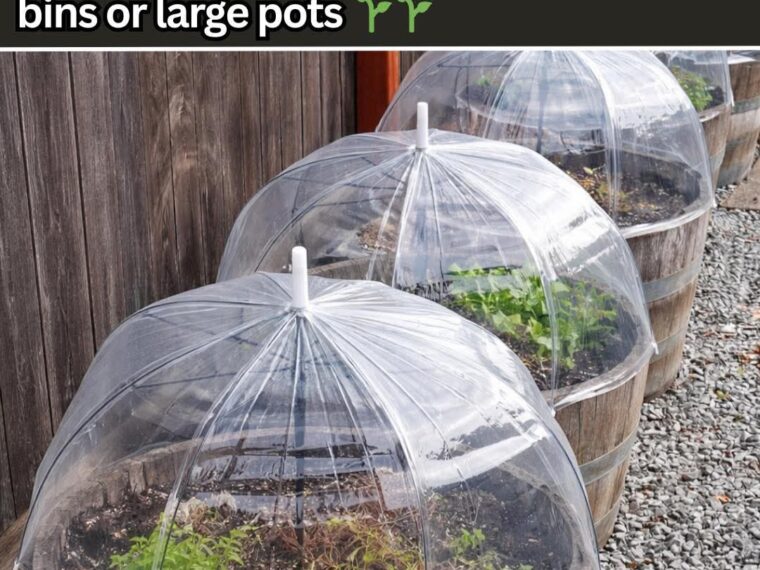
By removing the handles from dollar store umbrellas and placing them over tubs, bins, or large pots, you can create a simple protective structure that helps plants grow stronger while shielding them from harsh weather.
Why Plants Benefit from Mini Greenhouses
Young plants and seedlings are sensitive to sudden temperature changes, wind, and heavy rain. A small greenhouse cover helps create a more stable environment.
Mini greenhouse covers can help:
- Trap warmth from the sun
- Protect plants from cold nights
- Reduce wind damage
- Prevent heavy rain from flattening seedlings
- Keep pests away from young plants
Even a simple cover can significantly improve early plant growth.
Why Umbrellas Work So Well
Umbrellas are already designed to create a dome-shaped protective cover. When opened over plants, they naturally form a small shelter that allows light through while blocking rain and wind.
Benefits of using umbrellas include:
- Very low cost
- Quick to set up
- Lightweight and portable
- Reusable for multiple seasons
- Adjustable depending on plant size
Clear or light-colored umbrellas are especially useful because they allow more sunlight to reach the plants.
Materials You’ll Need
To create this simple greenhouse cover, you only need a few items:
- Cheap umbrellas (from a dollar store or discount shop)
- Large plant pots, tubs, or storage bins
- Garden soil and plants
- Optional: small stakes or weights to secure the umbrella
This project requires almost no tools.
Step-by-Step Method
1. Remove the Umbrella Handle
Start by removing the curved handle at the bottom of the umbrella. This allows the umbrella shaft to slide easily into soil or between the edges of containers.
If the handle is fixed, you may need to cut it off carefully.
2. Prepare Your Plant Container
Fill your large pots, tubs, or garden bins with soil and plant your seedlings or young plants as usual.
Containers work well because they allow you to easily position the umbrella cover.
3. Insert the Umbrella
Push the umbrella shaft into the soil at the edge of the container.
Open the umbrella so it spreads over the plants like a protective dome.
The umbrella should sit high enough to allow airflow but low enough to block wind and rain.
4. Adjust for Stability
If the umbrella moves in the wind, you can:
- Secure it with small stakes
- Add stones or bricks around the container
- Tie it gently to nearby supports
This keeps the structure stable during breezy weather.
5. Open and Close as Needed
One of the best advantages of umbrella greenhouses is flexibility.
You can:
- Open them during sunny days
- Close them during rain
- Remove them completely during warm weather
This allows you to control the growing environment without permanent structures.
Best Plants for Umbrella Greenhouses
This method works especially well for:
- Lettuce
- Spinach
- Herbs
- Seedlings
- Tomato starts
- Pepper plants
- Young flowers
It’s particularly useful during early spring when temperatures can fluctuate.
Extra Tips for Better Results
To improve your mini greenhouse setup:
- Use clear umbrellas for maximum sunlight
- Leave a small gap for airflow to prevent overheating
- Water plants early in the day to reduce moisture buildup
- Check daily during warm weather so plants don’t get too hot
Proper airflow helps prevent mold and mildew.
A Creative Way to Recycle
This idea is also a great way to reuse broken or unused umbrellas. Instead of throwing them away, they can serve a practical purpose in your garden.
Repurposing everyday objects reduces waste and saves money while helping you grow healthier plants.
Final Thoughts
A mini greenhouse doesn’t have to be complicated or expensive. By simply removing the handles from inexpensive umbrellas and placing them over tubs, bins, or large pots, you can create a quick protective shelter for your plants.
It’s a clever gardening hack that combines creativity, recycling, and practicality — proving that sometimes the best garden solutions are the simplest ones. 🌱☂️✨