
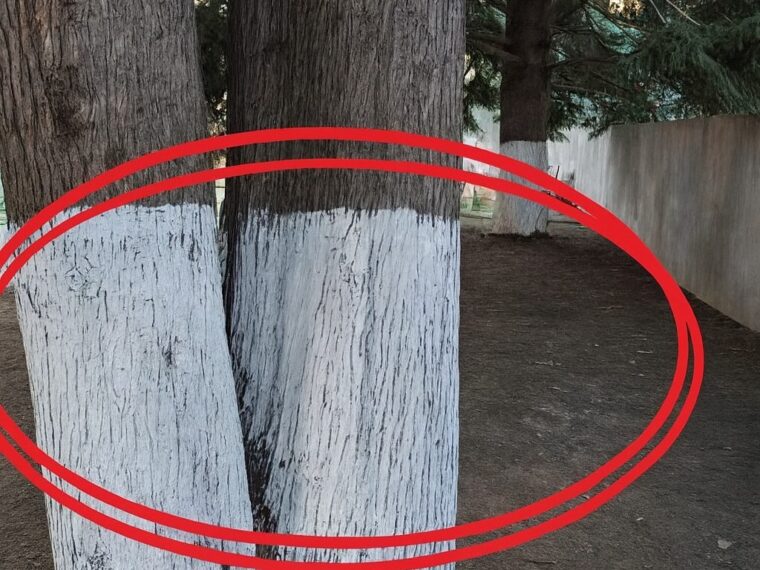
Have you ever noticed tree trunks painted white at the bottom and wondered why? It’s a common sight in parks, gardens, and along roadsides — yet few people know the real reason behind this curious practice.
It’s not just for decoration! The white paint on tree trunks serves several important protective and ecological purposes that help trees stay healthy and strong year-round.
Let’s explore why this simple yet effective technique is so widely used — and why you might consider doing it in your own garden.
1. Protection from Sunburn (Yes, Trees Can Get Sunburned!)
During winter or early spring, when the sun is strong but the air is cold, the bark of a tree can experience sudden temperature changes.
This can cause sunscald — cracks or splits in the bark due to rapid heating and cooling.
The white color reflects sunlight, preventing the bark from overheating during the day and cooling too quickly at night.
Just like sunscreen for humans, this coating acts as a thermal shield, protecting young or thin-barked trees like apple, citrus, and birch.
2. Repelling Insects and Pests
2. Repelling Insects and Pests
The white paint mixture often contains lime (calcium hydroxide), which is slightly alkaline and acts as a natural insect repellent.
It discourages ants, beetles, and other harmful pests from climbing up the trunk to lay eggs or feed on the bark.
Some gardeners also add copper sulfate to the mixture to prevent fungal infections and moss growth.
Scientific fact:
A study published in The Journal of Applied Entomology found that whitewashed trunks experienced significantly fewer pest infestations compared to untreated trees.
3. Preventing Fungal and Bacterial Diseases
The lime-based coating helps disinfect the bark, reducing the chances of fungal spores and bacteria taking hold.
In humid or rainy environments, this is crucial to keep the tree healthy and free from rot or decay.
The paint also helps seal small cracks and wounds, reducing the risk of pathogens entering through damaged bark.
4. Protecting Against Frost and Temperature Fluctuations
In many regions, the greatest threat to a tree’s health comes not from insects, but from temperature swings between day and night.
The white coating acts as an insulator, keeping the trunk’s temperature more stable and reducing the stress caused by freezing and thawing cycles.
This is especially beneficial for young trees with thin bark that haven’t developed their natural protective layers yet.
5. What Is the White Paint Made Of?
Traditional whitewash for trees is a natural mixture made from:
- 2 parts hydrated lime (calcium hydroxide)
- 1 part water
- (Optional) a small amount of copper sulfate for antifungal protection
- (Optional) natural latex or casein to help the paint stick longer
Some gardeners prefer eco-friendly versions made with clay or chalk powder instead of lime.
6. When and How to Apply It
- Best time: Late fall or early winter, before freezing temperatures start.
- How to apply: Use a brush or sprayer to coat the lower trunk (about 50–60 cm above the ground).
- Reapply: Every 12 months or after heavy rains, as the coating can wear off.
Fun Fact:
This practice dates back hundreds of years, used by farmers across Europe and Asia.
In some countries, it’s still part of agricultural regulations to protect fruit trees in orchards.
In Summary
Painting tree trunks white isn’t just an aesthetic choice — it’s a time-tested protection method that helps trees:
- Avoid sun damage and temperature shock
- Stay pest- and disease-free
- Remain strong and healthy through the seasons