Horizontal Chimney Heating System 🔥
A Smart Way to Heat Your Space Using Captured Heat
Most traditional fireplaces and stoves waste energy by sending valuable heat straight up the chimney. A horizontal chimney heating system is designed to do the opposite—capture, slow down, and reuse heat before it escapes. By redirecting hot exhaust gases through a horizontal flue, this system dramatically improves heating efficiency and comfort.
🌡️ What Is a Horizontal Chimney Heating System?
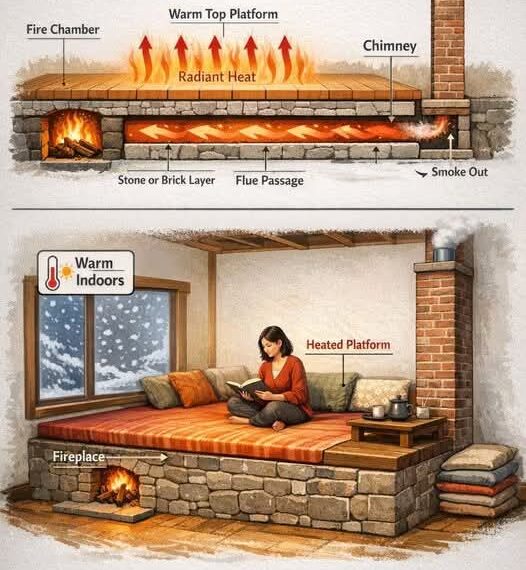
A horizontal chimney heating system channels hot smoke and gases sideways through masonry or heat-retaining materials before exiting the building. As the gases travel horizontally, heat is absorbed by surrounding materials and released slowly into the living space.
This concept is commonly used in:
- Rocket mass heaters
- Masonry heaters
- Greenhouses
- Off-grid and eco-homes
🔥 How It Works
- Fuel burns efficiently in a combustion chamber
- Hot gases are forced into a horizontal flue pipe
- The pipe runs through masonry, earth, or stone
- Heat transfers into the mass
- Warmth radiates slowly for hours
- Cooled gases exit safely through a vertical chimney
This process extracts far more usable heat than a straight vertical chimney.
🧱 Key Components
Combustion Chamber
- Burns wood cleanly and hot
- Often insulated for maximum efficiency
Horizontal Flue
- Usually metal stovepipe or masonry
- Runs 6–20 feet horizontally
Thermal Mass
- Brick, stone, cob, concrete, or earth
- Stores and releases heat slowly
Vertical Chimney Exit
- Creates proper draft
- Releases cooled exhaust gases
🌍 Why Horizontal Is Better Than Vertical
| Vertical Chimney | Horizontal Chimney |
|---|---|
| Heat escapes quickly | Heat stays indoors |
| Fast cooling | Long-lasting warmth |
| Low efficiency | High efficiency |
| High fuel use | Less fuel needed |
🌿 Benefits of a Horizontal Chimney System
- Uses 30–60% less fuel
- Provides long, steady warmth
- Reduces smoke and emissions
- Ideal for greenhouses and workshops
- Works well off-grid
- Comfortable radiant heat
🏠 Best Uses
- Greenhouses
- Cabins and tiny homes
- Earth-sheltered buildings
- Workshops and studios
- Emergency heating systems
⚠️ Safety Considerations
- Always maintain proper draft
- Use heat-resistant materials
- Install clean-out ports
- Avoid excessive horizontal length
- Follow local fire codes
- Ensure airtight connections
Carbon monoxide detectors are strongly recommended.
🔧 Design Tips for Best Performance
- Keep horizontal runs slightly sloped upward
- Limit sharp bends in the flue
- Add access points for cleaning
- Insulate the combustion chamber
- Use thermal mass strategically
🌡️ Heating Efficiency Explained
Unlike forced-air systems, horizontal chimney systems deliver radiant heat, which:
- Warms objects, not just air
- Feels more comfortable
- Maintains even temperatures
A single burn can provide warmth for 8–24 hours, depending on mass size.
🌱 Environmental Impact
- Burns wood more completely
- Produces fewer particulates
- Reduces deforestation pressure
- Supports sustainable heating
🌟 Final Thoughts
A horizontal chimney heating system turns wasted exhaust into stored warmth. By slowing down hot gases and capturing their energy, this design delivers comfort, efficiency, and sustainability—especially for off-grid and eco-friendly spaces.
It’s not about burning more fuel.
It’s about using heat smarter.