
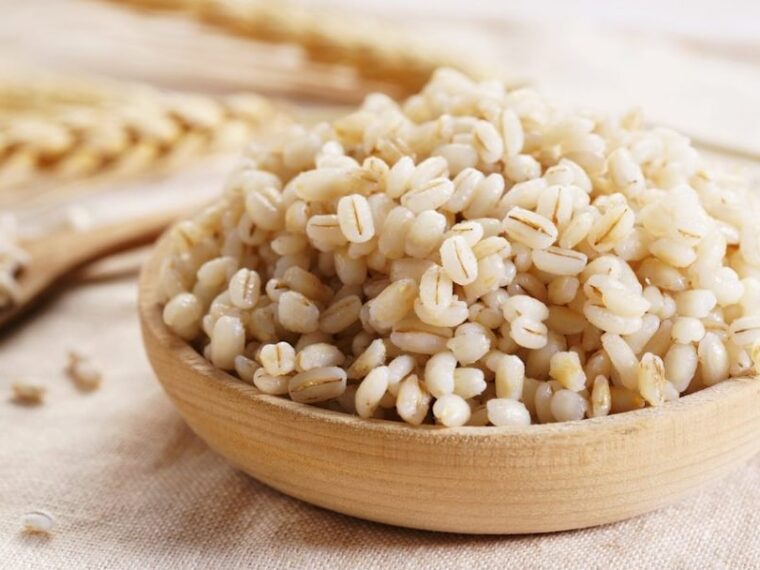
Barley is one of the oldest cereals in the world, cultivated as early as Mesopotamia in 7000 BC. It belongs to the Graminaceae family, and its scientific name is Hordeum vulgare. It is a common food in many countries, also used for bread-making and as the main ingredient in beer production. In the Mediterranean area, it was one of the most widely used cereals before the great popularity of wheat, which gradually replaced it as the basis of the diet. In the U.S., commercially available barley is divided into three main types, which differ in terms of properties and nutrients depending on the processing the grain undergoes. The two most common types found on shelves are hulled barley, in which the outer layer is removed, and pearled barley, which is further refined until it achieves its characteristic white hue and smooth texture. It is quick to cook, but provides less fiber. Whole barley, on the other hand, retains its bran, is not as easy to find as the other two, and requires prolonged cooking. Generally, it is a very interesting grain for its various beneficial properties and versatility in the kitchen: it has a delicate flavor, perfect for cold salads, soups, and orzotti. Let’s discover its virtues.
Barley’s Properties and Benefits
Barley is a good source of macro and micronutrients, such as protein, fiber, and minerals, and is best known for its anti-inflammatory and digestive properties. Hulled barley is closer to the whole grain than pearled barley, retaining many of the original nutrients: according to the values indicated by Feedinamics, 100 grams contain 354 kcal, distributed primarily across 73 grams of carbohydrates (complex and slow-release), 17 grams of fiber, and 12 grams of protein. Cooked pearl barley, on the other hand, contains 255 calories, with 5.6 grams of protein and 3.9 grams of total fiber in a 215-gram serving.
In terms of protein, therefore, in both cases we have a good quantity, although it should be remembered that they are not complete proteins in essential amino acids: for example, they lack lysine, like most cereals, which is instead present in legumes, which is why it is recommended to combine the two foods in diets. Fiber also offers interesting benefits: it has a stimulant and laxative effect, promoting intestinal transit. Not to mention minerals such as potassium, phosphorus, magnesium, zinc, copper and manganese, B vitamins and bioactive compounds, above all beta-glucans, allies of microbiota health and useful for controlling cholesterol and blood sugar. Let’s look in detail at the main benefits.
Barley’s Many Benefits, Properties, and (Some) Contraindications
Barley is one of the world’s oldest cultivated grains, valued for both its nutrition and versatility. Though often overlooked, it offers several important health benefits when used regularly in a balanced diet.
Key Benefits and Properties
Barley is rich in dietary fiber, especially beta-glucans, which help:
- Support healthy digestion
- Lower LDL (“bad”) cholesterol
- Improve blood sugar control
It also provides essential minerals such as magnesium, selenium, phosphorus, and iron, along with B vitamins that support energy metabolism and nervous system health.
Thanks to its low glycemic index, barley helps promote steady energy levels and longer-lasting satiety, making it useful for weight management and heart health. Its antioxidants also contribute to reducing inflammation and supporting overall cellular health.
Traditional and Practical Uses
Barley is commonly used in:
- Soups and stews
- Bread and porridge
- Barley water for hydration and digestion
- Malted products
Its mild, nutty flavor makes it easy to combine with vegetables, legumes, and proteins.
Contraindications and Precautions
Despite its benefits, barley is not suitable for everyone:
- It contains gluten, so it must be avoided by people with celiac disease or gluten sensitivity
- High fiber content may cause bloating if introduced too quickly
- Individuals with digestive conditions should consume it in moderation
Final Thought
Barley is a nutrient-dense, affordable grain with proven benefits for heart health, digestion, and blood sugar balance. When tolerated well, it can be a valuable addition to a healthy diet — but those sensitive to gluten should choose alternatives.