
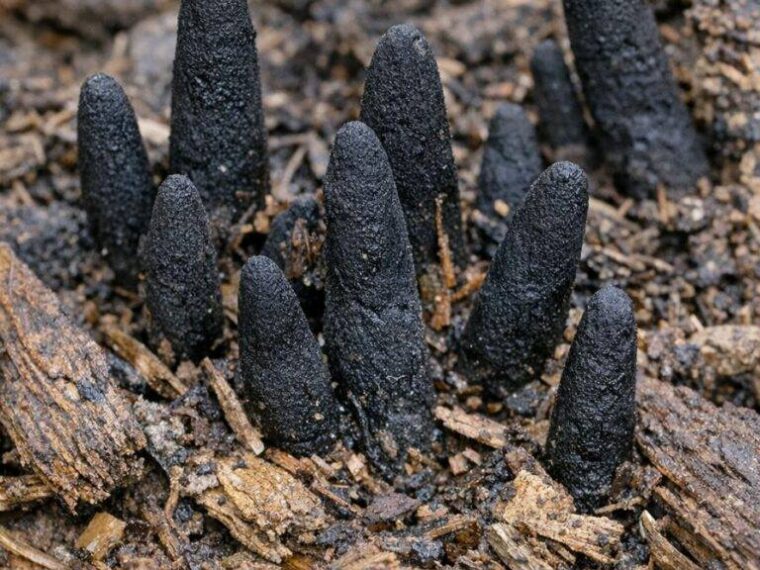
You walk into your backyard… and suddenly notice strange black finger-like shapes pushing out of the mulch.
They look hard. Dark. Almost like something buried underground is trying to crawl out.
Many people think:
- Is it insect nests?
- Something dangerous?
- Animal remains?
- A parasite?
The truth is far more fascinating.
In most cases, this eerie discovery is a mysterious fungus known as Xylaria polymorpha, commonly nicknamed Dead Man’s Fingers.
What You’re Seeing
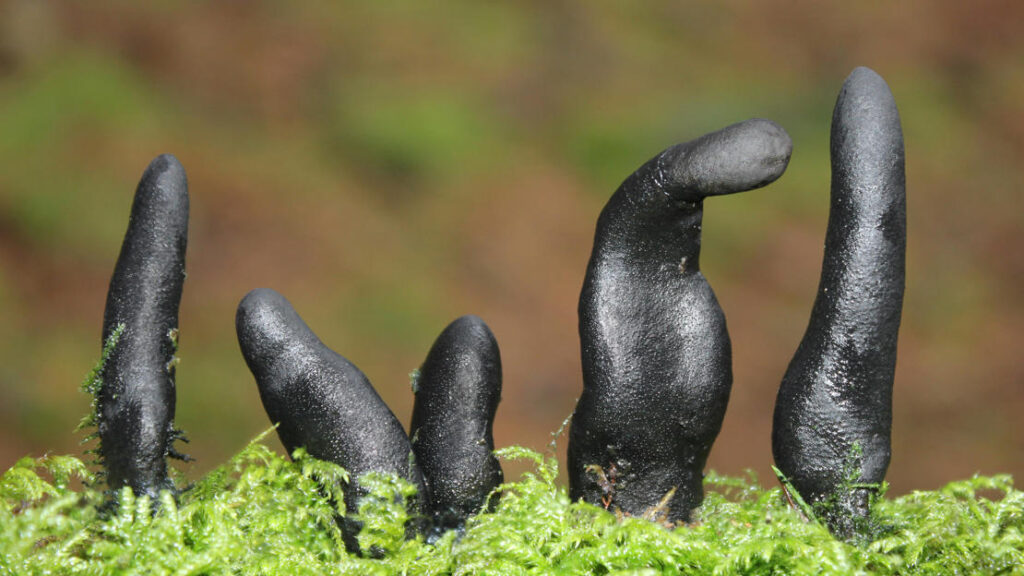
Typical appearance:
- Black or very dark gray “fingers”
- Hard, rough texture
- Growing in clusters
- Emerging from mulch or soil
- Often near buried wood
These structures are the fruiting bodies of a fungus that lives hidden underground.
Young versions can look pale or bluish before turning deep black — which makes the transformation even more dramatic.
Why This Creepy Fungus Appears
This fungus is not random. It shows up for a reason.
Dead Man’s Fingers feeds on:
- Rotting wood
- Old tree roots
- Buried branches
- Wood-based mulch
So if you see it, there is almost always decomposing wood below the surface — sometimes from a tree removed years ago.
In other words, your garden is quietly recycling itself.
Visual Guide (examples you would typically see)
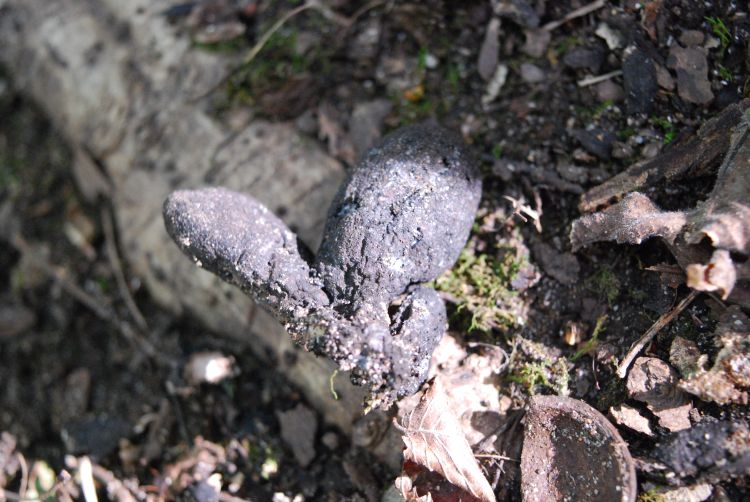
Typical related visuals:
- Dead Man’s Fingers growing on tree stumps
- Clusters emerging from bark mulch
- Early gray stage before turning black
- Close-ups showing the rough texture
These help confirm identification.
The Science Behind It
Fungi like Xylaria polymorpha are key ecosystem recyclers.
Scientific research in mycology shows wood-decay fungi:
- Break down lignin (very hard plant material)
- Release nutrients back into soil
- Support microorganisms
- Improve soil structure over time
Without fungi, forests — and gardens — would be buried in dead wood.
Is It Dangerous?
This is the question everyone asks.
Good news:
Not harmful to touch
Not a plant disease
Usually harmless to pets
Doesn’t attack healthy plants
But:
Not edible
Should not be consumed
Indicates buried wood decay
It looks scary — but it’s mostly harmless.
Why It Looks So Disturbing (Psychology)
There’s a reason this fungus goes viral online.
Humans instinctively react to:
- Shapes resembling body parts
- Dark growth emerging from soil
- Unknown natural phenomena
This triggers curiosity + fear — perfect for viral garden mysteries.
Should You Remove It?
You can remove it for aesthetic reasons, but removal is temporary.
It returns because:
The fungus lives inside the wood underground
What you see is only the surface structure
Permanent reduction requires removing the buried wood source.
How To Reduce Future Growth
Practical tips:
- Remove old roots or buried wood
- Use mixed mulch instead of pure wood mulch
- Improve drainage
- Turn mulch regularly
- Allow soil surface to dry between watering
You can reduce it — but not fully eliminate fungi (and that’s normal).
Fascinating Facts
- The fungus can live for years underground
- It may appear suddenly after rain
- Sometimes grows where a tree was cut long ago
- The interior is white despite the black exterior
- It’s one of the most recognizable “weird fungi” online
Final Thoughts
Those strange black fingers are not a threat — they’re a sign of nature quietly working beneath your garden.
What looks creepy is actually a natural recycling system breaking down hidden wood and enriching your soil.
So next time you spot these eerie shapes, remember:
Your garden isn’t haunted…
It’s alive.