
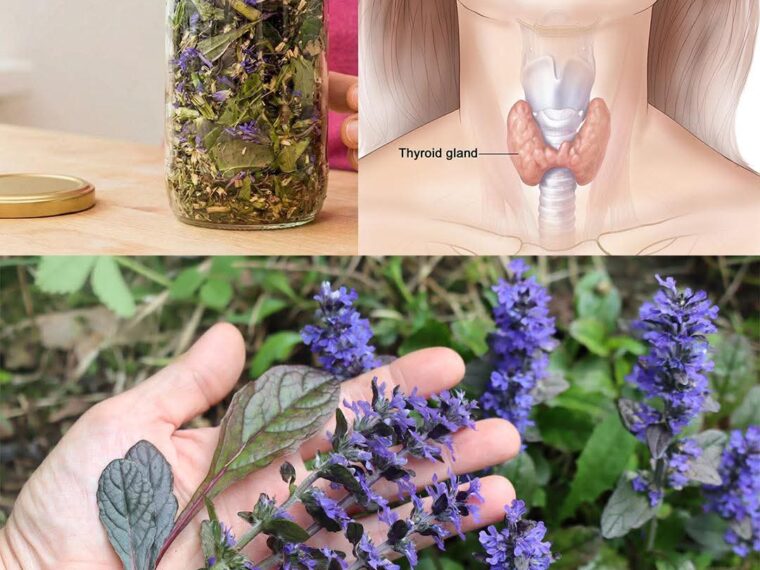
Bugleweed does not have the fame of ginseng or the romance of lavender, yet this modest wetland mint has earned a long-standing place in traditional herbal practice. Known botanically as Lycopus virginicus and related Lycopus species, bugleweed has historically been used for bleeding, coughs, and nervous agitation, but today it is best known in herbal circles for its possible role in supporting people with mild hyperthyroid symptoms. Modern references note that it has been used for mild hyperthyroidism, breast pain, and premenstrual discomfort, though strong clinical evidence is still limited.

What makes bugleweed interesting is not brute strength, but direction. Traditional and modern herbal sources describe it as an herb that may help “slow things down” when the body feels overstimulated. That is why it is often discussed in connection with symptoms such as restlessness, heat intolerance, palpitations, or a sense of internal overdrive associated with an overactive thyroid. Some literature suggests bugleweed compounds may influence thyroid-related pathways, but experts also emphasize that evidence is not yet robust enough to treat it as a proven replacement for medical therapy.
Why people call bugleweed “powerful”
The power of bugleweed lies in its specificity. It is not usually praised as an all-purpose tonic. Instead, it is valued for a narrower tradition: helping settle excess. Herbal monographs describe it as having antithyrotropic effects, meaning it may reduce thyroid overactivity, and some reviews note possible effects on immune or receptor activity relevant to Graves’ disease. Still, these findings are preliminary, and quality human trials remain scarce.
That makes bugleweed a good example of an herb with promise but limits. It may be meaningful for the right person, in the right context, under informed supervision. It is not a miracle cure, and it is not an herb to experiment with casually if thyroid disease is suspected.
Traditional and current uses
Historically, bugleweed was used in folk medicine for nosebleeds, heavy menstrual bleeding, coughs, and conditions involving bleeding from the lungs. In more current herbal use, the main conversation centers on mild hyperthyroidism, PMS-related symptoms, and breast discomfort.
Because the thyroid affects heart rate, energy, temperature tolerance, weight, and mood, any herb that may influence thyroid activity deserves respect. Hyperthyroidism can become serious and, when untreated, may lead to complications including heart problems, bone loss, and in rare cases thyroid storm.
How bugleweed is usually used
Bugleweed is most often taken as a tincture, tea, capsule, or dried herb preparation. Because standardized dosing is not well established, major references note that there is no firmly proven dosing guideline based on strong clinical trials. One open-label study cited in a monograph used 40 mg/day of Lycopus europaeus herb in divided doses for 3 months for mild hyperthyroidism, but that should not be treated as a universal dose.
A cautious, practical way to think about use is this:
Tea: Traditionally made from the aerial parts of the plant. This is the gentlest form, though strength can vary a lot depending on the herb and preparation.
Tincture: Common in herbal practice because it is concentrated and easier to titrate in small amounts.
Capsules or extracts: Convenient, but quality depends heavily on the manufacturer and the exact species used.
If someone chooses to use bugleweed, the wisest approach is to do so with a clinician or qualified herbal practitioner who understands thyroid disorders, medications, and lab monitoring.
Safety matters more than hype
Bugleweed is not appropriate for everyone. Sources advise avoiding it during pregnancy and breastfeeding, partly because of its possible hormone-related effects and the lack of adequate safety data. It is also not a good fit for people with hypothyroidism or those already taking thyroid medication unless a clinician is supervising its use. Sudden discontinuation after heavy use has also been described as a theoretical concern.
There is also concern that bugleweed may interfere with iodine uptake and thyroid balance.
A sensible way to use it
The most responsible use of bugleweed looks like this:
- Confirm the issue first. Symptoms like anxiety, weight loss, palpitations, sweating, and insomnia can have many causes. Thyroid testing matters.
- Do not self-treat severe symptoms. Fast heartbeat, chest pain, tremor, shortness of breath, or major weight loss need medical evaluation.
- Use only a clearly identified Lycopus product from a reputable supplier.
- Start conservatively and monitor how you feel.
- Recheck thyroid labs if using it for thyroid-related reasons.
Bugleweed’s real power is not that it is dramatic. Its power is that it may offer a focused, calming influence in situations of excess, especially where mild thyroid overactivity is involved. But herbs are strongest when matched with wisdom. Bugleweed should be approached as a thoughtful tool, not a shortcut. In the right setting it may be useful; in the wrong setting it may complicate an already delicate hormonal picture.
Inspired by this? Share the article with your friends!