Building a solar food dehydrator stops your harvest from going to waste and eliminates the high cost of running an electric oven for hours to dry your garden snacks.
Trying to dry fruit and herbs inside often leads to sticky messes on your counters and uses a massive amount of electricity that heats up your whole house. A solar dehydrator fixes this by using the free power of the sun and natural moving air to gently remove moisture while keeping your food safe from bugs and birds. It solves the problem of having way too many Big Boy tomatoes or Gala apples at once by turning them into lightweight snacks that stay good in your pantry for months.
You will save so much money on your grocery bill because you can make your own dried mangoes, jerky, and kale chips without any chemical preservatives. The screened walls let the wind carry away the dampness while the wooden frame keeps the heat inside to speed up the process. It also gives you a dedicated spot in your yard to process your harvest so your kitchen stays clean and organized.
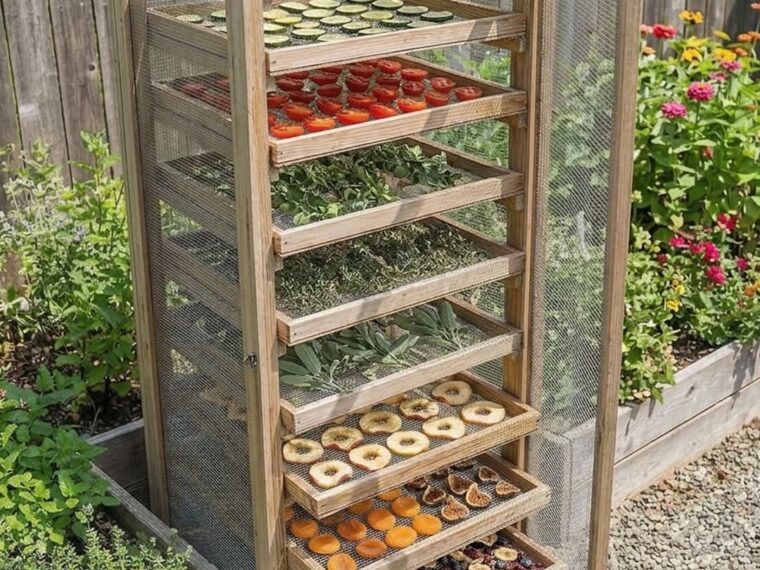
Start by building a tall wooden box using rot resistant cedar or pine boards that are about one inch thick for strength. Cut a door for the front and use small metal hinges and a simple latch to keep it closed tight against hungry squirrels. Cover all four sides and the roof with a fine metal screen like aluminum window screening and use a heavy duty staple gun to secure it every two inches so no flies can get inside.
Build several sliding trays using thin wood strips and more metal screening so air can move up through the bottom of the food. For the best results, place a piece of clear plexiglass over the south facing side or the roof to trap even more heat from the sun while the mesh sides let the moisture out. Place your dehydrator on a level bed of crushed limestone gravel to keep it steady and away from damp grass.
Slice your fruits and vegetables into thin, even pieces and lay them in a single layer on the trays so they dry at the same time. You can dry herbs like Common Sage and Munstead Lavender very quickly by placing them on the top shelves where the air is the warmest. Adding a dark piece of metal at the very bottom of the box will act like a heater by soaking up the sun and warming the air as it rises through your food.
Wipe down the wooden trays with a bit of white vinegar and water after every use to keep the wood clean and safe for your next batch of food. Store the dehydrator in your shed or under a porch during the winter to keep the wood from getting too wet and to make sure the screen stays tight and strong.