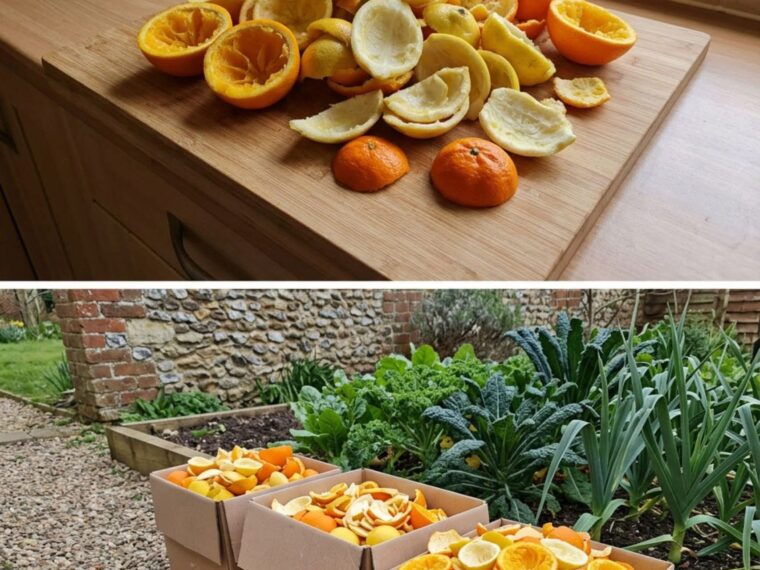
Citrus peels from the kitchen have seven practical uses in the garden and home before they reach the compost bin. 🍊
- Natural insecticide spray
Citrus peel contains limonene, a compound toxic to aphids, whiteflies, scale insects, and ants — the same compound used as the active ingredient in many commercial organic insecticides. Fill a glass jar with chopped lemon or orange peel and cover with white vinegar. Steep for two weeks in a dark spot. Strain, dilute 1:1 with water, and spray directly onto affected plants. Apply in the evening to avoid sun-burning wet foliage. - Ant and slug deterrent
Ants avoid limonene because it disrupts the chemical trails they use to navigate. Scatter freshly grated peel along ant trails, around container bases, and near entry points. For slugs, place peel pieces around vulnerable plants — the sharp scent keeps them at a distance. Replace every three to four days as the scent fades. - Cat deterrent
Cats strongly dislike citrus scent. Scatter orange or lemon peel in garden beds, containers, and areas where cats dig. Works indoors too: pieces of peel near houseplants discourage cats from digging in the potting mix. - Compost activator
Citrus peels add nitrogen and speed decomposition. Cut them into small pieces before adding — whole peels take months to break down. Mix with dry material at roughly 1 part peel to 3 parts dry material to prevent acidity from slowing bacterial activity. Partially decomposed citrus is attractive to earthworms. - Natural fire starter
Dried citrus peel burns easily due to the flammable essential oils in the skin. Dry peels on a tray for three to four days until crisp. Use in place of commercial fire starters for a fireplace or charcoal grill — they catch quickly and produce a pleasant clean smoke. - Trash can deodorizer
A handful of fresh peel placed at the bottom of the kitchen compost bin or trash can after each emptying masks odors and discourages fruit flies from laying eggs. Replace with each emptying. - Organic matter for acid-loving plants
Hydrangeas, azaleas, blueberries, camellias, and gardenias benefit from organic matter with a slightly acidic starting pH. Finely chopped citrus peel worked into the soil around these plants contributes organic matter as it decomposes. Note: peels alone will not produce a significant or reliable change in soil pH — for genuine acidification, use sulfur, acidic fertilizer, or pine bark mulch. Combining peel with coffee grounds adds more organic acid content than either alone. Avoid using near plants that prefer alkaline conditions such as lavender or rosemary.
🍊 Seven uses before it reaches the trash. The peel is not waste — it is the useful part.