🌿 What the Science Really Shows
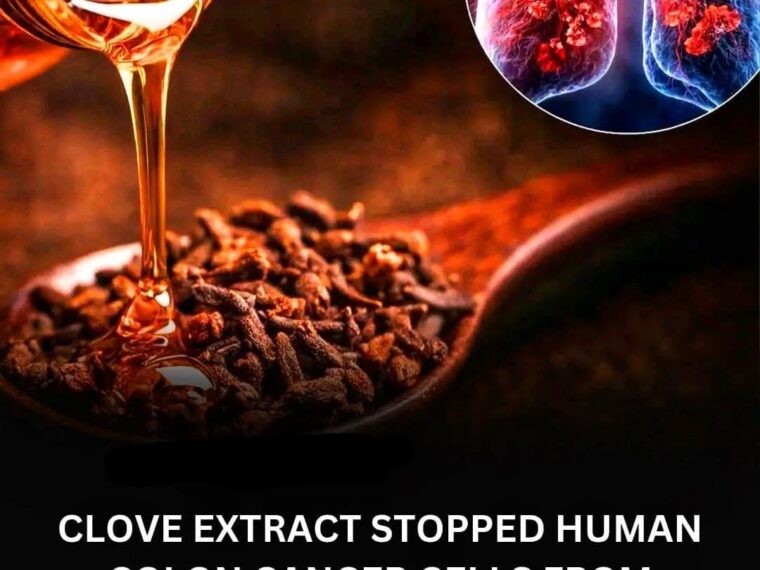
Natural compounds found in everyday foods often attract attention for their potential health benefits. One such example is clove, a common spice that has been studied for its biological activity. A study published in Oncology Research (2014) explored how clove extract may affect cancer cells—particularly those involved in colorectal cancer.
While the findings are promising, it’s important to understand what the research actually shows—and what it does not mean.
🧪 What the Study Investigated
Researchers focused on a specific preparation called ethyl acetate extract of cloves (EAEC) and tested its effects on:
- Human colon cancer cells (HT-29) in laboratory conditions (in vitro)
- Mouse models of colon cancer (in vivo)
The goal was to see whether compounds in cloves could influence cancer cell growth and survival.
⚙️ Key Findings: How Clove Extract Affected Cancer Cells
1. Inhibition of Cancer Cell Growth
The study found that clove extract slowed the growth of cancer cells by causing G0/G1 cell cycle arrest.
This means:
- Cells were stopped at an early stage of their life cycle
- They could not proceed to DNA replication
- As a result, they were unable to divide and multiply
This kind of interruption is a key strategy in cancer treatment research.
2. Induction of Apoptosis (Programmed Cell Death)
Another important effect observed was apoptosis, a natural process where damaged or unwanted cells self-destruct.
Clove extract:
- Triggered apoptosis in cancer cells
- Reduced overall cell survival
This is significant because many cancer cells resist normal cell death mechanisms.
3. Role of Active Compounds
The study identified oleanolic acid (OA) as one of the key bioactive compounds contributing to these effects.
However, researchers noted that:
- The whole clove extract often performed better than OA alone
- This suggests a synergistic effect—multiple compounds working together
4. Effects in Animal Models
In mouse models of colon cancer, clove extract showed:
- Suppression of tumor growth
- Effects comparable to, or in some cases stronger than, 5-fluorouracil (5-FU), a commonly used chemotherapy drug
The mechanism involved:
- Increased expression of proteins like p21, which block cell cycle progression
- Decreased expression of proteins needed for cell division
🧠 Why These Findings Matter
This research highlights the potential of plant-based compounds in cancer research, particularly for:
- Slowing tumor growth
- Enhancing cell death in cancer cells
- Targeting multiple biological pathways
It also supports the idea that natural substances may play a role in future therapeutic development.
⚠️ Important Limitations to Understand
While the results are encouraging, there are critical limitations:
❗ Laboratory vs. Human Reality
- The study was conducted on cells in a lab and animals
- Human biology is far more complex
- Effects seen in controlled conditions do not always translate to people
❗ Not a Treatment or Cure
- Clove extract is not a proven cancer treatment
- It should never replace medical care or prescribed therapies
❗ Dosage and Safety
- The concentrations used in research are often much higher than what you would consume in food
- Safety and effectiveness in humans are still unknown
🌿 What This Means for Everyday Health
Cloves remain a nutritious spice with beneficial compounds, including antioxidants. Incorporating them into a balanced diet may support general health, but:
- They should be viewed as part of a healthy lifestyle, not a medical solution
- Their potential in cancer treatment is still under investigation
🔬 The Bigger Picture: Future Research
Studies like this are an early step in a long process.
Before any compound becomes a treatment, it must go through:
- Extensive laboratory testing
- Animal studies
- Multiple phases of human clinical trials
Only then can safety and effectiveness be confirmed.
🌟 Final Thoughts
The 2014 study on clove extract offers an interesting glimpse into how natural compounds may interact with cancer cells. By slowing cell growth and promoting cell death in laboratory settings, cloves show potential worth exploring further.
However, the key takeaway is balance:
- The science is promising—but still early
- The results are meaningful—but not definitive
- The potential is real—but not yet proven in humans
Cloves may be powerful in the lab, but in real life, they remain a supportive part of a healthy diet—not a standalone solution.
📚 Citation
- Kaur, M., et al. (2014). Anticancer and tumor growth inhibitory potential of clove extract in colon cancer. Oncology Research, 21(5), 247–259.
If you want, I can simplify this into a short, viral-style post or compare it with other natural compounds studied for cancer research 🌿