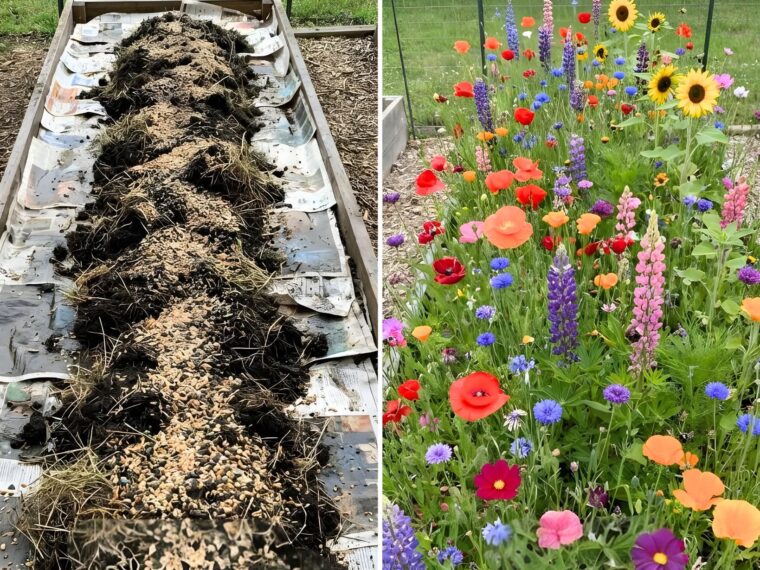
These seeds crave the authentic April experience. Stick them in the ground. Give them wind. Give them rain. Real flowers appreciate a little mud between their toes and a sky without a roof.
Growing Pains and April Grains

Real gardeners trust the soil, not plastic trays. Besides, your windowsill belongs to your cat, not to plastic pots.
Quick note: If your garden still sees snow in April, don’t worry. Hardy seeds like poppies, bachelor’s buttons, and sweet peas can handle cool soil, while warm-season flowers can wait until the weather settles.
1. Bachelor’s Buttons (USDA Zones 2-11)

Surviving a surprise frost makes these blue gems the ultimate heroes. Frilly petals prefer the cool embrace of early spring soil. Scatter them thinly across the surface.
I advise raking the earth lightly to anchor the seeds against heavy rain. Local bees will appreciate the nectar while other flowers still sleep.
Quick tip: Bachelor’s buttons can reseed freely in some gardens. Deadhead spent flowers if you want to prevent them from spreading.
If you’re trying to support pollinators early in the season, we also wrote an article about native flowers that attract pollinators better than many common garden plants.
2. Poppies (USDA Zones 3-10)

Have you ever tried moving a poppy? Don’t. These delicate soulsprefer cool spring soil and rarely transplant well. Scatter the microscopic seeds across the April soil.
Because the seeds are so tiny, I leave them on the surface and barely press them into the soil instead of covering them. A thin dusting of sand keeps them from drifting into the neighbor’s yard during a spring gale.
Quick tip: One thing I’ve learned is to mix the seeds with a little sand before scattering them. It makes spreading those tiny seeds much easier and prevents clumps.
3. Nasturtiums (USDA Zones 2-11)

Peppery petals flourish best when you ignore them. Rich fertilizer creates massive leaves that hide every vibrant bloom.
Push the wrinkled seeds an inch down into poor soil. Lean conditions encourage the plant to prioritize flowers over foliage. You get a spicy, edible carpet that thrives on your calculated apathy.
Quick tip: If germination seems slow, I usually soak the seeds for a few hours first because that thick seed coat can delay sprouting.
4. Zinnias (USDA Zones 3-11)

Let the neighborhood overachievers waste money on purple grow lights. These flamboyant disks crave real heat instead.
Wait until the soil is warm and frost danger has passed before tucking seeds an inch into a sunny spot. I suggest leaving a twelve-inch gap between plants to ensure good airflow.
Quick tip: I’ve found zinnias rot quickly in cold soil, so I wait until nights stay warm before planting.
If you want blooms all summer long, we explain how deadheading zinnias keeps them producing flowers much longer.
5. Sunflowers (USDA Zones 2-11)

Sturdy stalks prefer a permanent home from day one. Shifting these golden giants later can stunt their growth or weaken the stem. Shove seeds two inches deep into a sunny patch.
Deep planting helps create a natural anchor against summer winds. Nature provides the scaffolding while you simply supply the dirt and perhaps a cold beverage.
Quick tip: One trick I use is planting two seeds in each spot because birds sometimes pull up the first sprout.
6. Cosmos (USDA Zones 2-11)

Its whimsical foliage appears without any expensive
They thrive in poor soil. Rich fertilizer produces only green bushes with zero blossoms. Skip the compost pile entirely. You want a lanky show that sways in the wind.
Quick tip: Cosmos often reseed themselves. If you prefer a tidier garden, remove seed heads before they mature.
7. Sweet Peas (USDA Zones 2-11)

I always soak these stony seeds in tepid water overnight. Softening that stubborn coat helps them sprout more quickly once they hit the ground. You should provide a sturdy trellis early, though.
Young vines start climbing quickly, so having vertical support ready avoids tangled growth. Sweet peas also prefer cool soil, germinating best around 50-60°F for the most intoxicating, nostalgic perfume imaginable.
Quick tip: In my experience, planting them early in cool spring soil produces much stronger plants than waiting for warm weather.
If you love fragrant plants, we also wrote a guide on fragrant flowers that work beautifully in smaller gardens.
8. Calendula (USDA Zones 3-10)

Does your vegetable patch need a sacrificial lamb? These orange survivors germinate in soil as cold as 40°F. Press the curved seeds into damp earth.
Calendula usually attracts aphids, which means it will draw them away from your prized lettuce. If a flower becomes heavily infested, you can simply remove it to help reduce the pests. It’s both an ecological and an economical way to have a healthy garden.
Quick tip: I usually scatter a few extra seeds because calendula germinates quickly and fills empty spaces in the garden.
Calendula is also one of the easiest companion plants to grow, and we explain exactly why calendula is such a powerful companion plant in another guide.
9. Nigella (USDA Zones 2-10)

I drop these black grains directly onto the soil lightly cover them with a thin layer of soil (about 1/8 inch). Eventually, the pods will resemble striped balloons.
These decorative spheres add a Victorian charm to dried bouquets long after their blue blossoms fade. In my experience, the lazy direct sowing often provides two full seasons of decor.
Quick tip: I rarely thin nigella because the plants actually look better when they grow in loose drifts.
If you plan to save seeds from your flowers, we also explain how to store garden seeds so they stay viable for years.
10. Amaranth (USDA Zones 2-11)

Wait for the soil to reach a steady 70°F before committing these tiny grains to the earth. Cold mud can cause seeds to rot. I always thin the seedlings to eighteen inches apart because crowding produces stunted stalks with weak color.
Towering burgundy plumes eventually add vertical weight to the back of a flower bed. A single packet usually provides almost a lifetime supply if you let a few plants go to seed.
Quick tip: Amaranth can self-seed easily. Allowing a few plants to drop seed will bring them back next year, but remove seed heads if you want to keep them contained.
11. Morning Glories (USDA Zones 3-10)

Stop feeding these climbers expensive fertilizer unless you want a massive pile of green laundry. Nitrogen-rich encourages leafy growth but fewer blooms.
I wait for a steady 65°F dirt temperature before dropping scarred seeds near a vertical trellis. Those iconic trumpets only appear when the plant isn’t overfed. You get a lush screen for the price of a single latte.
Quick tip: Morning glories reseed aggressively in many climates and can spread quickly. Remove seed pods before they dry if you want to control where they grow.