
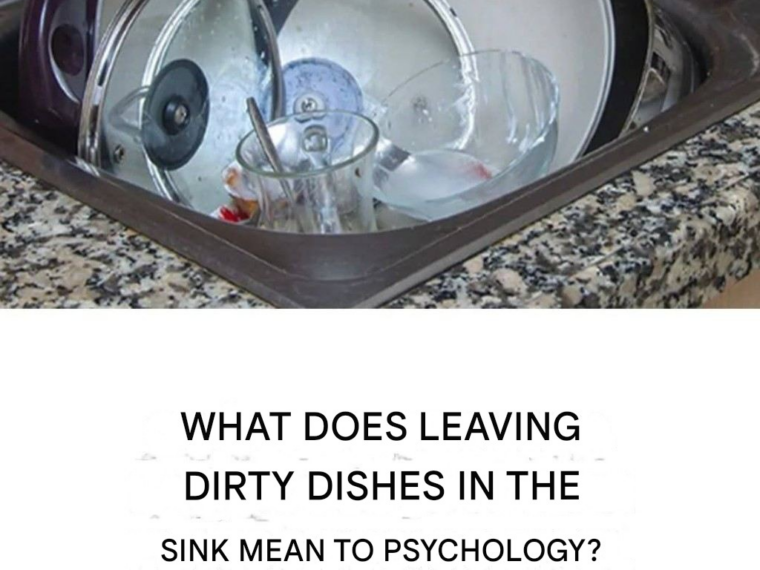
Do you often leave dishes in the sink? According to psychology, it’s more than just a habit: it reveals things about stress, tidiness, and daily energy management.
Leaving dirty dishes in the sink is a very common behavior. For some, it’s just a matter of time; for others, it’s a conscious decision. However, according to psychology, this habit can reveal much more about how a person experiences home life, manages stress, and handles their daily responsibilities.
The seemingly trivial act of postponing household chores may be related to very specific emotional, mental, and organizational factors.
Dishes in the sink and stress management
One of the most common meanings is related to stress. When mental energy is low, the brain tends to postpone activities it perceives as unrewarding. Leaving the dishes in the sink becomes a form of mental conservation, a welcome break after a busy day.
In these cases it is not laziness, but an automatic response to an overload of thoughts and commitments.
Procrastination and the Need for Control:
According to behavioral psychology, putting off washing the dishes can be a form of daily procrastination. Repetitive tasks without an immediate reward are postponed to a later, often indefinite, time.
For some people, this choice also represents a way to maintain control: deciding when to do something, even if it is simple, strengthens the feeling of autonomy in days marked by rigid rules and schedules.
Relationship with order and home:
The way you manage the sink also reflects your relationship with domestic order. Those who tolerate dirty dishes for hours or days tend to have a higher tolerance for clutter and greater mental flexibility.
Conversely, those who feel uncomfortable seeing a full sink associate external order with a sense of inner calm and stability. Neither of these approaches is wrong; they are simply different ways of experiencing spaces.
Decision fatigue and nighttime routines:
This habit is most common at night. Psychology refers to it as decision fatigue: after making so many decisions during the day, even a simple decision like washing the dishes can be exhausting.
In this context, leaving everything in the sink becomes a mental shortcut that allows you to postpone the task until the next day.
When it becomes a sign that shouldn’t be ignored:
If dishes remain in the sink for extended periods and the situation causes discomfort or guilt, this behavior could indicate a deeper difficulty managing daily energy. It’s not the act itself that matters, but how it affects personal well-being.
Psychology suggests observing your habits without judgment, identifying small and sustainable changes instead of imposing rigid rules.
Dishes in the sink: habit or personal message?
Leaving dishes in the sink isn’t just a matter of tidiness or disorder. It can reflect stress, tiredness, a need for independence, or a changing relationship with home. Understanding the meaning behind this behavior helps you better understand your daily needs and find a more functional balance.