
Snoring is one of those nighttime problems that seems simple but is actually influenced by many factors: anatomy, breathing patterns, sleep depth, allergies, weight, alcohol use, and—very importantly—sleep position. One of the most common questions people ask is whether sleeping on the right side helps or worsens snoring. The answer isn’t a simple yes or no, but science gives us some clear clues.
Why sleep position affects snoring
Snoring happens when airflow is partially blocked as you breathe during sleep. When muscles in the throat relax, the airway narrows. Air passing through causes the surrounding tissues to vibrate, producing the familiar snoring sound.
Your sleep position changes how gravity acts on these tissues. This is why sleeping on your back is strongly associated with louder and more frequent snoring: gravity pulls the tongue and soft palate backward, narrowing the airway. Side sleeping, in general, is usually better for keeping the airway more open.
But not all side sleeping is equal.
Sleeping on the right side: helpful or harmful?
For many people, sleeping on the right side can reduce snoring compared to sleeping on the back, but it may worsen snoring compared to sleeping on the left side—especially in certain individuals.
Here’s why:
1. Airway openness
Side sleeping prevents the tongue from falling straight back into the throat. This alone often decreases snoring intensity. From this perspective, the right side is usually better than sleeping on your back.
However, some studies and sleep specialists note that the left side may keep the airway slightly more stable for certain people, particularly those with sleep apnea or reflux-related snoring.
2. Acid reflux connection

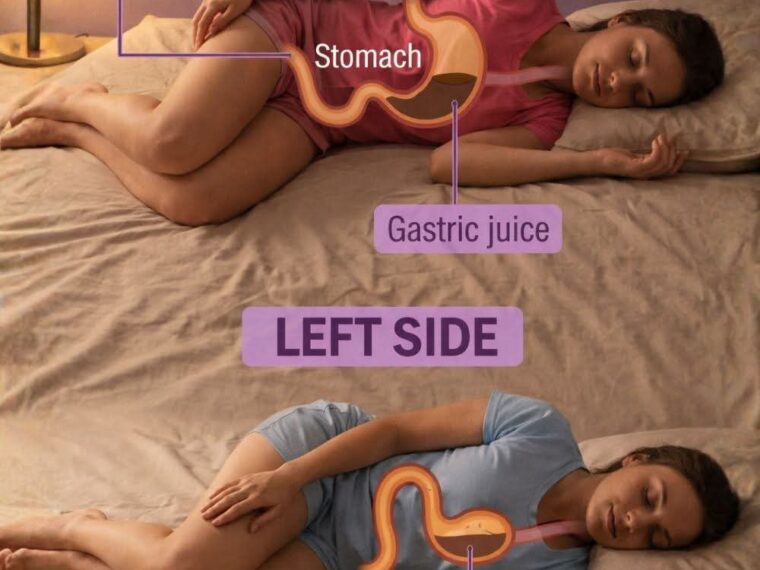
Acid reflux is a major contributor to snoring. When stomach acid moves upward, it can irritate the throat and airway, causing inflammation and narrowing that worsen snoring.
Sleeping on the right side can increase acid reflux, because of how the stomach and esophagus are positioned. Increased reflux can lead to more throat irritation overnight, which may make snoring worse—especially in people who already have GERD.
In contrast, sleeping on the left side has been shown to reduce reflux, which is why doctors often recommend it for people who snore due to acid reflux.
3. Nasal congestion and circulation
Some people notice that nasal congestion shifts depending on which side they lie on. Sleeping on the right side may increase congestion in the right nasal passage due to gravity and blood flow changes. If your snoring is driven by nasal blockage rather than throat collapse, this can make snoring worse.
When right-side sleeping may help snoring
Sleeping on the right side may be beneficial if:
- Your snoring mainly occurs when sleeping on your back
- You don’t suffer from acid reflux
- Your snoring is mild and position-dependent
- You have shoulder or hip discomfort that prevents left-side sleeping
In these cases, right-side sleeping is often a reasonable compromise and may significantly reduce snoring compared to back sleeping.
When it may worsen snoring

Right-side sleeping may worsen snoring if:
- You have acid reflux or frequent heartburn
- You have moderate to severe sleep apnea
- Your snoring is related to throat inflammation
- You wake up with a sore throat or hoarse voice
- In these situations, left-side sleeping is usually the better option.
Practical tips to reduce snoring
If you prefer sleeping on your right side but still snore, try:
- Elevating your head slightly with a supportive pillow
- Avoiding alcohol within 3–4 hours of bedtime
- Treating nasal congestion with saline rinses or humidifiers
- Maintaining a healthy weight
- Training yourself to switch sides during the night if reflux symptoms appear
The bottom line
Sleeping on your right side is usually better than sleeping on your back when it comes to snoring, but it may not be the best option for everyone. For people with acid reflux or sleep apnea, the left side often provides greater relief. The most effective approach is to pay attention to your own symptoms and adjust your sleep position accordingly.
Sometimes, small changes in how you sleep can make a big difference in how well you—and everyone around you—rest at night.