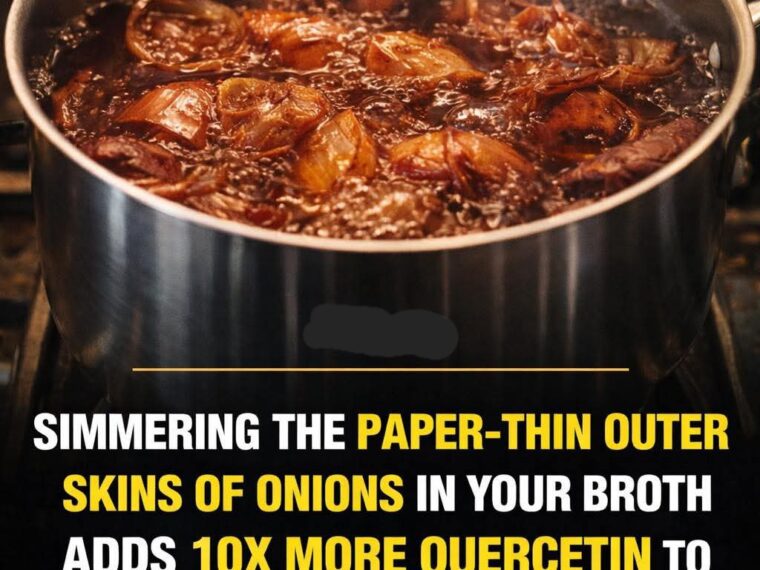
Most of us peel onions and immediately discard the dry, papery outer skins. They seem useless — too tough to chew and too dry to cook with. But those layers actually serve as the onion’s natural defense system, and they’re packed with a powerful antioxidant called quercetin.
Before you start saving every onion peel, let’s explore what the science says — and how to use them safely and realistically.
Why Onion Skins Are So Protective
Plants produce protective compounds to defend against UV rays, pests, and environmental stress. In onions, many of these compounds concentrate in the outer layers.
One of the most studied is quercetin, a flavonoid antioxidant known for its:
- Anti-inflammatory properties
- Potential blood pressure–lowering effects
- Antioxidant activity
- Cardiovascular support
Research consistently shows that onion skins contain significantly higher concentrations of quercetin than the inner white flesh.
In other words, the part we throw away may contain more of this compound than the part we eat.
What Is Quercetin?
Quercetin is a naturally occurring plant pigment found in:
- Onions (especially red and yellow varieties)
- Apples
- Berries
- Capers
- Leafy greens
It has been widely studied for its role in:
- Supporting healthy blood vessels
- Reducing oxidative stress
- Modulating inflammation
- Supporting immune balance
Some studies suggest quercetin may help improve endothelial function (how well blood vessels relax and contract), which plays a role in blood pressure regulation.
However, it’s important to avoid exaggerated claims. While quercetin is beneficial, food-based intake is supportive — not equivalent to prescription medication.
Is Quercetin Heat-Stable?
One reason onion skins are useful in cooking is that quercetin is relatively heat-stable compared to some other antioxidants.
When simmered in water, small amounts of quercetin and related flavonoids can leach into the liquid. This makes broths and cooking water potential carriers of these compounds.
That said, the amount transferred depends on:
- Cooking time
- Temperature
- Surface area of the skins
- Type of onion
It’s supportive — but not truly “pharmaceutical-grade.” Whole foods work gently and cumulatively.
How to Use Onion Skins Safely
Because the skins are too fibrous to chew comfortably, the key is infusion — then removal.
1. In Soups and Broths
Add clean onion skins to homemade vegetable or bone broth. Simmer for 20–40 minutes, then strain before serving.
2. In Rice or Grain Water
Place a few washed onion skins in the cooking water for rice, quinoa, or lentils. Remove them before eating.
3. In Homemade Stock Bags
Keep a freezer bag of vegetable scraps (carrot tops, celery ends, onion skins) and use them for broth.
Important:
- Always wash onion skins thoroughly to remove dirt or pesticide residue.
- Use organic onions when possible.
- Avoid moldy or damaged layers.
Why the Inner Onion Still Matters
While outer layers contain more quercetin, the inner onion flesh still provides:
- Prebiotic fibers (like inulin)
- Sulfur compounds that support detox pathways
- Vitamin C
- Flavor-enhancing natural sugars
The goal isn’t to replace the edible portion — but to maximize the whole plant.
Heart Health and Inflammation: A Realistic View
Quercetin has shown potential in research to:
- Slightly reduce blood pressure in some individuals
- Support vascular health
- Reduce markers of inflammation
But dietary intake works gradually. A few onion skins in soup won’t override poor diet, high stress, or lack of exercise.
True heart protection comes from:
- Balanced nutrition
- Fiber-rich foods
- Regular movement
- Adequate sleep
- Stress management
Onion skins can be part of that pattern — not a shortcut.
The Bottom Line
The dry, papery skins of onions contain concentrated quercetin, a powerful antioxidant linked to cardiovascular and anti-inflammatory support. Because quercetin is relatively heat-stable, simmering the skins in soups or cooking water can gently infuse some of these beneficial compounds into your food.
They’re not magic, and they’re not medicine — but they are a smart way to reduce food waste and extract more value from ingredients you already use.
Sometimes the most overlooked parts of a plant hold surprising nutritional potential — even the layers we usually toss away.