
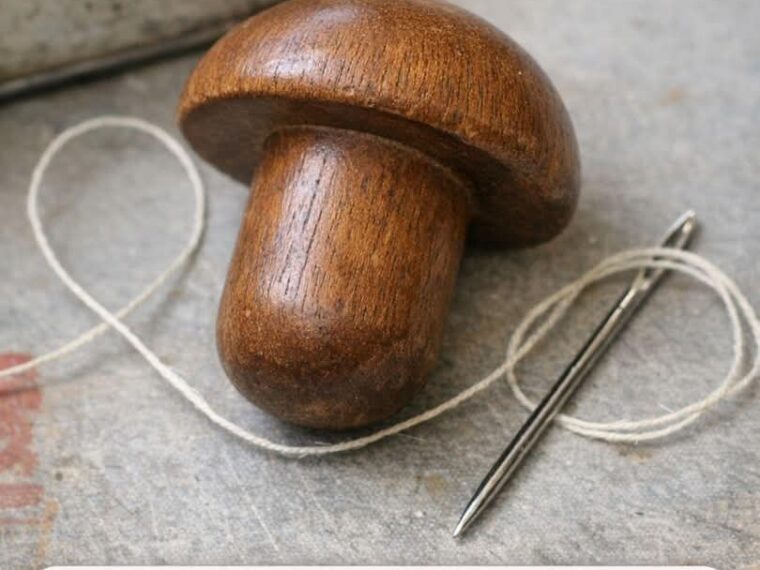
The darning mushroom’s cap is intentionally rounded and smooth, allowing fabric to glide across its surface without snagging. This design was crucial for maintaining the integrity of the textile fibers during repair. The short handle provides just enough grip to hold the tool steady while working.
Wooden darning mushrooms were often made from hardwoods like beech or maple, chosen for their durability and smooth finish. Some were plain, while others might have been decorated with simple carvings or paint, adding a touch of personal flair to an otherwise utilitarian tool.
6. Clues From Context: What Old Sewing Tins Reveal About Their Tools
Old sewing tins often contain a mix of practical tools and sentimental items, reflecting the era and household from which they originate. The presence of a darning mushroom among needles, thimbles, and thread suggests a time when repair and reuse were standard practices.
Sewing tins themselves can be valuable indicators of the past, often passed down through generations. They might include inherited tools or items collected over a lifetime, each with its own story. The context of these items together provides a snapshot of domestic life in a particular time and place.
7. Variations on the Theme: Eggs, Mushrooms, And Other Darning Tools
While the darning mushroom is a common variant, darning eggs are another popular tool used for similar purposes. Shaped like an egg, these tools also provide a rounded surface for mending fabric, often used interchangeably with mushrooms depending on personal preference.
Some darning tools were whimsical in design, crafted to be visually pleasing as well as functional. They came in various sizes, materials, and even colors, reflecting both the availability of materials and the aesthetic preferences of their users.
8. How to Use a Darning Mushroom Today (Step-By-Step Overview)
To use a darning mushroom today, start by placing the damaged part of the sock over the mushroom’s cap. Stretch the fabric until it’s taut but not overly tight, ensuring that the hole is centered. Thread a darning needle with yarn or thread that matches the fabric.
Begin by sewing a series of vertical stitches over the hole, anchoring the thread in undamaged areas. Then, weave horizontal stitches over and under the vertical ones, creating a woven patch. This method ensures a sturdy repair that mimics the original fabric structure, extending the life of the item being mended.
9. Caring For and Restoring Old Wooden Sewing Tools
To preserve the integrity of vintage wooden sewing tools like the darning mushroom, regular care is essential. Clean the wood with a soft, damp cloth to remove dust and grime. Avoid soaking the wood, as moisture can cause swelling or cracking.
Periodically, apply a light coat of mineral oil or beeswax to nourish the wood and maintain its smooth surface. This will also help to prevent drying and cracking, ensuring that the tool remains functional and beautiful for years to come.
10. Collectible or Everyday Tool? Assessing Age, Value, And Rarity
While darning mushrooms were once everyday household items, their status has shifted over time. Today, they are often considered collectible, valued for their historical significance and craftsmanship. The age, condition, and uniqueness of a darning mushroom can affect its value.
Hand-carved or painted examples, or those with a known provenance, may be particularly sought after by collectors. However, even a simple, well-used darning mushroom holds value as a nostalgic piece of domestic history, representing an era when mending was a common skill.
11. Why Rediscovering Darning Tools Matters in the Age of Fast Fashion
In today’s fast fashion era, the skills and tools associated with repairing clothing have largely been forgotten. Rediscovering tools like the darning mushroom encourages a return to sustainable practices, emphasizing the importance of repair and reuse.
By learning to mend our clothes, we can reduce waste, save money, and preserve the craftsmanship of garments that would otherwise be discarded. The darning mushroom, once a staple in household sewing kits, is a symbol of a more thoughtful and sustainable approach to fashion and consumerism.
Found this smooth wooden object in an old sewing tin. Shaped like a mushroom but the handle is too short to be a pestle.
Pages: 1 2


